


Join the Leading Global Eye Health Alliance.
Membership-
Choose an alternate language here
- Membership

The European Commission Expert Panel’s report, Child Safety Online: Protecting and Empowering Minors in a Digital World (13 July 2026), is wrong to say there is “no strong evidence” linking overall screen time to the development of myopia.
As screen-based technologies become increasingly integrated into education, social interaction and everyday life, policymakers have a responsibility to ensure that guidance is grounded in the strongest available evidence.
The report’s assertion is not supported by either the wider scientific literature or by the very sources cited by the Expert Panel. Clarifying the evidence matters because myopia is no longer a niche eye health issue. It is one of the fastest-growing public health challenges affecting children and adolescents worldwide.
The Children’s Eye Health Coalition responded on 22 July stating that “children spending more than three hours per day on digital devices have over 25% higher risk of developing myopia, rising to over 75% when computer use is included, and that myopia risk increases sharply between one and four hours of daily screen exposure.”
As the International Agency for the Prevention of Blindness (IAPB), we believe that policies designed to protect children online must also reflect the growing body of evidence linking modern visual behaviours, including prolonged near work and increased screen exposure, to myopia risk. While scientific discussion continues regarding the precise contribution of different risk factors, the broader evidence base clearly supports caution and early intervention rather than complacency.
The stakes could not be higher.
When myopia begins in childhood and progresses unchecked, it can lead to high myopia, significantly increasing the lifetime risk of serious vision-threatening conditions, including retinal detachment, glaucoma and myopic macular degeneration. These complications can have profound consequences for individuals, families, health systems and economies.
With global myopia prevalence projected to rise sharply in the coming decades, early detection and intervention during childhood are essential. We cannot afford to wait until millions more children develop avoidable sight problems before acting.
Children today are growing up in an environment that differs significantly from previous generations. Educational demands, digital learning, entertainment and social engagement increasingly involve sustained near-focus activities and extended time spent indoors. Public health policy must evolve accordingly.
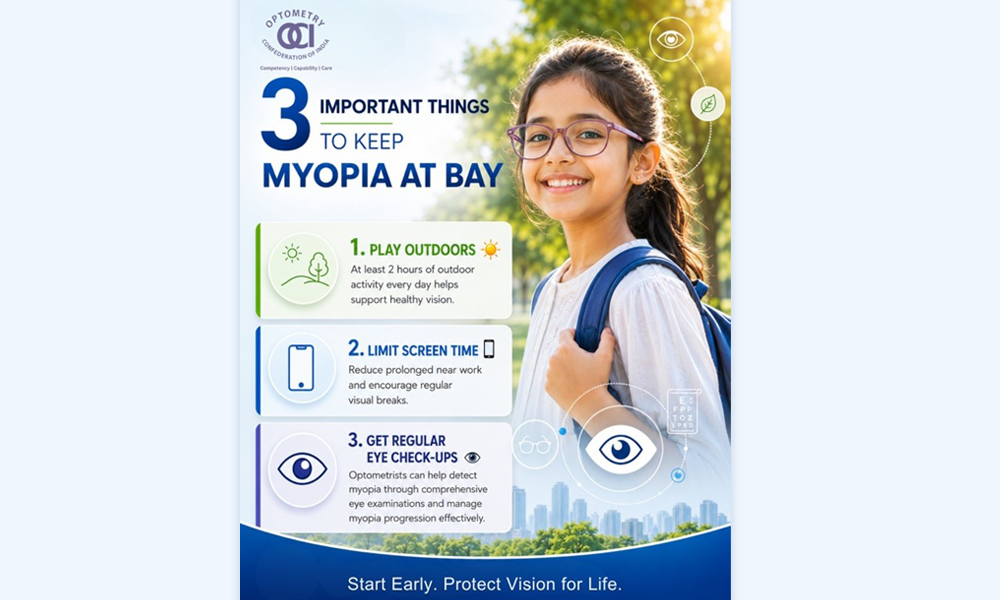
This does not mean demonising technology. Digital tools bring enormous benefits for learning, communication and inclusion. But responsible policy requires balancing those benefits with a precautionary and evidence-informed approach to children’s health. Encouraging healthy screen habits, increasing awareness of myopia risk factors, promoting outdoor time and ensuring regular eye examinations are all sensible measures that can be implemented today.
As a leading global alliance dedicated to ending avoidable blindness and sight loss, IAPB remains committed to working with partners across sectors to ensure children everywhere have access to timely eye care and the opportunity to enjoy healthy vision throughout their lives.
As policymakers continue to shape the future of children’s digital experiences, we urge them to ensure that guidance accurately reflects the current evidence base. Protecting and empowering minors in a digital world should include protecting their vision.
Because when it comes to childhood myopia, early action today can prevent serious sight loss tomorrow.
Related reading.