


Skip to content

Behavior Change Communication Materials for Child Eye Health in China

Published: 03.09.2020
Guan Chunhong Senior Programme Manager
Orbis International North Asia
1/1

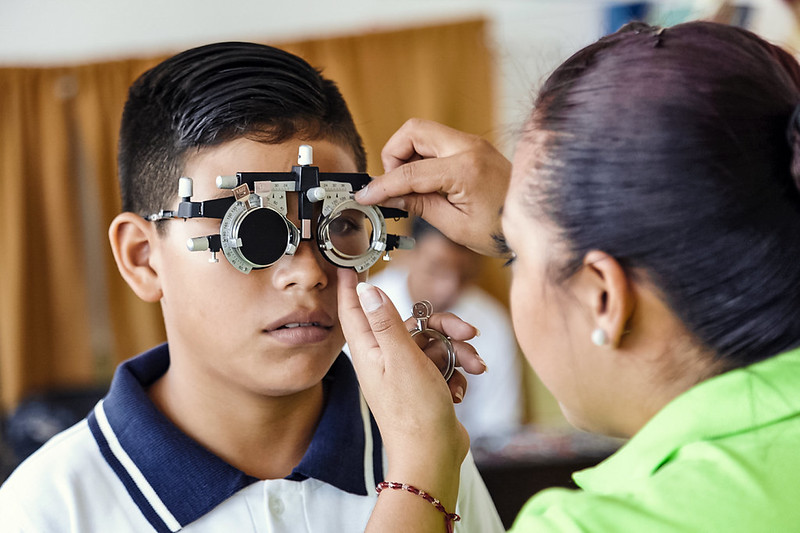
Child eye health promotion was one of the major components of the Seeing is Believing CHEER Project which was conducted in multi-formats through multi-channels from community level to tertiary level in Shanxi China. Leaflets, booklets, and posters were distributed through clinics, schools and special events. Health talk videos were played on a continuous loop at clinics and during school screening.

The project worked with advertising agencies to design Behaviour Change Communication (BCC) materials and three key factors were taken into consideration:

1) Delivering key messages effectively

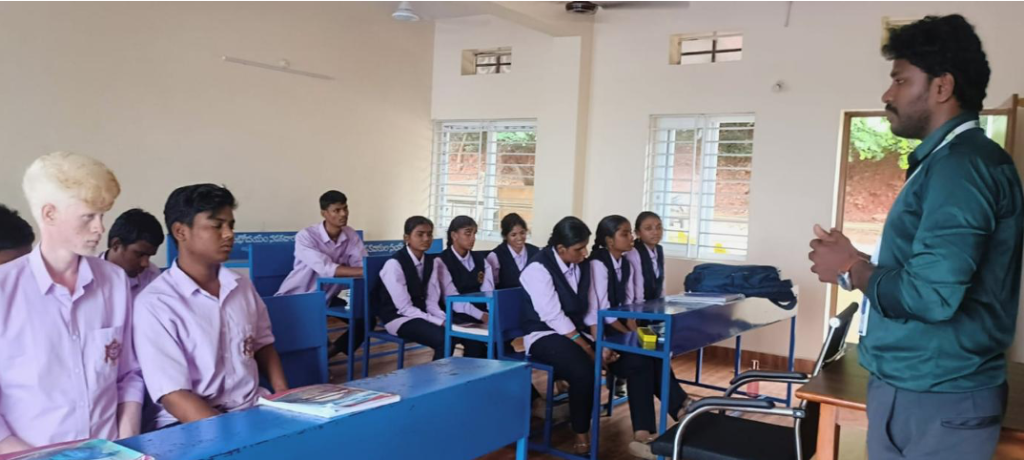
The video agency advised the project to invite local pediatric ophthalmologists to talk about the key messages in early detection, treatment of common eye diseases such as strabismus, congenital cataracts and eye injuries. Optometrists were invited to speak about electronic products and outdoor activities and myopia. This helped to build trust between parents and eye care professionals. A brochure on common eye diseases was developed with coloured cartoon pictures and captions, which school children liked. The advertising agency helped with colour contrast, font size and the layout of printing BCC materials. Together with another consortium INGO and local partners, a black and white leaflet and black T-shirts with ten key messages were printed about cortical visual impairment were developed for children with low vision to have better contrast.
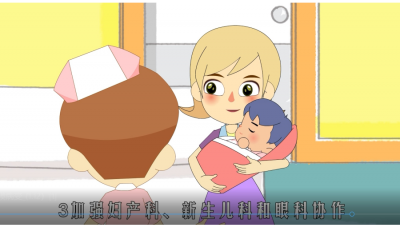
Multi-disciplinary collaboration to prevent ROP2) Focusing on the target audience

Children, parents, and schoolteachers are critical for prevention of refractive error, eye injury and ROP. Orbis International worked with the video agency to design child-friendly cartoon videos. Sand painting was used in one of the videos. The video agency staff had lengthy discussions with eye care professionals on how to make the video simple and attractive to children and parents. Eye care professionals provided raw materials and case studies while the video agency adapted it by removing any jargon. The prototype was tested among health professionals, children and non-health people. Two cartoon videos were designed for the prevention of ROP. One was for prenatal health education to parents, early screening and follow-up by targeting the public. The other video targeted medical professionals to highlight the multi-disciplinary collaboration between the obstetric department, NICU and the eye department.

3) Developing the appropriate product for the right channel

In the early phase of the project, the video agency insisted on making long videos even though the contract fee was fixed regardless of the length. The first video on general child eye health was 11 minutes with pictures they shot during school screening and in hospitals. The second video on eye diseases was 9 minutes. These videos could not be shared through social media/WeChat so a large audience was missed. After some discussion with the video maker, it was agreed  to make mini-movies with key messages only and limit the length to 4 minutes for ocular injuries and 2 minutes for ROP. These were widely shared and liked by the public reaching over a million people.

Guan Chunhong

Author: Guan Chunhong, Chunhong.guan@orbis.org

Photo Credits

Prevent Blindness is declaring February as Age-related Macular Degeneration (AMD) and Low Vision Month in an effort to provide education and various expert-approved resources to the public and professionals. This year’s AMD and Low Vision Month is generously supported by Gold Sponsor EyePoint, Inc.

According to Johns Hopkins Medicine, AMD is the most common cause of severe loss of eyesight among people 50 and older. And, about 4 million Americans live with low vision, which is defined as chronic visual impairment that cannot be corrected with glasses, contact lenses or medical treatments.

AMD affects the central part of the retina called the “macula.” When AMD damages the macula, the center part of a person’s vision may become blurred or wavy, and a blind spot may develop. Early detection and treatment of AMD is key to helping to prevent significant vision loss.

Two types of AMD include:

  • Dry- The most common form of AMD, dry AMD, is caused by the appearance of small yellow deposits called drusen, which form under the retina. These are accumulated waste products of the retina, which can grow and stop the flow of nutrients to the retina. This may cause the retinal cells in the macula that process light to die, causing vision to become blurred. This form of the disease usually worsens slowly. An advanced form of dry AMD is called geographic atrophy.
  • Wet- Wet AMD generally causes more rapid and more serious vision loss. In this form of the disease, tiny new blood vessels grow under and into the retina. These blood vessels are fragile and often break and leak, causing a loss of vision.

“As our population ages, the number of individuals impacted by AMD continues to grow. Many will face difficulties doing the things we sometimes take for granted, such as reading, seeing faces, and driving,” said Jeff Todd, president and CEO of Prevent Blindness. “Our robust collection of resources on AMD and low vision are intentionally created to help minimize vision loss and maintain independence for those impacted by AMD while providing effective tools to the public and providers on ways to save sight.”

As part of AMD and Low Vision Month, Prevent Blindness offers the free AMD GuideMe app. This resource provides a customized overview of AMD along with a tailored resource list and suggested steps to help save sight from the eye disease specific to the individual using the GuideMe app. Prevent Blindness offers additional educational resources including fact sheets and shareable social media graphics in English and Spanish, and dedicated webpages.

New this year, as part of the Prevent Blindness ASPECT Patient Engagement Program Member Spotlight Series, graduate Laurie S., shares her experience with AMD, including her family history with the eye disease, how it impacts her daily activities including the ability to read music, and the importance of support groups “Age-related Macular Degeneration: Laurie’s Story.”

Videos in the Prevent Blindness Focus on Eye Health Series include:

  • “Age-related Macular Degeneration (AMD) and Low Vision,” featuring W. Lloyd Clark, MD, Palmetto Retinal Center, and Assistant Clinical Professor of Ophthalmology at the University of South Carolina School of Medicine.
  • “Low Vision,” featuring R. Tracy Williams, OD, FAAO, Executive Director at Spectrios Institute for Low Vision, Clinical Professor of Ophthalmology, Loyola University and Adjunct Professor, Illinois College of Optometry. Dr. Williams is also a former Prevent Blindness Board of Directors member.
  • “Vision Impairment and Mental Wellness,” with AMD patient Dr. Connie Hills, psychologist, consultant and speaker.

The Prevent Blindness “Living Well With Low Vision” program provides useful information to those with low vision, their care partners and healthcare professionals. Content includes self-help guides, resources for vision loss and mental wellness, information on clinical trials, and much more. Living Well With Low Vision is supported by grants from Amgen and Genentech.

For more information on AMD, please visit PreventBlindness.org/amd. For information on geographic atrophy, please visit PreventBlindness.org/geographic-atrophy.
And, for more information on Living Well With Low Vision, or other general eye health information, please visit lowvision.PreventBlindness.org.

For a listing of organizations and services that provide financial assistance for vision care in English or Spanish, please visit https://preventblindness.org/vision-care-financial-assistance-information.