




Join the Leading Global Eye Health Alliance.
Membership-
Choose an alternate language here
- Membership
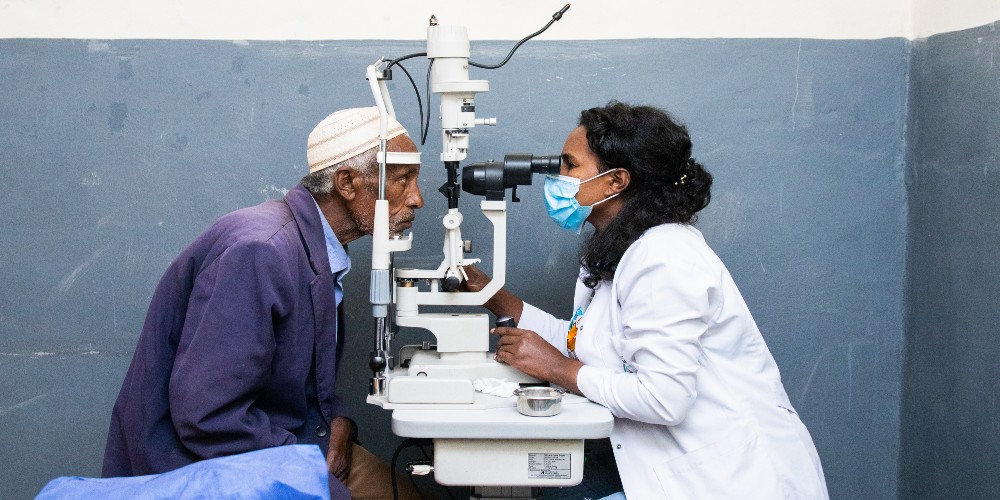
HCP Cureblindness and SightLife International, leading global eye health nonprofits, announced they have joined forces as one organization to make a greater impact in eye care worldwide. Effective immediately, HCP Cureblindness will acquire the SightLife International Program, the global division of the broader SightLife organization, with full integration of systems, programs, and brand to come over the next 12 months.
This transition marks the next step of an ever-growing relationship between the two organizations. For 13 years, HCP Cureblindness and SightLife International have collaborated on multiple projects in clinical training, eye bank development, advocacy and prevention in Nepal and Ethiopia.
“Together, our respective expertise will have a substantial and long-term impact on the world’s most underserved communities, helping to enable local eye care access for the future,” said HCP Cureblindness CEO, K-T Overbey. “Building on our shared commitment to training, while also combining HCP Cureblindness’ deep expertise in specialized care delivery and infrastructure development with SightLife International’s expertise in primary care and policy and advocacy, we will ensure millions of men, women, and children across Asia and Africa have access to the eye care they need to thrive.”
Additionally, by combining the regions in which they each serve, their work can go farther, faster toward the mission of eliminating blindness due to cataracts – and now also corneal blindness – worldwide, which together impact nearly 70 million people globally.
Established in 1995, HCP Cureblindness brings life-changing eye care to people in underserved areas of the world with continual focus on training local personnel. This action-based approach builds local leadership, empowers key actors, and develops sustainable practices from the ground up. Together with an extensive network of implementing partners in over 20 countries, HCP Cureblindness has provided over 1.19 million sight-restoring surgeries and 13.3 million screenings and basic treatments, has trained over 19,000 eye health professionals, and has established 5 eye hospitals.
Launched in 2009, SightLife International takes a health systems approach to addressing the inequities that contribute to and perpetuate corneal blindness worldwide. With committed partners, SightLife International has been instrumental in restoring sight and preventing blindness for more than 225,000 individuals around the world and providing clinical training for more than 7,000 health care providers.
“SightLife US and the Lions Eye Institute for Transplant & Research deeply value the mission and impact of SightLife International and are confident this is the best next step for the program and team to bring their work to new heights,” said Jason Woody, CEO of SightLife/LEITR. “Together, SightLife US and LEITR will continue to stand behind SightLife International and HCP Cureblindness’ bold work to ensure more people can experience the joy and possibility that sight affords.”
In August 2022, SightLife merged with the Lions Eye Institute for Transplant and Research (LEITR), which is now the world’s largest combined nonprofit eye bank and research institute. SightLife International and HCP Cureblindness will look for opportunities to partner with SightLife US and LEITR to support technical training for eye bank personnel and surgeons globally, as well as provide corneal tissue to areas where eye bank development is not feasible.
HCP Cureblindness and SightLife International will also look for more opportunities to bring together their dedicated partners and surgeon community to advance their collective work, bringing the gift of sight to more people around the world.
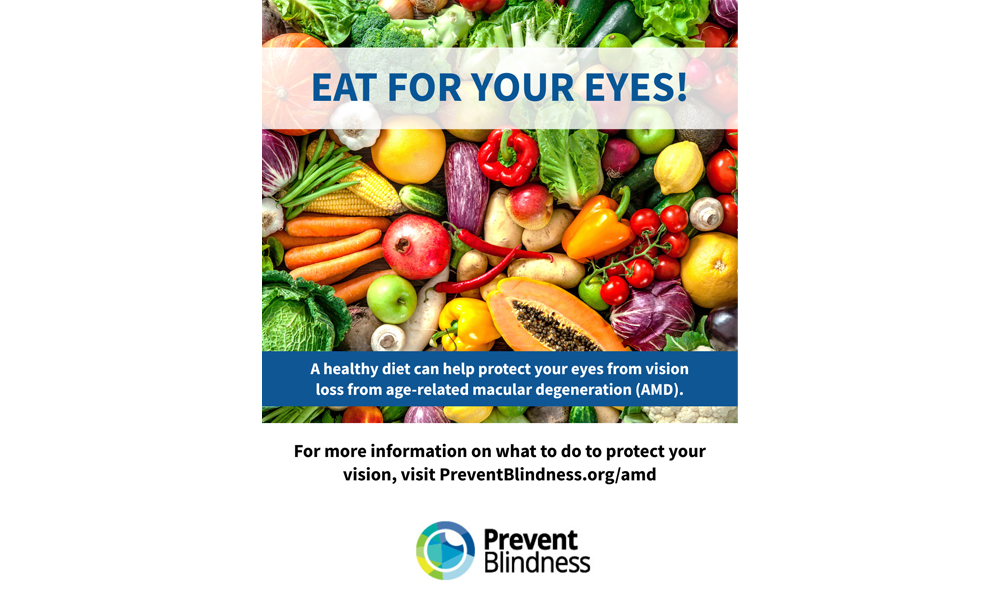
Prevent Blindness is declaring February as Age-related Macular Degeneration (AMD) and Low Vision Month in an effort to provide education and various expert-approved resources to the public and professionals. This year’s AMD and Low Vision Month is generously supported by Gold Sponsor EyePoint, Inc.
According to Johns Hopkins Medicine, AMD is the most common cause of severe loss of eyesight among people 50 and older. And, about 4 million Americans live with low vision, which is defined as chronic visual impairment that cannot be corrected with glasses, contact lenses or medical treatments.
AMD affects the central part of the retina called the “macula.” When AMD damages the macula, the center part of a person’s vision may become blurred or wavy, and a blind spot may develop. Early detection and treatment of AMD is key to helping to prevent significant vision loss.
Two types of AMD include:
“As our population ages, the number of individuals impacted by AMD continues to grow. Many will face difficulties doing the things we sometimes take for granted, such as reading, seeing faces, and driving,” said Jeff Todd, president and CEO of Prevent Blindness. “Our robust collection of resources on AMD and low vision are intentionally created to help minimize vision loss and maintain independence for those impacted by AMD while providing effective tools to the public and providers on ways to save sight.”
As part of AMD and Low Vision Month, Prevent Blindness offers the free AMD GuideMe app. This resource provides a customized overview of AMD along with a tailored resource list and suggested steps to help save sight from the eye disease specific to the individual using the GuideMe app. Prevent Blindness offers additional educational resources including fact sheets and shareable social media graphics in English and Spanish, and dedicated webpages.
New this year, as part of the Prevent Blindness ASPECT Patient Engagement Program Member Spotlight Series, graduate Laurie S., shares her experience with AMD, including her family history with the eye disease, how it impacts her daily activities including the ability to read music, and the importance of support groups “Age-related Macular Degeneration: Laurie’s Story.”
Videos in the Prevent Blindness Focus on Eye Health Series include:
The Prevent Blindness “Living Well With Low Vision” program provides useful information to those with low vision, their care partners and healthcare professionals. Content includes self-help guides, resources for vision loss and mental wellness, information on clinical trials, and much more. Living Well With Low Vision is supported by grants from Amgen and Genentech.
For more information on AMD, please visit PreventBlindness.org/amd. For information on geographic atrophy, please visit PreventBlindness.org/geographic-atrophy.
And, for more information on Living Well With Low Vision, or other general eye health information, please visit lowvision.PreventBlindness.org.
For a listing of organizations and services that provide financial assistance for vision care in English or Spanish, please visit https://preventblindness.org/vision-care-financial-assistance-information.