



Join the Leading Global Eye Health Alliance.
Membership-
Choose an alternate language here
- Membership
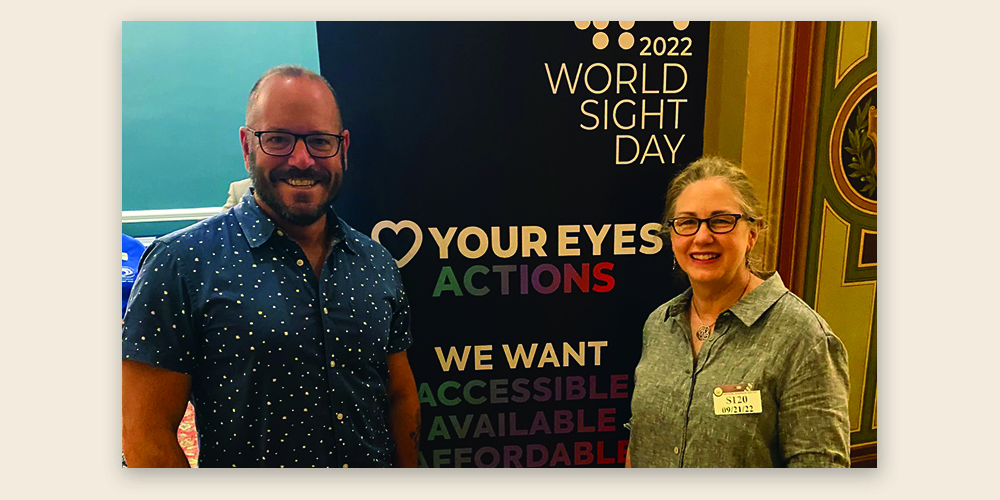
On Wed., Sept. 21, Prevent Blindness, and the Prevention of Blindness Society of Metropolitan Washington, held the first World Sight Day Vision Screening and Eye Health Educational Event at the U.S. Capitol Building in Washington, D.C.
World Sight Day, coordinated by the International Agency for the Prevention of Blindness (IAPB), aims to raise awareness of blindness and vision impairment as major global public health and development issues.
Legislative members, their staff, and the public were invited to participate in the free certified vision screening by trained volunteers, and received information on a variety of vision and eye health topics, including eye diseases and conditions. This event was sponsored by Horizon Therapeutics.
Both Co-Chairs of the Congressional Vision Caucus participated in the day’s event. Prevent Blindness formally thanked soon-retiring Rep. David Price (D-NC) for his years of service in the U.S. Congress, and for his long-standing commitment to vision and eye health, while Rep. Gus Bilirakis (R-FL) provided recorded remarks to mark the occasion.
“All of us at Prevent Blindness thank Rep. Price for his years of service in Congress, and for his leadership and commitment to vision and eye health,” said Jeff Todd, president and CEO of Prevent Blindness. “And we thank everyone, including Rep. Bilirakis, for helping to make this World Sight Day event a tremendous success!”
Prevent Blindness is declaring February as Age-related Macular Degeneration (AMD) and Low Vision Month in an effort to provide education and various expert-approved resources to the public and professionals. This year’s AMD and Low Vision Month is generously supported by Gold Sponsor EyePoint, Inc.
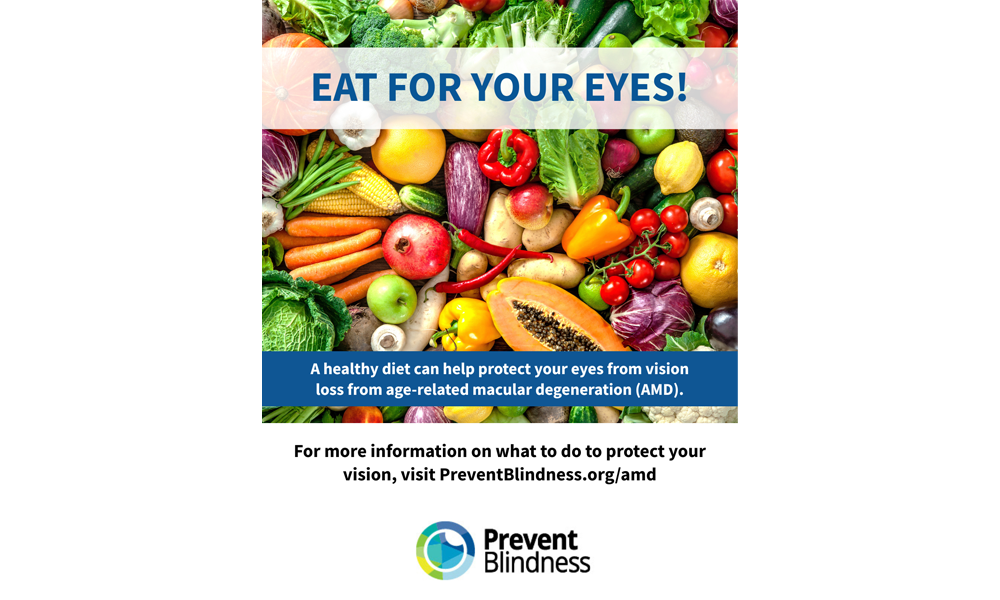
According to Johns Hopkins Medicine, AMD is the most common cause of severe loss of eyesight among people 50 and older. And, about 4 million Americans live with low vision, which is defined as chronic visual impairment that cannot be corrected with glasses, contact lenses or medical treatments.
AMD affects the central part of the retina called the “macula.” When AMD damages the macula, the center part of a person’s vision may become blurred or wavy, and a blind spot may develop. Early detection and treatment of AMD is key to helping to prevent significant vision loss.
Two types of AMD include:
“As our population ages, the number of individuals impacted by AMD continues to grow. Many will face difficulties doing the things we sometimes take for granted, such as reading, seeing faces, and driving,” said Jeff Todd, president and CEO of Prevent Blindness. “Our robust collection of resources on AMD and low vision are intentionally created to help minimize vision loss and maintain independence for those impacted by AMD while providing effective tools to the public and providers on ways to save sight.”
As part of AMD and Low Vision Month, Prevent Blindness offers the free AMD GuideMe app. This resource provides a customized overview of AMD along with a tailored resource list and suggested steps to help save sight from the eye disease specific to the individual using the GuideMe app. Prevent Blindness offers additional educational resources including fact sheets and shareable social media graphics in English and Spanish, and dedicated webpages.
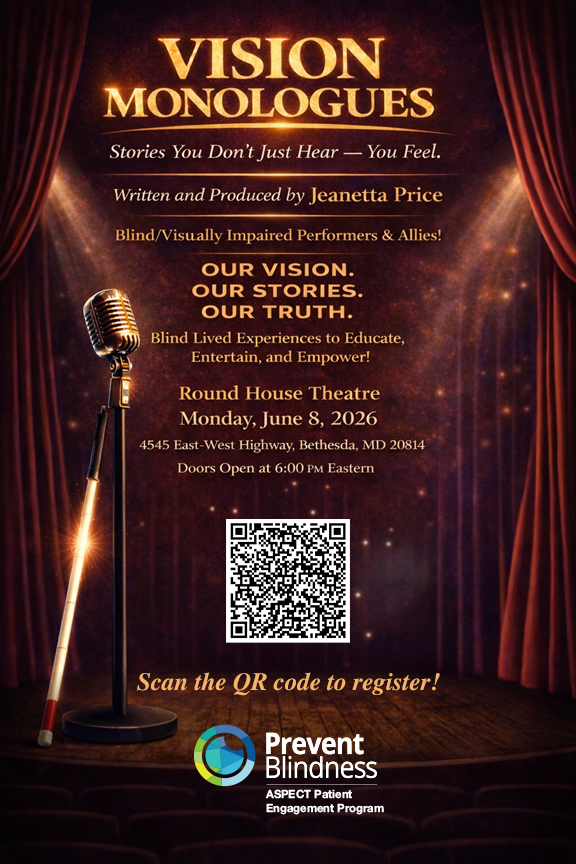
New this year, as part of the Prevent Blindness ASPECT Patient Engagement Program Member Spotlight Series, graduate Laurie S., shares her experience with AMD, including her family history with the eye disease, how it impacts her daily activities including the ability to read music, and the importance of support groups “Age-related Macular Degeneration: Laurie’s Story.”
Videos in the Prevent Blindness Focus on Eye Health Series include:
The Prevent Blindness “Living Well With Low Vision” program provides useful information to those with low vision, their care partners and healthcare professionals. Content includes self-help guides, resources for vision loss and mental wellness, information on clinical trials, and much more. Living Well With Low Vision is supported by grants from Amgen and Genentech.
For more information on AMD, please visit PreventBlindness.org/amd. For information on geographic atrophy, please visit PreventBlindness.org/geographic-atrophy.
And, for more information on Living Well With Low Vision, or other general eye health information, please visit lowvision.PreventBlindness.org.
For a listing of organizations and services that provide financial assistance for vision care in English or Spanish, please visit https://preventblindness.org/vision-care-financial-assistance-information.