


Join the Leading Global Eye Health Alliance.
Membership-
Choose an alternate language here
- Membership

Many people at risk of avoidable blindness are already attending healthcare services on a regular basis. For people living with diabetes and other non-communicable diseases (NCDs), routine clinic visits provide an opportunity to identify sight-threatening eye disease before vision is lost.
A recent partnership in Zimbabwe explored how eye screening can be integrated into these existing healthcare pathways, helping bring eye care closer to where patients already receive treatment.
Working alongside the Ministry of Health, Zimbabwe Council for the Blind, Norton Eye Unit and CBM Global, the University of St Andrews Arclight Project supported a programme focused on strengthening the detection of diabetic retinopathy and other causes of avoidable blindness.
Bringing eye screening into routine care
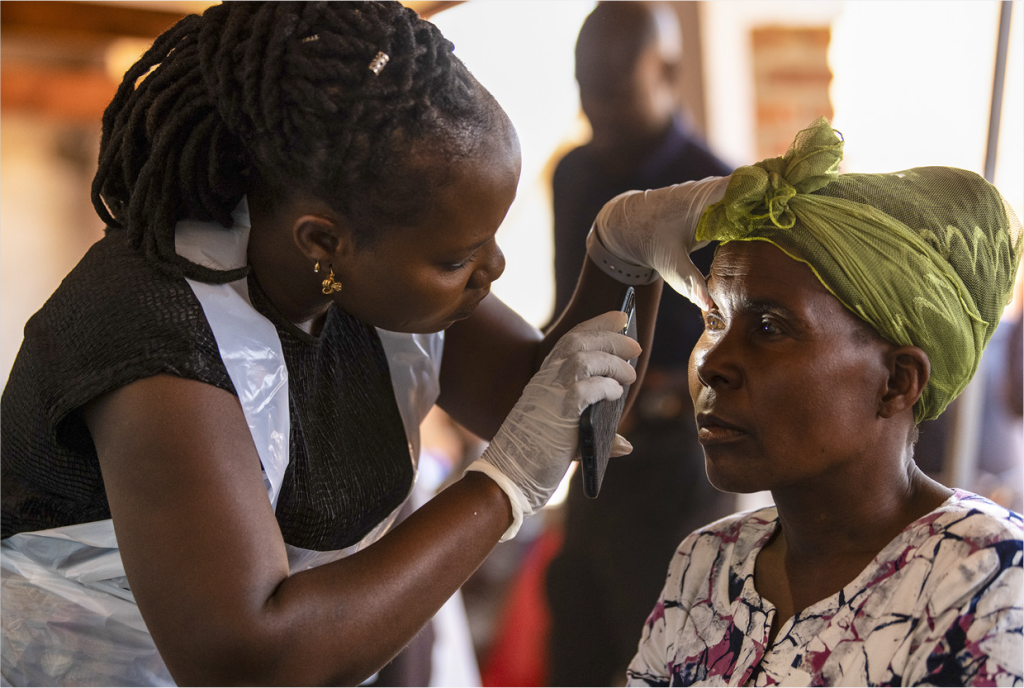
Across four hospital-based workshops, 92 eye health workers — including ophthalmologists, ophthalmic nurses, registrars, refractionists and optometry students — took part in practical training designed to support eye examination within routine healthcare services.
The focus was diabetic retinopathy, one of the leading causes of preventable sight loss among people living with diabetes. By supporting eye examinations within diabetes and NCD clinics, healthcare workers can identify patients who require referral before significant vision loss occurs.
This approach helps make eye care more accessible by integrating screening into services that patients are already attending.
Detecting more than diabetic retinopathy
While diabetic retinopathy was a key priority, the same examination skills can also support the detection of glaucoma, cataract, anterior segment disease and other common causes of avoidable blindness.
This means a single patient encounter can provide an opportunity to identify multiple eye conditions and strengthen referral pathways for patients who need specialist care.
Rather than creating separate programmes for individual diseases, integrating eye examination into routine care can help make services more available while making better use of existing healthcare contacts.
Practical tools for everyday clinical settings
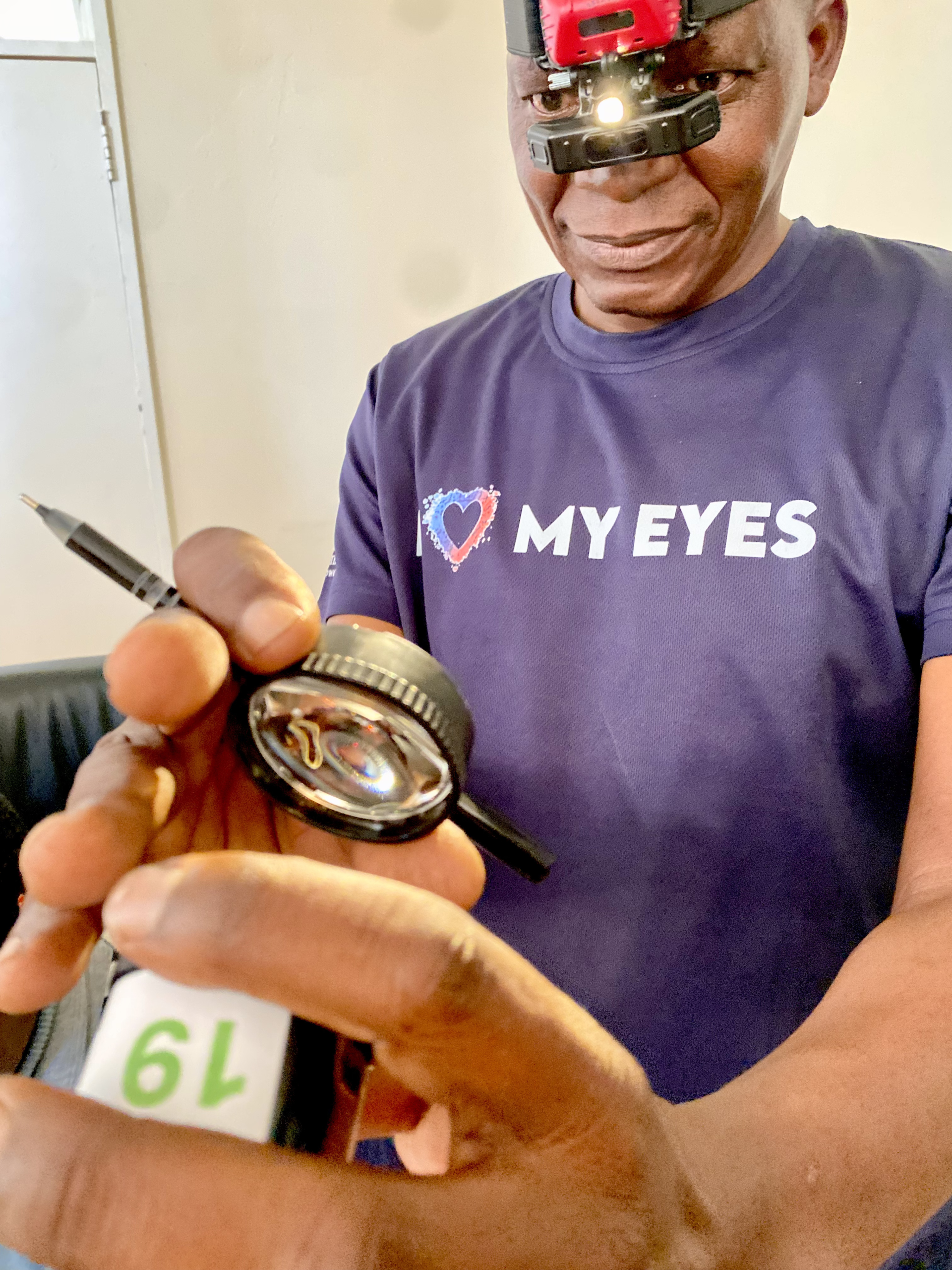
Participants were equipped with Arclight ophthalmoscopes and Holo Binocular Indirect Ophthalmoscope (BIO) systems to support eye examination in a range of clinical environments.
A total of 79 Arclight devices and 42 Holo BIO systems were distributed through the programme, helping extend eye screening beyond specialist eye units and into routine clinical practice.
Portable and affordable equipment has an important role to play in expanding access to eye care, particularly when combined with local training, referral pathways and ongoing support.
Some participants also wore IAPB Love Your Eyes campaign shirts during the workshops – a reminder of our shared partnership working.
Why this matters
Around the world, avoidable sight loss is often not a consequence of conditions being untreatable, but of conditions being detected too late.
The experience in Zimbabwe highlights a practical approach to addressing this challenge. By integrating eye examination into routine diabetes and NCD services, healthcare workers can identify sight-threatening disease earlier and create more opportunities for referral and treatment.
At the Arclight Project, we describe this as making eye care more accessible, affordable and available. Small changes within existing healthcare systems can help ensure that more people receive sight-saving care before vision is lost.