





Join the Leading Global Eye Health Alliance.
Membership-
Choose an alternate language here
- Membership
The American Academy of Ophthalmology (AAO) has announced the recipients of two of its awards: International Blindness Prevention Award and Outstanding Humanitarian Service Award. The recipients will be recognised at AAO’s annual meeting in 2021.
The International Blindness Prevention Award, established in 1992, honors an individual who has made significant contributions to reducing blindness and/or restoring sight worldwide.
The 2020 Award has been given to Larry Schwab, MD, one of the recipients of our Vision Excellence Awards.
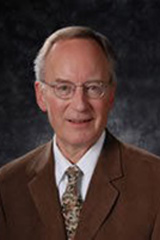 Dr. Schwab was selected for the award by the Global Education and Outreach Committee for his global impact in three areas: 1) long-term collaboration, networking and consulting in policy, planning and implementing blindness prevention programs; 2) direct care, teaching and training clinical officers, medical assistants and nurses in the developing world, particularly Africa and Asia, and 3) speaking, advocating and supporting blindness prevention programs at academic institutions, medical societies, communities and with international health officials throughout his career.
Dr. Schwab’s career in caring for underserved populations began as soon as he completed his medical training at West Virginia University. Following his internship at New Orleans’ Charity Hospital, he became a captain in the US Army Medical Corps and went to Vietnam, where he served first as a general medical officer in a surgical hospital. He then spent six months in combat as a battalion surgeon, and was awarded two bronze stars, one for meritorious service and for valor for heroism in ground combat operations as a non-combatant.
You can read more about him here.
The Outstanding Humanitarian Service Award recognizes Academy members for contributions in charitable activities, care of the indigent and community service performed above and beyond the typical duties of an ophthalmologist.
The 2020 recipients are: Steve A. Arshinoff, MD and John E. Kempen, MD.
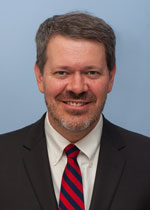 Dr. John Kempen was nominated by Harvard Medical School for his creative and effective model to help patients in great need. In 2014, Dr. Kempen co-founded Sight for Souls, a nonprofit corporation with the goal of bringing sustainable, high-quality eye care to developing regions of the world. He took the noble journey of leadership through sacrifice, giving up his tenured professorship at the University of Pennsylvania in 2015 to move with his family to Ethiopia, where he created, launched and developed an innovative, robust and academically oriented Center of Excellence in Addis Ababa.
Read more on him.
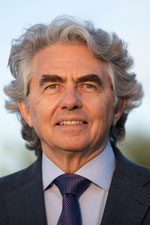 Dr. Steve Arshinoff was nominated by the Canadian Ophthalmological Society for his continued involvement with the Medical Mobile Eye Care Unit (MMECU). He joined this initiative as a resident at the University of Toronto in 1978 and has continued his involvement for the past 42 years. Since 1998, Dr. Arshinoff has been the medical director of the MMECU programme. In this capacity, he organizes the programme, secures funds, upgrades the facilities, leads the medical team and provides eye care. Read more on him.
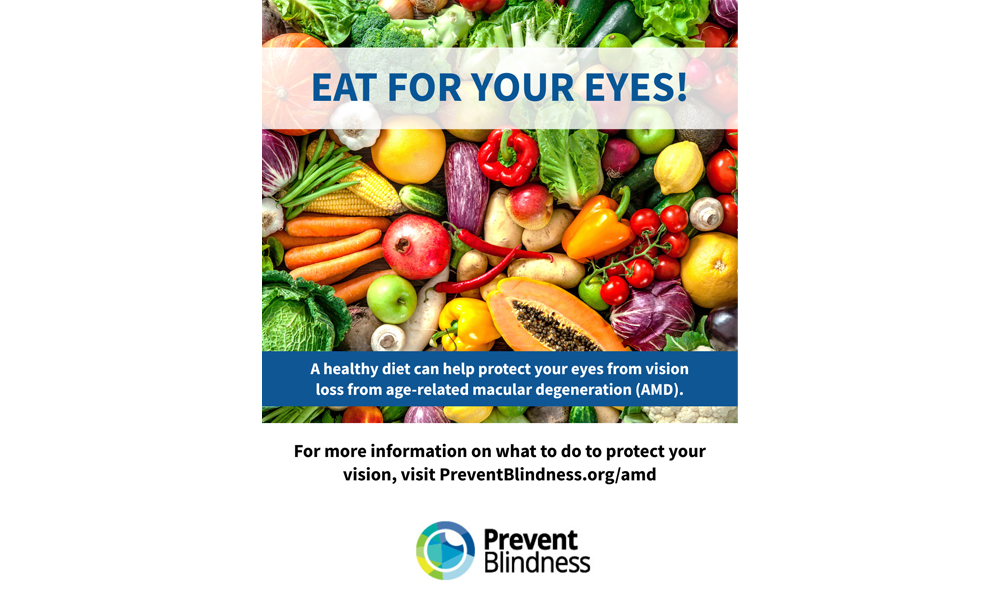
Prevent Blindness is declaring February as Age-related Macular Degeneration (AMD) and Low Vision Month in an effort to provide education and various expert-approved resources to the public and professionals. This year’s AMD and Low Vision Month is generously supported by Gold Sponsor EyePoint, Inc.
According to Johns Hopkins Medicine, AMD is the most common cause of severe loss of eyesight among people 50 and older. And, about 4 million Americans live with low vision, which is defined as chronic visual impairment that cannot be corrected with glasses, contact lenses or medical treatments.
AMD affects the central part of the retina called the “macula.” When AMD damages the macula, the center part of a person’s vision may become blurred or wavy, and a blind spot may develop. Early detection and treatment of AMD is key to helping to prevent significant vision loss.
Two types of AMD include:
“As our population ages, the number of individuals impacted by AMD continues to grow. Many will face difficulties doing the things we sometimes take for granted, such as reading, seeing faces, and driving,” said Jeff Todd, president and CEO of Prevent Blindness. “Our robust collection of resources on AMD and low vision are intentionally created to help minimize vision loss and maintain independence for those impacted by AMD while providing effective tools to the public and providers on ways to save sight.”
As part of AMD and Low Vision Month, Prevent Blindness offers the free AMD GuideMe app. This resource provides a customized overview of AMD along with a tailored resource list and suggested steps to help save sight from the eye disease specific to the individual using the GuideMe app. Prevent Blindness offers additional educational resources including fact sheets and shareable social media graphics in English and Spanish, and dedicated webpages.
New this year, as part of the Prevent Blindness ASPECT Patient Engagement Program Member Spotlight Series, graduate Laurie S., shares her experience with AMD, including her family history with the eye disease, how it impacts her daily activities including the ability to read music, and the importance of support groups “Age-related Macular Degeneration: Laurie’s Story.”
Videos in the Prevent Blindness Focus on Eye Health Series include:
The Prevent Blindness “Living Well With Low Vision” program provides useful information to those with low vision, their care partners and healthcare professionals. Content includes self-help guides, resources for vision loss and mental wellness, information on clinical trials, and much more. Living Well With Low Vision is supported by grants from Amgen and Genentech.
For more information on AMD, please visit PreventBlindness.org/amd. For information on geographic atrophy, please visit PreventBlindness.org/geographic-atrophy.
And, for more information on Living Well With Low Vision, or other general eye health information, please visit lowvision.PreventBlindness.org.
For a listing of organizations and services that provide financial assistance for vision care in English or Spanish, please visit https://preventblindness.org/vision-care-financial-assistance-information.