



Join the Leading Global Eye Health Alliance.
Membership-
Choose an alternate language here
- Membership
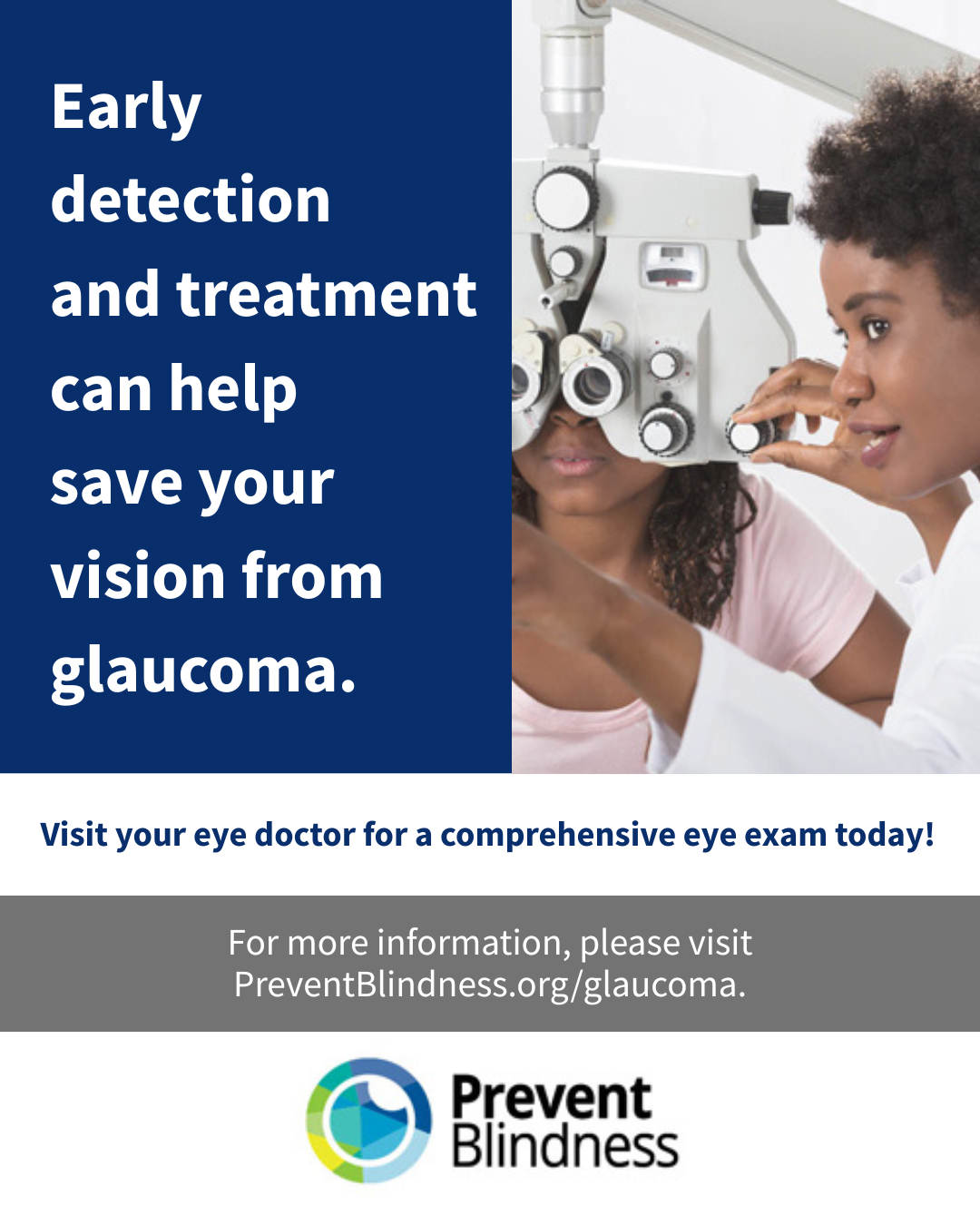
As part of January’s National Glaucoma Awareness Month, Prevent Blindness is providing patients, care partners, and allied health professionals with free educational resources on the condition.
According to the National Eye Institute, glaucoma is a group of eye diseases that can cause vision loss and blindness by damaging the optic nerve. Generally, symptoms begin slowly, usually starting with loss of peripheral (side) vision. It is sometimes referred to as the “Silent Thief of Sight” because people with glaucoma often do not notice vision loss in its early stages.
There are several types of glaucoma, with the two most common being Primary Open-Angle Glaucoma and Angle-Closure Glaucoma. Other important types include Normal-Tension Glaucoma and Secondary Glaucoma, caused by injury or other conditions like diabetes. While rare, glaucoma can also occur in children and includes Congenital Glaucoma in babies.
Common risk factors for glaucoma include:
• Age: 60 years or older (over age 40 for Black or African Americans)
• Race/Ethnicity: African American, Hispanic, Asian, or of Native American descent
• Family History: Parent, brother, sister, or anyone related by blood with glaucoma
• Medical History: History of high pressure in your eyes, previous eye injury, long term steroid use, head trauma, or nearsightedness
• Diabetes: Adults with diabetes are twice as likely to develop glaucoma. The risk increases with the amount of time someone has had diabetes.
“There is currently no cure for glaucoma. However, as with many eye diseases and conditions, early detection and treatment can slow significant vision loss,” said Jeff Todd, president and CEO of Prevent Blindness. “That’s why access to affordable quality eyecare is essential for everyone.”
Prevent Blindness offers a vast collection of free expert-approved resources including downloadable fact sheets, a listing of glaucoma financial assistance resources, shareable social media graphics, and a dedicated webpage.
Prevent Blindness and Responsum Health invite the public to join “The Glaucoma Community,” a free platform that provides educational glaucoma content, a personalized newsfeed, the moderated “Community Chat,” and a dedicated Facebook group. The Community is offered in multiple languages and is available via a web browser or through a free mobile app for Apple or Android users.
On January 20, at 3 p.m. ET, Prevent Blindness will host the free webinar, “Critical Conversations About Glaucoma.” This discussion is thoughtfully designed for people living with glaucoma, their care partners, and family members, and offers practical guidance, reassurance, and support.
Topics include:
• understanding glaucoma from the start,
• how to describe vision changes,
• proper use of glaucoma eye drops,
• managing the emotional impact of a diagnosis,
• talking with family about hereditary risk and eye exams.
The “Critical Conversations About Glaucoma” webinar will be moderated by Hillary A. Golden, Founder of Glaucoma Coach, and Prevent Blindness ASPECT Patient Engagement Program graduate. Speakers will include Karen Allison MD, MBA, FACS, Associate Professor of Clinical Ophthalmology, Flaum Eye Institute, University of Rochester Medical Center, and Prevent Blindness Board of Directors member, and Pathik P. Amin, OD, FAAO, Visiting Associate Professor of Ophthalmology, Glaucoma Service, Illinois Eye and Ear Infirmary, University of Illinois at Chicago. Register at PreventBlindness.org/glaucoma-webinar.
Also new this year, as part of the Prevent Blindness ASPECT Patient Engagement Program Member Spotlight Series, graduate Angeline H. shares her experience with glaucoma, including her diagnosis, and the importance of timely resources in coping and adjusting in “Glaucoma: Angeline’s Story.”
Additional videos in the Prevent Blindness Focus on Eye Health Series include:
For more information and materials on glaucoma, visit PreventBlindness.org/glaucoma. For information on glaucoma financial assistance programs in English and Spanish, please visit https://preventblindness.org/glaucoma-help.
Prevent Blindness is declaring February as Age-related Macular Degeneration (AMD) and Low Vision Month in an effort to provide education and various expert-approved resources to the public and professionals. This year’s AMD and Low Vision Month is generously supported by Gold Sponsor EyePoint, Inc.
According to Johns Hopkins Medicine, AMD is the most common cause of severe loss of eyesight among people 50 and older. And, about 4 million Americans live with low vision, which is defined as chronic visual impairment that cannot be corrected with glasses, contact lenses or medical treatments.
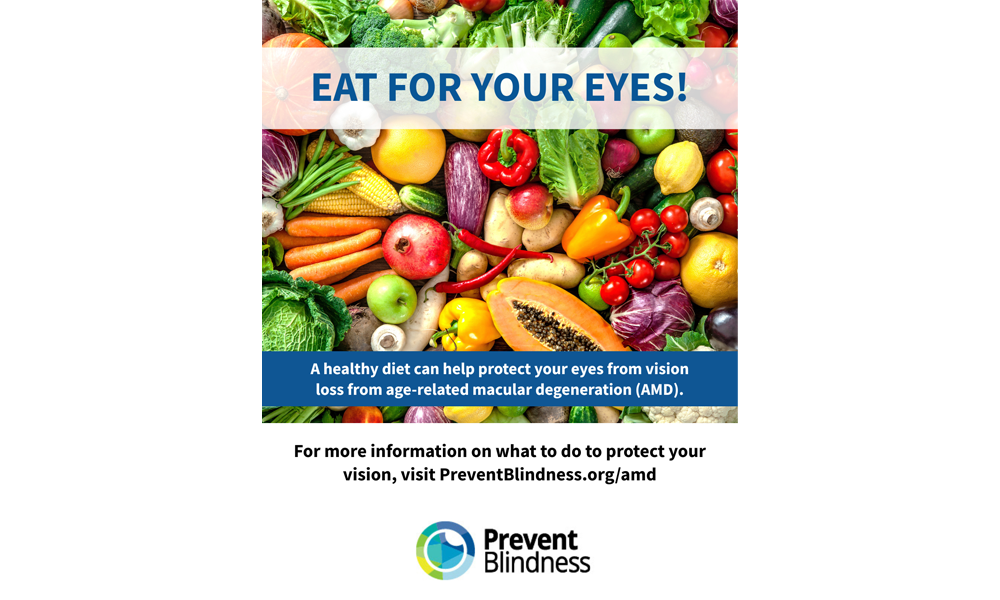
AMD affects the central part of the retina called the “macula.” When AMD damages the macula, the center part of a person’s vision may become blurred or wavy, and a blind spot may develop. Early detection and treatment of AMD is key to helping to prevent significant vision loss.
Two types of AMD include:
“As our population ages, the number of individuals impacted by AMD continues to grow. Many will face difficulties doing the things we sometimes take for granted, such as reading, seeing faces, and driving,” said Jeff Todd, president and CEO of Prevent Blindness. “Our robust collection of resources on AMD and low vision are intentionally created to help minimize vision loss and maintain independence for those impacted by AMD while providing effective tools to the public and providers on ways to save sight.”
As part of AMD and Low Vision Month, Prevent Blindness offers the free AMD GuideMe app. This resource provides a customized overview of AMD along with a tailored resource list and suggested steps to help save sight from the eye disease specific to the individual using the GuideMe app. Prevent Blindness offers additional educational resources including fact sheets and shareable social media graphics in English and Spanish, and dedicated webpages.
New this year, as part of the Prevent Blindness ASPECT Patient Engagement Program Member Spotlight Series, graduate Laurie S., shares her experience with AMD, including her family history with the eye disease, how it impacts her daily activities including the ability to read music, and the importance of support groups “Age-related Macular Degeneration: Laurie’s Story.”
Videos in the Prevent Blindness Focus on Eye Health Series include:
The Prevent Blindness “Living Well With Low Vision” program provides useful information to those with low vision, their care partners and healthcare professionals. Content includes self-help guides, resources for vision loss and mental wellness, information on clinical trials, and much more. Living Well With Low Vision is supported by grants from Amgen and Genentech.
For more information on AMD, please visit PreventBlindness.org/amd. For information on geographic atrophy, please visit PreventBlindness.org/geographic-atrophy.
And, for more information on Living Well With Low Vision, or other general eye health information, please visit lowvision.PreventBlindness.org.
For a listing of organizations and services that provide financial assistance for vision care in English or Spanish, please visit https://preventblindness.org/vision-care-financial-assistance-information.