




Join the Leading Global Eye Health Alliance.
Membership-
Choose an alternate language here
- Membership
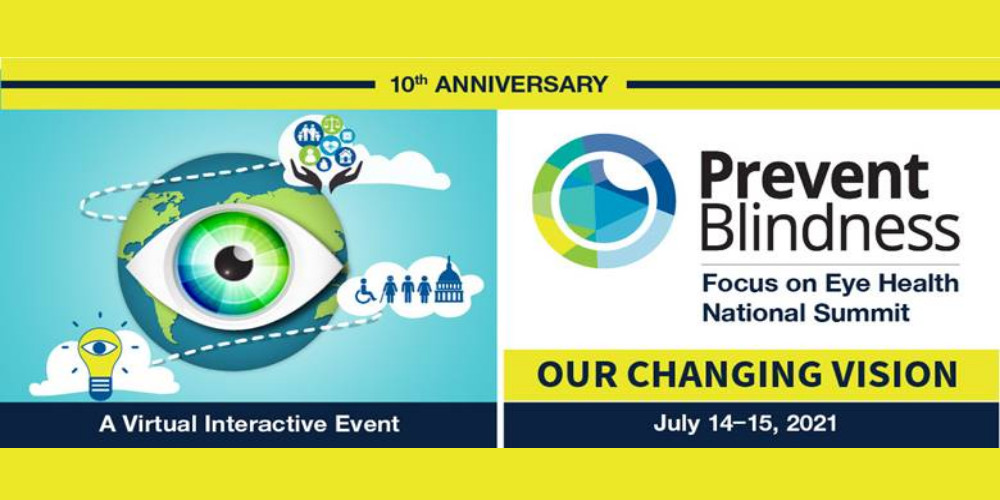
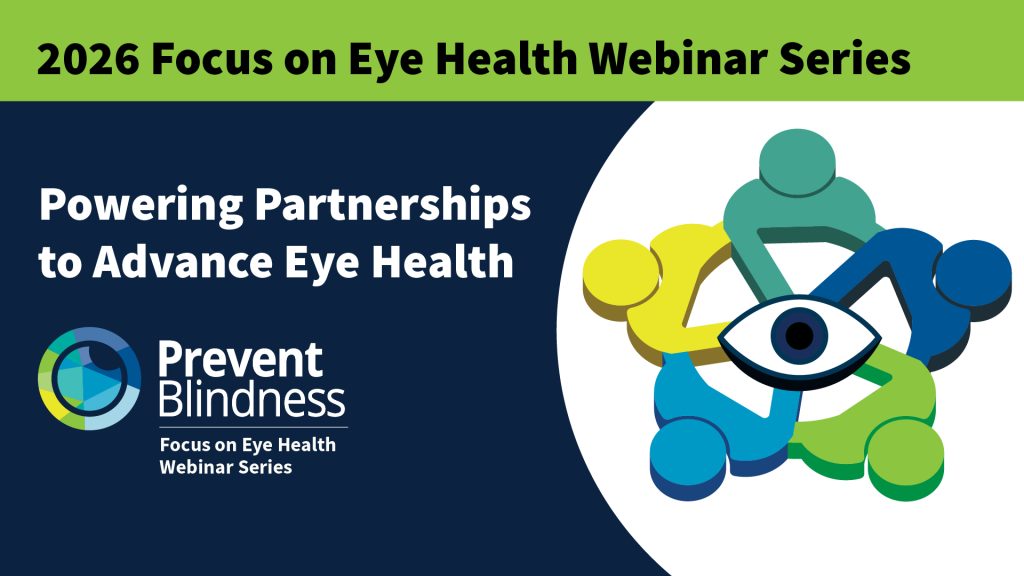
On July 14-15, 2021, Prevent Blindness will host the 10th annual Focus on Eye Health National Summit as a virtual interactive event. (Due to the current COVID-19 health crisis, the 2021 event will be held as an online event only.) This FREE event will include multiple opportunities for participant engagement, including moderated discussions on key topics, chats with presenters, an exhibit hall with live exhibitor chat and video conversation, and more.
The Focus on Eye Health National Summit is a key venue to elevate the national dialogue among diverse stakeholder groups around vision and significant population health issues such as surveillance, equity, prevention messaging, service integration, program development, and dissemination of best practices. The Summit allows participants to develop new collaborations, integrate new vision health messages and procedures into their outreach, and improve lines of communication with internal and external partners.
An exciting Summit agenda has been planned for the two-day event, and will include a variety of presentations related to this year’s theme, “Our Changing Vision.” The agenda will celebrate the key vision advancements that have occurred during the 10 years the summit has convened, and look ahead to leading advancements, policies, and social issues that will shape how we approach eye health for the coming decade. The agenda will recognize the importance of research expansion, shifting political leadership, and the elevation of the patient at the center of care decisions.
The agenda includes the following keynote presentations:
Opening Keynote Presentation:
Michael F. Chiang, MD, Director, National Eye Institute
Keynote Presentation: Adversity is My Superpower
Amy Dixon, Paralympic Athlete & President, Glaucoma Eyes International
Keynote Presentation: The Role of Public Health in Advancing Eye Health
Ross C. Brownson, PhD, Lipstein Distinguished Professor of Public Health, Washington University in St. Louis
For details about the event and agenda, visit www.preventblindness.org/eyesummit.
The Focus on Eye Health National Summit welcomes a diverse range of participants, including patient advocates, vision researchers, clinicians, foundations, community-based and advocacy organizations, national vision and eye health organizations, vision companies, government agencies, legislative staff, and more.
Registration is free. Register today to attend the virtual event: www.preventblindness.org/eyesummit.
Prevent Blindness is declaring February as Age-related Macular Degeneration (AMD) and Low Vision Month in an effort to provide education and various expert-approved resources to the public and professionals. This year’s AMD and Low Vision Month is generously supported by Gold Sponsor EyePoint, Inc.
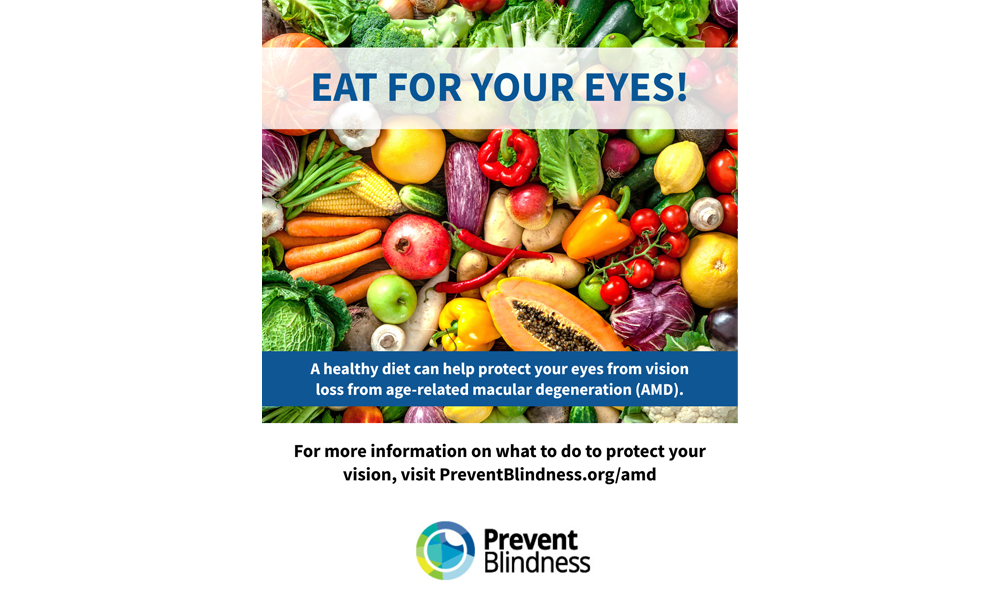
According to Johns Hopkins Medicine, AMD is the most common cause of severe loss of eyesight among people 50 and older. And, about 4 million Americans live with low vision, which is defined as chronic visual impairment that cannot be corrected with glasses, contact lenses or medical treatments.
AMD affects the central part of the retina called the “macula.” When AMD damages the macula, the center part of a person’s vision may become blurred or wavy, and a blind spot may develop. Early detection and treatment of AMD is key to helping to prevent significant vision loss.
Two types of AMD include:
“As our population ages, the number of individuals impacted by AMD continues to grow. Many will face difficulties doing the things we sometimes take for granted, such as reading, seeing faces, and driving,” said Jeff Todd, president and CEO of Prevent Blindness. “Our robust collection of resources on AMD and low vision are intentionally created to help minimize vision loss and maintain independence for those impacted by AMD while providing effective tools to the public and providers on ways to save sight.”
As part of AMD and Low Vision Month, Prevent Blindness offers the free AMD GuideMe app. This resource provides a customized overview of AMD along with a tailored resource list and suggested steps to help save sight from the eye disease specific to the individual using the GuideMe app. Prevent Blindness offers additional educational resources including fact sheets and shareable social media graphics in English and Spanish, and dedicated webpages.
New this year, as part of the Prevent Blindness ASPECT Patient Engagement Program Member Spotlight Series, graduate Laurie S., shares her experience with AMD, including her family history with the eye disease, how it impacts her daily activities including the ability to read music, and the importance of support groups “Age-related Macular Degeneration: Laurie’s Story.”
Videos in the Prevent Blindness Focus on Eye Health Series include:
The Prevent Blindness “Living Well With Low Vision” program provides useful information to those with low vision, their care partners and healthcare professionals. Content includes self-help guides, resources for vision loss and mental wellness, information on clinical trials, and much more. Living Well With Low Vision is supported by grants from Amgen and Genentech.
For more information on AMD, please visit PreventBlindness.org/amd. For information on geographic atrophy, please visit PreventBlindness.org/geographic-atrophy.
And, for more information on Living Well With Low Vision, or other general eye health information, please visit lowvision.PreventBlindness.org.
For a listing of organizations and services that provide financial assistance for vision care in English or Spanish, please visit https://preventblindness.org/vision-care-financial-assistance-information.