


Join the Leading Global Eye Health Alliance.
Membership-
Choose an alternate language here
- Membership

The Jerome Jacobson Global Program continues to strengthen international partnerships that expand access to high-quality eye care, support training for the next generation of ophthalmologists, and build long-term research collaborations around the world.
This document is a practical guidance and advocacy tool for advancing integrated action on climate and eye health, ground in an intersectional gender equity approach.
This toolkit is designed to allow eye health programmes and facilities to assess their vulnerability to climate change.
This is a case for action on rare eye diseases designed to inform and mobilise health advocates and policy makers to prioritise rare eye diseases in the health systems.
In our new report for World Sight Day, co-led by Seva Foundation, we make a first attempt to estimate the global loss of learning from uncorrected refractive error in schools.
The Competency-based refractive error teams (CRET) tool, developed by the World Health Organization (WHO), is a practical resource designed to support the delivery of high-quality, team-based refractive error services.
This handbook provides practical guidance to support the establishment of sensory screening programmes for school-age children.
This report outlines how an ageing population, rising diabetes rates, and low awareness of retinal conditions in Asia Pacific are reshaping vision care, highlighting new opportunities to improve care through existing systems.
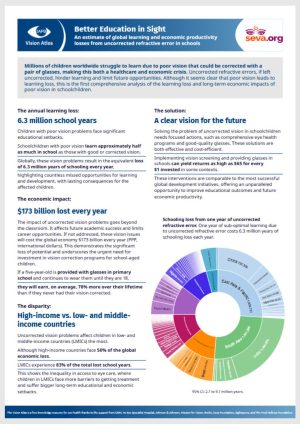
This summary of Better Education in Sight provides an estimate of global learning and economic productivity losses from uncorrected refractive error in schools.
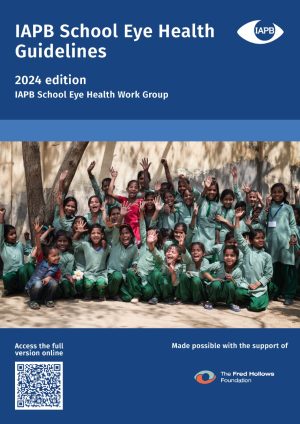
The IAPB School Eye Health Workgroup has released these guidelines to help deliver standardised comprehensive eye health services to more than 700 million children attending schools around the world.
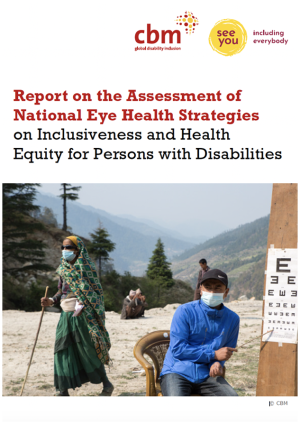
Inclusiveness and Health Equity for Persons with Disabilities
The WHO Vision and eye screening implementation handbook (VESIH) offers a step-by-step guidance for conducting vision and eye screenings in community and primary care settings.