


Join the Leading Global Eye Health Alliance.
Membership-
Choose an alternate language here
- Membership
Algeria has been validated by the World Health Organization (WHO) as having eliminated trachoma as a public health problem, becoming the 29th country globally and the 10th in the WHO African Region to achieve this milestone.
Trachoma, the world’s leading infectious cause of blindness, was hyperendemic in Algeria throughout much of the 20th century. Data from 1912 to 1955 indicated a prevalence of trachomatous inflammation—follicular (TF) exceeding 90% in all surveyed areas. Consequently, trachoma was designated a public health priority, with screening and treatment campaigns initiated from the 1950s onward.
Progress toward elimination accelerated following national independence in 1962, which led to the establishment of a national health system responsible for Algeria’s trachoma program. Baseline and impact surveys were conducted to identify populations requiring intervention and assess program effectiveness.
In October 2009, Algeria demonstrated its commitment to trachoma by endorsing Vision 2020: The Right to Sight. The initiative, which was coordinated by WHO, aimed to eliminate the primary causes of blindness, including trachoma, by 2020. To support this goal, the Ministry of Health developed a strategic three-year plan (2013–2015) focused on eliminating trachoma in remaining endemic areas through the scale-up of the WHO-endorsed SAFE strategy (Surgery, Antibiotics, Facial cleanliness, and Environmental improvement).
To oversee implementation, a national committee of experts was convened, comprising ophthalmologists, epidemiologists and infectious disease specialists. Its mandate was to coordinate the national campaign, establish a roadmap aligned with WHO strategy, and evaluate the epidemiological situation across 12 southern districts by updating disease mapping and informing programme delivery.
Between 2013 and 2016, screenings of children aged 5 to 9 years old identified trachoma prevalence of approximately 15% in Adrar and 10% in Béchar, leading to the distribution of azithromycin eye drops for detected cases. By 2018, surveillance of 845,327 children demonstrated a decline in TF prevalence to below 1%; however, three districts remained above the elimination threshold for trachomatous trichiasis (TT), the blinding stage of the disease.
In response, Algeria implemented comprehensive surgical management for TT in Adrar/Timimoun, Touggourt, and El M’ghaier in 2025. The campaign included extensive door-to-door screening, achieving 96% coverage of the target population and reducing TT prevalence to below 0.1%.
In addition to TT management and antibiotic distribution, progress toward elimination was reinforced by substantial improvements in water, sanitation, and hygiene (WASH) infrastructure. In endemic populations, data from the 2022 survey on water sources for face washing indicated that 91% of households had access to running water at home, reflecting widespread availability of improved water sources that support good facial hygiene, a key component of trachoma prevention.
The elimination of trachoma as a public health problem in Algeria highlights what can be achieved when governments build health systems that leave no one behind. Since establishing its public health system, Algeria has taken consistent, deliberate steps to sustainably reduce the burden of trachoma, while advancing progress toward broader United Nations Sustainable Development Goals—including universal health coverage and access to clean water and sanitation for all.— Michaela Kelly, Chair of the International Coalition for Trachoma Control
Trachoma is targeted for global elimination as a public health problem under Sustainable Development Goal target 3.3 and the neglected tropical diseases (NTD) road map 2021–2030, published by WHO and endorsed by World Health Assembly Member States in 2020. As of November 2025, 97.1 million people are known to require interventions for trachoma globally, representing a 94% reduction from the 1.5 billion people estimated to live in trachoma-endemic areas in 2002.
Other countries validated by WHO as having eliminated trachoma as a public health problem are Benin, Burundi, Cambodia, China, Egypt, Fiji, The Gambia, Ghana, India, the Islamic Republic of Iran, Iraq, the Lao People’s Democratic Republic, Libya, Malawi, Mali, Mauritania, Mexico, Morocco, Myanmar, Nepal, Oman, Pakistan, Papua New Guinea, Saudi Arabia, Senegal, Togo, Vanuatu, and Viet Nam.
Trachoma elimination in Algeria was supported by Tropical Data.
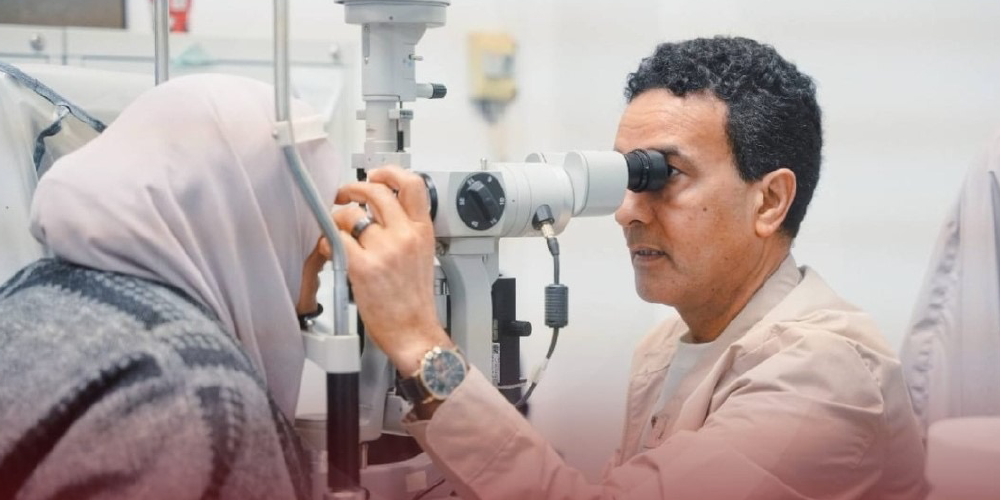
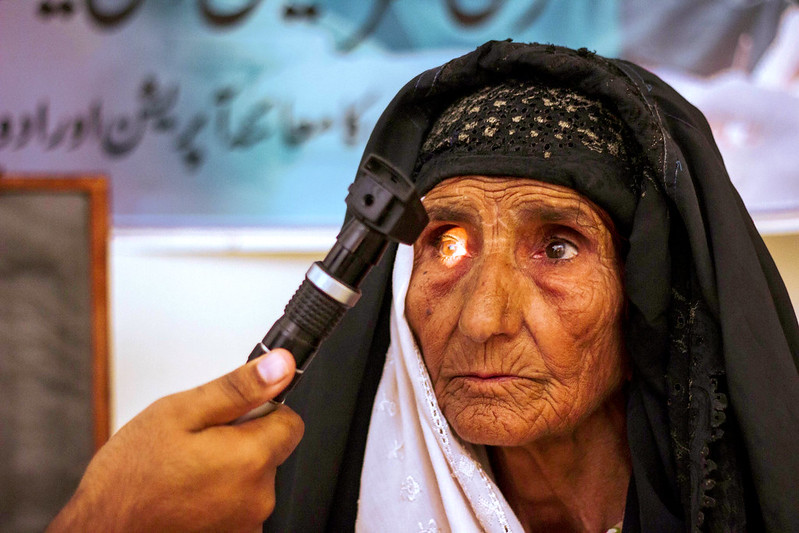
Photo credit: WHO/Algeria