



Join the Leading Global Eye Health Alliance.
Membership-
Choose an alternate language here
- Membership
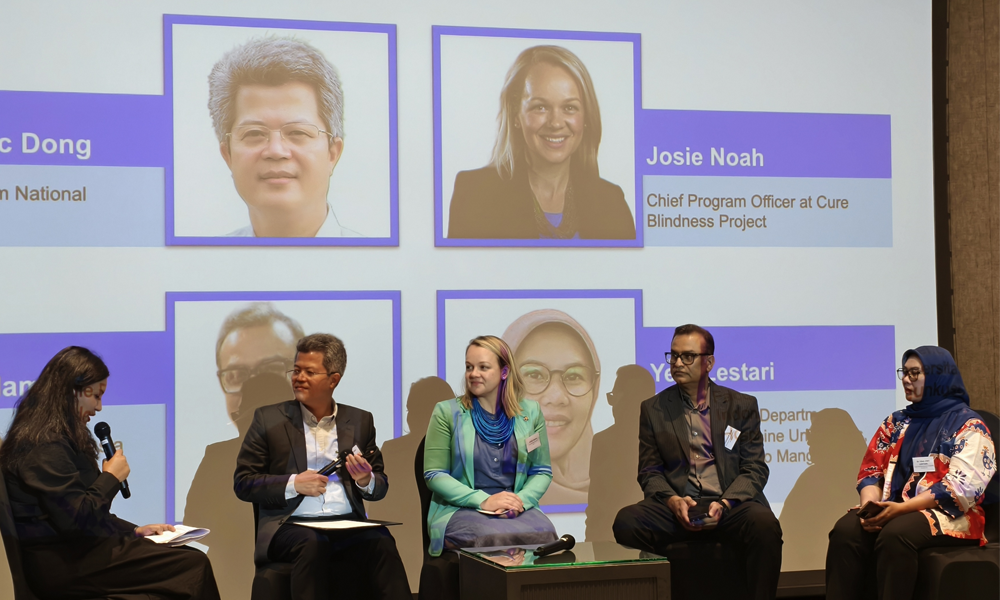
At the Asia-Pacific Eye Health Leadership & Global Summit Commitments Dialogue in Bangkok held from 31 Mar to 2 Apr, an important shift in thinking began to take hold. Cataract is no longer being seen simply as a surgical issue, it is increasingly being understood as one of the most practical and powerful entry points for strengthening health systems.
Cataract remains the leading cause of blindness globally, despite the fact that we already have a safe, effective, and highly cost-effective solution. The challenge today is not about whether cataract can be treated it is about whether systems are able to deliver that treatment consistently, equitably, and with quality. In 2021, countries agreed to increase effective cataract surgical coverage by 30 percentage point by 2030, a target that requires more than scaling up services; it demands system-wide improvement.
This formed the backdrop of a timely discussion, held alongside the introduction of new WHO guideline- Summary of recommendations for quality of care in cataract surgery management. The summary of recommendations take a whole-of-system view covering pre-operative assessment, intra-operative quality, and post-operative outcomes offering countries a practical framework to improve both access and quality across the entire patient journey.
As Dr Tashi, WHO SEARO reflected during the session, “Cataract gives us one of the clearest opportunities to connect evidence, delivery, and political commitment. If we get this right, we are not only restoring sight, we are showing how systems can work better for people.”
Dr Aziz shared country experience from Malaysia highlighting that progress is not just about expanding services, but about understanding and responding to real-world behaviours. As he noted, “a one-size-fits-all approach is no longer viable,” underscoring that even with strong national systems, uptake and outcomes vary across regions and communities, requiring tailored, data-driven approaches.
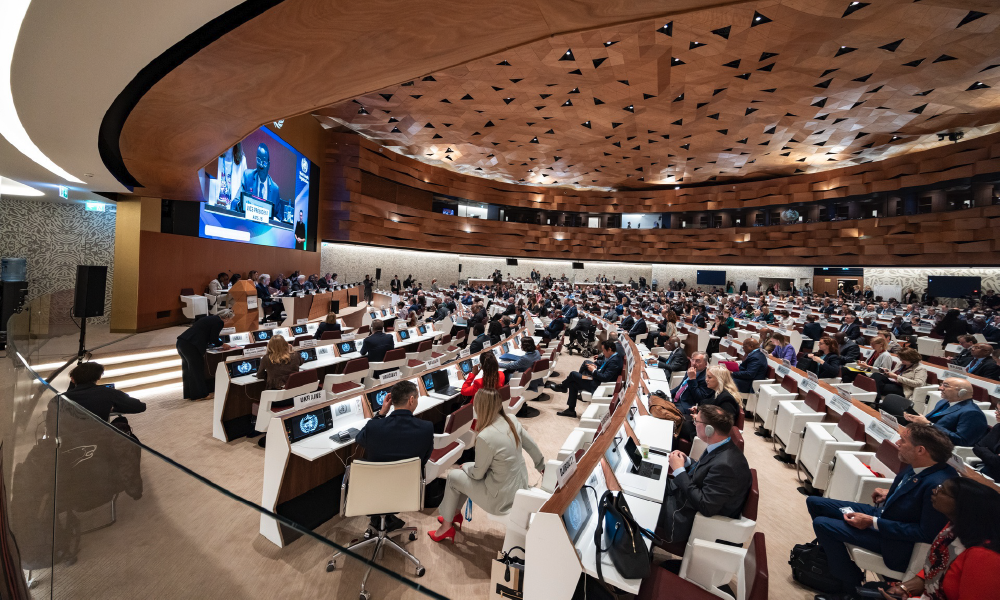
The panel discussion featuring Dr. Pham Ngoc Dong, Josie Noah, Musabbir Alam, and Dr Yeni Lestari focused on what would make cataract commitments truly meaningful at the Global Summit. The conversation moved beyond ambition to practicality: what can countries and partners commit that will actually overcome existing barriers. Cataract emerged clearly as both an entry point for system improvement and a political lever for change.
Panelists reflections on what breakthrough the Summit could catalyse included improving effective coverage by addressing bottlenecks in workforce, financing, and service delivery. All panelists shared strong alignment on the need to shift toward quality-centered approaches, while recognizing that recommendation requires an integrated approach to service delivery: integrating cataract, refractive error and sub-specialty care will drive better outcomes; ensuring eye care is part of universal health coverage; and embedding eye care in primary health care and strengthening referral pathways will drive demand.
In closing, one message stood out unequivocally: quality is non-negotiable. Without quality, we risk undermining the integrity of the entire system, turning what is preventable and treatable into an irreversible blindness. Cataract, therefore, is not just a clinical priority; it is a powerful mechanism to drive accountability, integration, and performance across the health system. Well-designed cataract commitments can go beyond service delivery, they can unlock structural barriers, align policy and financing, and demonstrate what real system transformation looks like.