


Join the Leading Global Eye Health Alliance.
Membership-
Choose an alternate language here
- Membership
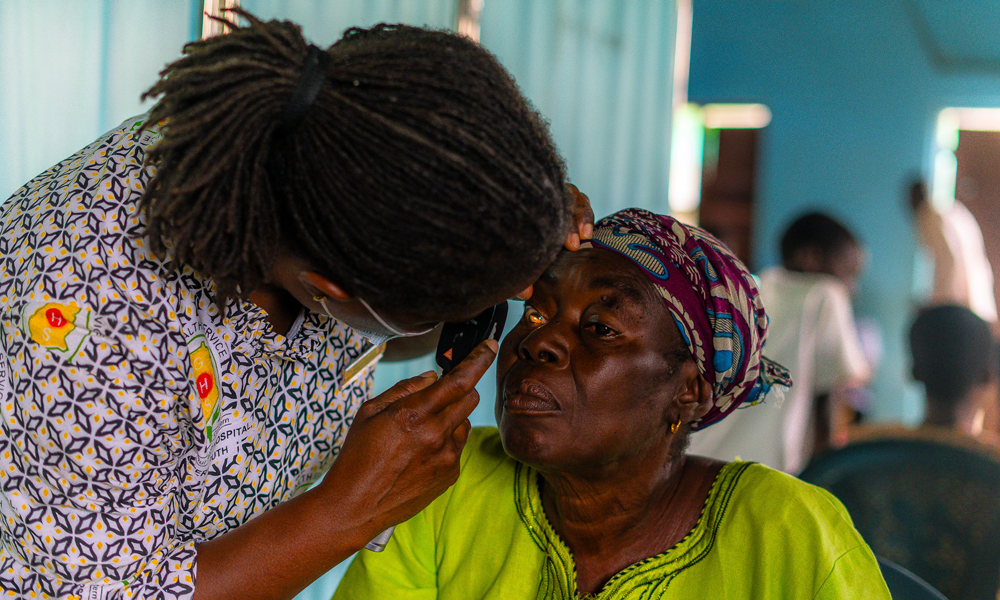
On World Health Day 2026, the global community is called to stand with science: to back the evidence, the collaboration and the innovation that protect people’s health.
Diabetes is now a global epidemic. Over 460 million adults are living with the condition today, projected to rise to 700 million by 2045. Around one in three will develop some form of diabetic retinopathy, and a significant proportion will lose vision unless detected and treated in time. Yet vision loss from diabetic retinopathy (DR) is, in most cases, preventable. The question is not whether we know what to do. It is whether we have the systems in place to do it.
Science has given us the know how
The last decade has cemented an evidence base that now shapes national clinical guidelines across the world and has transformed how we treat DR today. The Diabetic Retinopathy Study and Early Treatment Diabetic Retinopathy Study established laser photocoagulation as a sight-saving intervention. The DRCR.net Protocol T established anti-VEGF therapy as first-line treatment for diabetic macular oedema, and the CLARITY trial showed anti-VEGF to be a viable alternative to laser for proliferative disease. Imaging technology has advanced in parallel, with optical coherence tomography and ultra-widefield retinal imaging now central to diagnosis and monitoring. In 2018, the first autonomous artificial intelligence system for DR screening received regulatory approval, opening the door to detection without a specialist in the room. Multiple studies since demonstrating that AI grading of DR can match or exceed human performance.
But evidence and treatments alone do not save sight. Reducing vision loss depends on the screening programmes, referral pathways, trained workforces and policies that get proven interventions to the people who need them.
Early detection: finding people before they lose vision
Most people with early diabetic retinopathy have no symptoms. By the time vision is affected, damage has often already occurred. Screening is therefore the cornerstone of effective DR programmes and it must begin where people with diabetes actually live and seek care, not only where eye specialists are based.
Strong DR systems start with integration. When a person diagnosed with diabetes is automatically referred for retinal screening as part of routine care, outcomes change. Community health workers, primary care clinics, mobile units and task-shared models all have a role in making screening accessible, particularly in rural and underserved settings. But screening is only as good as the equipment and standards behind it — practical guidance such as the IAPB equipment specifications for fundus cameras used in DR screening helps programmes choose the right tools for their context.
This is also where AI is beginning to make a tangible difference: portable fundus cameras paired with validated algorithms can now bring expert-level screening to places that have never had an ophthalmologist within reach. The science is no longer the main constraint; the bottleneck is implementation.
Strong DR systems start with integration. When a person diagnosed with diabetes is automatically referred for retinal screening as part of routine diabetes care, outcomes change. Yet in many parts of the world, eye care and diabetes services still operate in parallel rather than together. Closing that gap is one of the most important steps any health system can take to prevent vision loss. The widespread availability of digital fundus cameras has been a gamechanger for integration of DR care, enabling task shifting so that trained non-specialist staff can capture retinal images in primary care, diabetes clinics and community settings far from any ophthalmologist. Practical guidance such as the IAPB equipment specifications for fundus cameras used in DR screening helps programmes choose the right tools for their context. Layered onto this, AI has enormous potential to expand access still further: portable fundus cameras paired with validated algorithms can now bring expert-level screening to places that have never had an ophthalmologist within reach.
Effective Pathways: from detection to treatment
Screening without a clear pathway to quality treatment delivers no impact. Effective DR systems require functioning referral networks, trained ophthalmologists and retinal specialists, reliable supplies of anti-VEGF and laser equipment and, crucially, the data systems to track patients through their care journey. Too often, people identified as needing treatment are lost between the screening clinic and the hospital. Here too, AI-supported triage can help, by providing an immediate result to the patient and prioritising urgent cases ensuring the most vision-threatening cases are treated first.
Supportive Policy: making DR a national priority
None of this happens without leadership. Strong DR programmes need policy frameworks that recognise diabetic eye disease as a core component of both diabetes care and integrated people-centred eye care. They need financing models that make screening and treatment affordable, workforce strategies that train and retain skilled staff, and regulatory environments that allow new technologies, including AI, to be deployed safely and equitably. Universal health coverage must include eye care; and diabetes care, by definition, must include the eye. The recent IAPB/IDF policy brief on diabetic retinopathy sets out what this looks like in practice.
The strength of a mixed membership
What makes the IAPB Diabetic Retinopathy Member Engagement Group distinctive is the mix of people around the table: clinicians who treat patients every day, academics who generate the evidence, NGOs who deliver services in some of the most under-resourced settings in the world, and industry partners who develop the technologies that make modern DR care possible. This combination is our greatest strength. It allows us to produce science that directly informs practice and ensures that practice shapes the questions science asks.
Nowhere will this matter more than in the responsible implementation of AI. Realising its potential safely and equitably requires rigorous validation in real-world populations, thoughtful integration into clinical pathways, attention to data quality and bias, and ongoing dialogue between developers, users and regulators. No single sector can do this alone.
Standing with science, together
Diabetic retinopathy is one of the great solvable challenges of modern eye health. The science is clear, the tools exist, and the case for action has never been stronger. What we need now is the systems thinking and the political will to ensure that every person with diabetes, wherever they live, has access to the screening, treatment and follow-up that will protect their sight.
This World Health Day, let’s stand with science by investing in the systems that turn evidence into impact. The knowledge is in our hands; the action must follow.