


Join the Leading Global Eye Health Alliance.
Membership-
Choose an alternate language here
- Membership
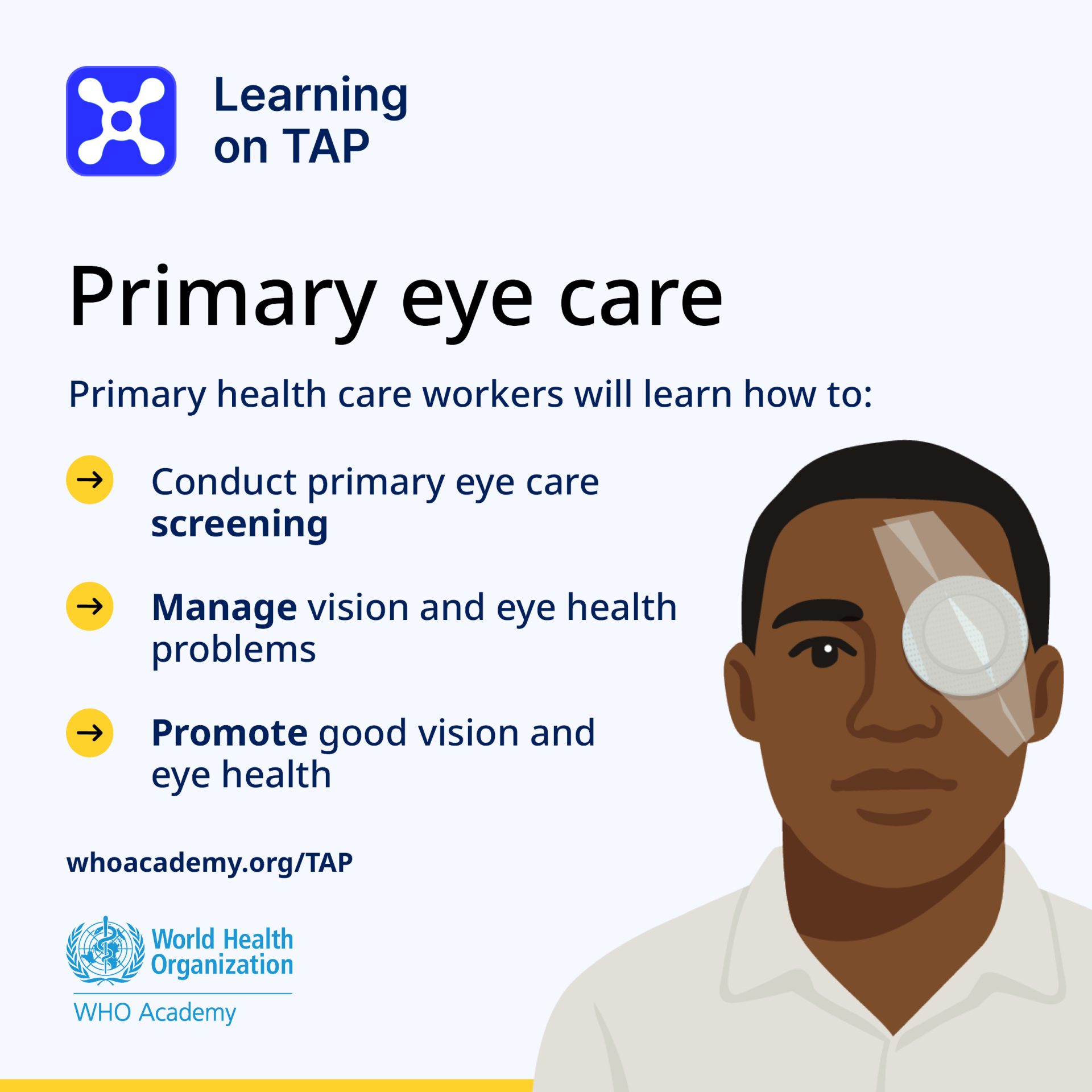
The World Health Organization has officially launched its new Learning on TAP platform available on the WHO Academy, marking an important step in how health workers everywhere can access high-quality digital learning. Alongside this global launch, WHO has released a new training resource for eye health: the Primary eye care course.
For many countries, primary health care workers are the first point of contact for people experiencing vision problems. Yet consistent training, practical tools and confidence in eye care tasks can vary widely. The new Primary eye care course is designed to help bridge this gap, offering a structured and accessible package that supports countries as they strengthen integrated people-centred eye care.
The course is built around the essential skills primary health care workers need to identify, manage and refer common eye conditions. It draws directly on WHO guidance, including the Vision and eye screening implementation handbook (Figure 1), and is designed for use across a wide range of settings, from rural clinics to busy urban facilities. Its target audience includes primary and community health workers who can integrate eye care into routine services, other service providers such as NGOs and civil society organisations that support referral pathways and quality checks, and education or training institutions looking to embed primary eye care into existing curricula.
Figure 1: WHO’s Vision and eye screening implementation handbook
The Primary eye care course (Figure 2) is delivered as a blended package, combining five hours of open-access online learning with in-person skills workshops and mentored practice. It includes three structured modules:
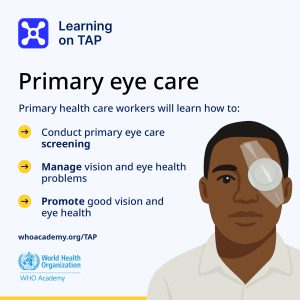
Figure 2: Primary Eye Care course on the Learning on TAP platform
Supporting resources include quizzes, screening forms, quick-reference guides and a printable poster that can be used in clinics and community settings.
Learning on TAP strengthens the impact of these resources by offering a platform that is flexible, practical and accessible to busy health workers. The self-paced online modules can be completed around service demands, while the in-person skills practice and mentorship help translate knowledge into confident on-the-job performance. This approach is particularly valuable in low-resource settings, and it allows ministries and training institutions to integrate the course into existing programmes without major adjustments.
The development of this course also reflects the increasing global demand for competency-based training that can be adapted to local needs. Many countries are working to integrate essential eye care into primary health care, yet face challenges such as limited specialist supervision, variable training quality and competing service priorities. By providing a structured curriculum with clear learning outcomes, WHO aims to give frontline workers the confidence and skills they need to manage common eye conditions safely and effectively.
The Primary eye care course sits alongside other new resources released on the Learning on TAP platform, including the Vision and hearing screening for school age children course, which was based in the accompanying Vision and hearing screening for school-aged children: implementation handbook. This practical training is designed for primary health care workers, teachers and social workers, and focuses on how to conduct sensory screening for children. It also provides a checklist of materials needed for eye and ear screening, making it a helpful companion resource for countries strengthening early detection efforts.
The release of the Primary eye care course is part of a broader commitment to strengthening the global eye health workforce and supports ongoing efforts across many regions. Together with the Vision and hearing screening course, it reflects a growing shift toward building multisectoral skills for early detection and integrated care. As more countries prioritise school health and community-based services, having a single platform that brings together high-quality training on vision, hearing and other essential services will enable more coordinated delivery. Strengthening skills at primary level ultimately brings us closer to ensuring that people everywhere receive the eye care they need, when and where they need it.
For more information, please visit the WHO’s Vision and Eye Care Programme’s webpage.