


Join the Leading Global Eye Health Alliance.
Membership-
Choose an alternate language here
- Membership

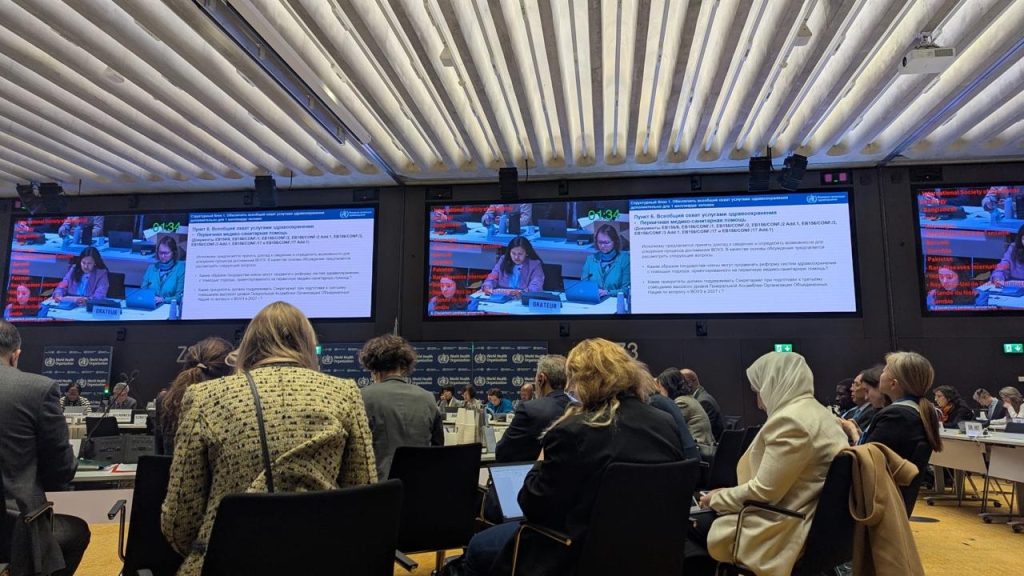
IAPB’s Junu Shrestha speaks to Monika Schindler-Schnitzl, Founder of Self-Help Graves’ Disease/Endocrine Orbitopathy and a huge advocate for Rare Diseases. Monika’s lived experience of Thyroid Eye Disease was featured in the Seeing the Unseen Rare Diseases Policy Brief, published in November 2025 and against the backdrop of rare disease resolution at the World Health Assembly in May 2025.
The conversation explores why personal stories are essential to effective policy, what people-centred eye care truly means in practice, and how health systems can better respond to the needs of those living with rare eye conditions.
Why do you think it’s important for personal stories to sit alongside policy recommendations?
Personal stories touch where numbers and strategy papers end. They make it clear that behind every political decision stands a real person with fears, hopes, and an everyday life full of challenges. Especially in the case of rare diseases, which often remain invisible, personal experiences give those affected a voice and dignity. They create closeness, promote understanding, and remind decision-makers that good policy must not only be efficient but also humane. It is only through the interplay of personal experiences and political recommendations that what is at stake is revealed – and why action is so urgently necessary.
The World Health Assembly recently recognized rare diseases as a priority. From your perspective, why is this recognition important for people living with rare eye conditions?
For people with rare eye diseases, this recognition offers hope for the protection of their sight. Vision loss threatens independence, participation, and quality of life – the prioritization makes it clear that these fears are taken seriously and improves the path to earlier diagnosis, targeted research, and better care.
The brief calls for more people-centered approaches to eye care. In simple terms, what does “better care” mean for someone living with a rare eye disease?
“Better care” for someone living with a rare eye disease means receiving a timely and accurate diagnosis, access to appropriate treatment and support, and not having to navigate the health system alone. It also means that healthcare providers listen to patients, understand their individual needs, and actively involve them in decisions about their care.
Importantly, better care also means addressing stigma and social barriers that people with rare eye diseases often face. Vision loss or visible eye conditions can sometimes lead to misunderstanding, discrimination, or exclusion, which can affect a person’s confidence, education, employment, and participation in society.
In simple terms, better care is people-centred care, care that supports not only the medical needs of the individual but also their dignity, inclusion, and quality of life. It is about putting the person at the centre, not just the disease.
Access and affordability remain major challenges. What do you think health systems need to do to ensure people with rare eye diseases are not left behind?
Healthcare systems must ensure that people with rare eye diseases receive timely access to specialized physicians, diagnostics, and therapies. Furthermore, costs should be fairly covered to ensure treatments remain affordable. Important steps also include education, research, and the involvement of affected individuals in decision-making – so that no one is left behind, and the risk of vision loss can be reduced, thus protecting quality of life.
What is one message you hope policymakers take away after reading this brief?
I hope policymakers recognise that every decision they make to improve access to care has a real impact on people’s everyday lives. This brief is a reminder that rare eye diseases must be explicitly included within broader rare disease policies and services, so that people are not at risk of losing vision or being lost within fragmented referral pathways.
While each condition may be rare, the number of people living with rare diseases collectively is significant, and many cases of sight loss could be prevented if timely diagnosis, treatment, and care are accessible. Decisions regarding research, diagnostics, and treatment directly affect people’s quality of life, independence, and ability to participate fully in society.
My hope is that policymakers act to prioritise rare diseases within health systems and ensure equitable access to care, support, and protection of eyesight for those affected.