The year 2025 was marked by disruption, uncertainty, and significant institutional challenges, while 2026 presents an important moment of reflection and opportunity. WHO is in the midst of one of its most significant periods of institutional transition in its recent history. A decade of overlapping global health crises, health emergencies and increasing humanitarian demands has exposed the fragility of WHO’s financing model and placed sustained pressure on its workforce and delivery systems. The realignment process now underway is not simply a budget exercise, but an attempt to reshape the organization so it can remain financially sustainable while continuing to deliver on its global mandate.
Despite an important political achievement, Member States agreeing to a 20% increase in assessed contributions WHO still projects a funding gap of around US$ 1.05 billion for the 2026–2027 biennium. Around three-quarters of the base programme budget is currently secured, but the remaining financing depends heavily on pipeline agreements and voluntary contributions. In 2025, WHO implemented cost-containment measures that generated approximately US$ 187 million in savings, largely through cuts in travel and procurement, alongside reprogramming of activities to protect salary lines and temporary use of Programme Support Cost funds. These decisions helped stabilize immediate risks but also underscored the structural vulnerability of a system still reliant on unpredictable external funding.
The financial reality has accelerated one of the largest workforce restructurings in the organization’s history. By mid-2026, 2,371 positions are expected to be cut globally, with nearly half managed through non-invasive measures such as attrition and retirement. The steepest reductions are concentrated at WHO Headquarters, with the intention of preserving country-level delivery and protecting core technical capacity. The restructuring is framed as organizational redesign rather than simple downsizing, a shift toward a leaner, more agile, and increasingly technology-enabled institution designed to work more closely with Member States while strengthening innovation and partnerships.
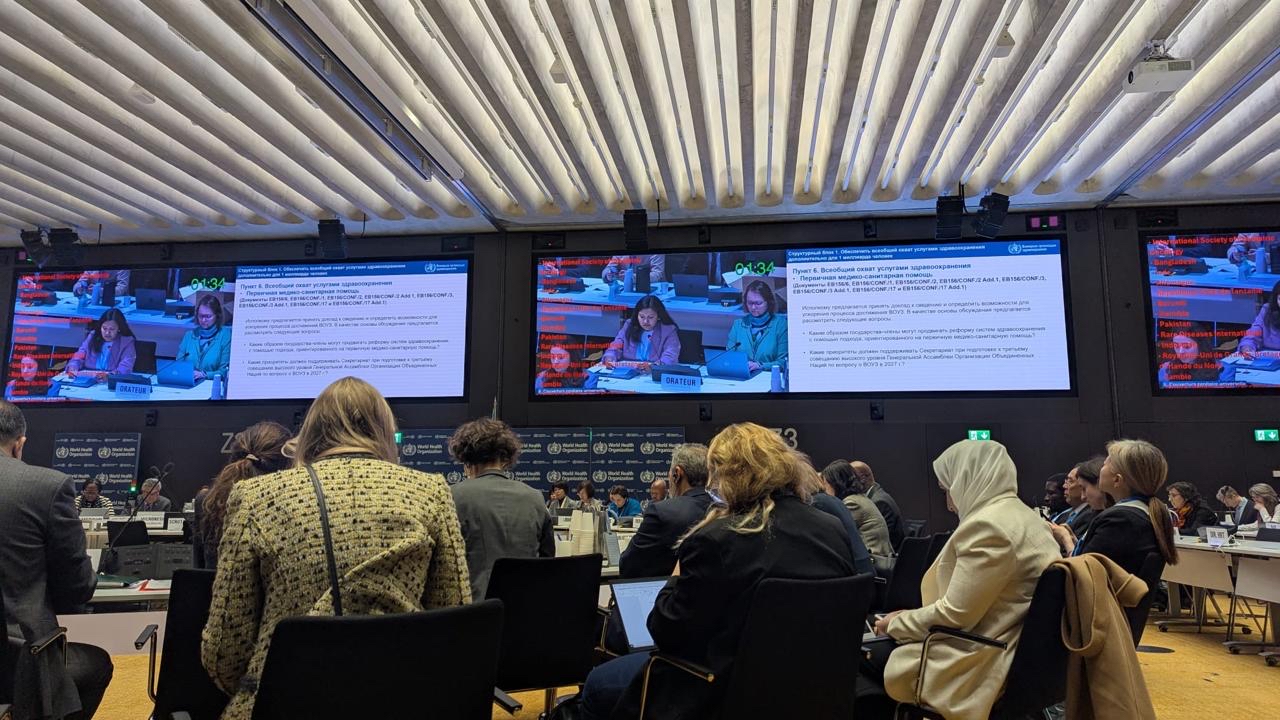
These institutional shifts provide important context for the policy direction, shaped in the 158 WHO Exectuive Board agenda, which meets in February 2026. The agenda reflects not only the thematic priorities of Member States, but also the kinds of programmes most likely to receive political attention and future investment. Several agenda that are particularly relevant and important to us are:
- The review of the Political Declaration on Non-Communicable Diseases comes at a time when the intersections between ageing, diabetes, hypertension, mental health and vision-related complications are receiving greater recognition in global health discussions. As countries move from political commitment to implementation, this creates an important opening for advocacy: meaningful NCD progress will require eye health to be integrated into prevention, treatment and healthy ageing strategies, rather than remaining on the margins of policy and delivery.
- Progress on the Neglected Tropical Diseases Roadmap 2021-2030 remains another major priority area for WHO in 2026- an agenda marked by both impressive achievemnts and need sustained momentum. Since 2023, 12 countries have been validated for eliminating trachoma as a public health problem, and those needing interventions have fallen from 285 million in 2010 to 113.8 million in 2024. While over 170 million people were treated annually for onchocerciasis (aka river blindness) in 2023–2024, the programmes now transition toward post-treatment surveillance. To reach 2030 targets, the focus must now shift to stronger surveillance, integrated data systems and sustained investment, which is an important moment for the eye health community to shape future collaboration, resourcing and accountability for trachoma elimination.
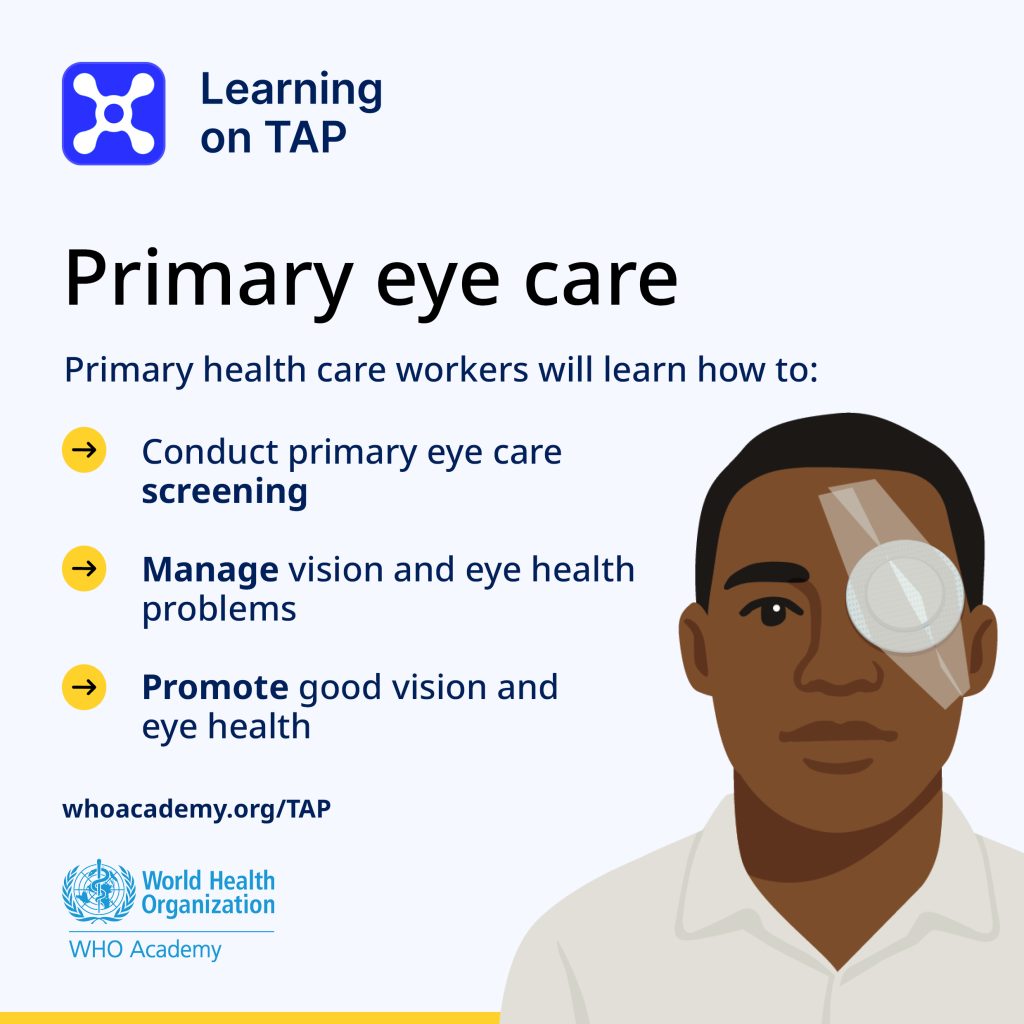
- Primary Health Care remains a central priority for WHO in 2026 as countries look ahead to the 2027 UN High-Level Meeting on Universal Health Coverage and reaffirm PHC as the most effective way to UHC. This creates an important opportunity to advance integration of eye health within PHC, positioning it as a core element of comprehensive primary care and ensuring it is reflected in upcoming UHC commitments.
- Another key strand of WHO’s work in 2026 relates to the 2030 Agenda for Sustainable Development and progress toward the Triple Billion targets. Ongoing reflections on the post-2030 landscape provide an important moment not only to track how health priorities are evolving, but also to identify opportunities to ensure that eye health is more visible within future global development frameworks.
- The year also sees continued momentum around the “Economics of health for all” agenda, with a draft strategy expected to shape how countries and partners integrate economic value, financing approaches and equity considerations into decision-making. This creates a useful space to draw on the investment case for eye health and to ensure that its social and economic benefits are reflected in wider policy discussions in 2026.
- Work to strengthen the evidence base for public health and social measures remains another strategic area, including research and population-level approaches that are highly relevant to emerging eye health challenges. This generates opportunities for stronger engagement with academic partners and for shaping future research asks through a public-health lens.
- WHO will also continue advancing implementation of the 2023 resolution on strengthening rehabilitation in health systems, an area where collaboration with partners and cross-sectoral organisations can help ensure that rehabilitation, including vision-related support needs, is better integrated within broader service delivery.
- In parallel, growing attention to data governance, digital health and artificial intelligence including new regulatory and standards-setting work anticipated in 2026 will be particularly important for us where digital tools and assistive technologies are rapidly evolving. Understanding how Member States shape these approaches will be crucial for future work on regulatory environments and access.
- Finally, WHO’s engagement in wider UN reform processes and the evolving global health architecture is expected to remain a prominent theme through 2026. These discussions will be important for understanding how global priorities are shifting and for positioning eye health within emerging coordination, financing and partnership spaces across the international system.
Taken together, 2026 represents a pivotal moment for WHO and its partners, a year that will demand more strategic engagement, clearer alignment with global priorities, and a stronger emphasis on evidence, value and collaboration in shaping the future of global health.
References:
1. WHO Member States Briefing Nov 2025, https://apps.who.int/gb/MSPI/pdf_files/2025/11/Item1_19-11.pdf
2. 158 Executive Board Main documents: https://apps.who.int/gb/e/e_eb158.html