




Join the Leading Global Eye Health Alliance.
Membership-
Choose an alternate language here
- Membership
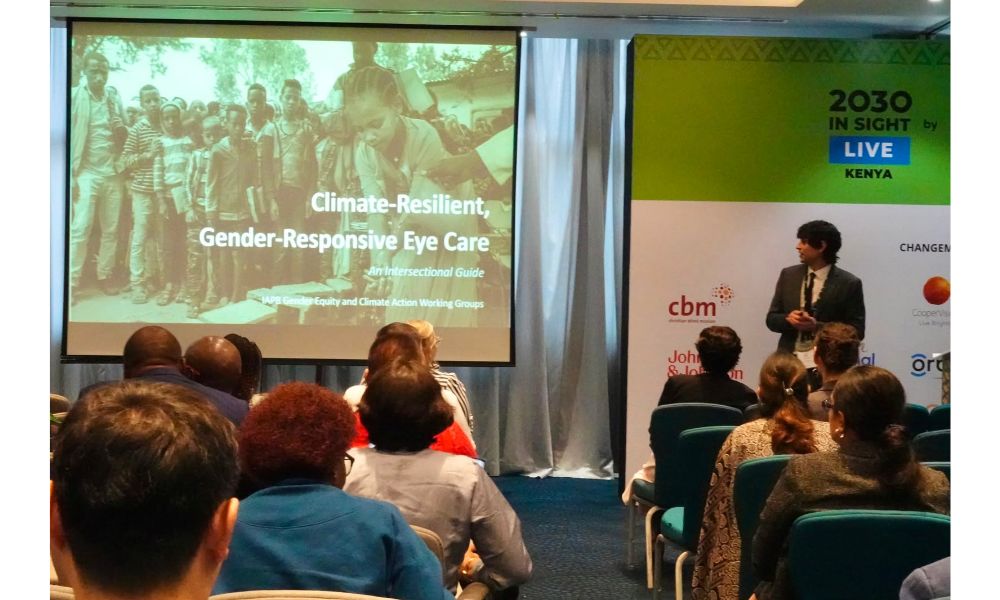
Today, on World Environment Day 2026, the International Agency for the Prevention of Blindness (IAPB) launches Climate Resilient, Gender Responsive Eye Care: An Intersectional Guide at IAPB Insight Live in Nairobi. The launch comes at a critical moment: climate change is already disrupting health systems, increasing risks to vision, and deepening the barriers that keep millions of people from accessing timely, affordable eye care.
From extreme heat, floods and air pollution to food insecurity, water scarcity and service disruption, the climate crisis already a present and growing challenge to eye health. Without deliberate action, it will continue to widen health inequities, hitting those who already face the greatest obstacles to care hardest, including women and girls, older people, people with disabilities, and communities affected by poverty or displacement.
Designed as a practical advocacy and planning tool, the guide sets out eight priority recommendations to help governments, planners and eye health actors respond now. It calls for eye health to be built into climate-sensitive health planning and disaster preparedness, for stronger primary and community eye care closer to where people live, and for inclusive outreach and telehealth that can protect continuity of care during disruptions while reducing travel burdens and emissions. It also highlights the importance of partnerships with women’s organisations and organisations of people with disabilities, inclusive data and decision-making, and climate-resilient facility design – because health systems will only be truly resilient if they are designed to reach those most at risk.
“Climate change is already affecting eye health, but those impacts aren’t shared equally. If we don’t plan to build inclusive, resilient eye health systems now, we risk undermining decades of progress in reducing avoidable vision loss,” said Ben Murphy, Technical Specialist – Local Advocacy, The Fred Hollows Foundation, and co-author of the guide.
“This guide helps the eye health sector plan and adapt to climate risks and service disruptions, so access can be protected, especially for women and communities facing multiple barriers to care and particular vulnerabilities,” said Sumrana Yasmin, Technical Director – Inclusive Health, Sightsavers, and co-author of the guide.
Climate Resilient, Gender Responsive Eye Care: An Intersectional Guide is a joint initiative of the IAPB Climate Action Working Group and Gender Equity Working Group. The guide was written by Ben Murphy of The Fred Hollows Foundation, Sumrana Yasmin of Sightsavers, and Jennifer Pitter-López of Light for the World.