









Join the Leading Global Eye Health Alliance.
Membership-
Choose an alternate language here
- Membership

The World Bank and the Vision Catalyst Fund (VCF) are working together to develop a new financing approach designed to unlock sustainable funding at scale and support the integration of eye care into national health systems. The VCF is working closely with the IAPB, a founding partner of the VCF, alongside leading international eye health organisations.
Despite accounting for up to 10% of patient consultations, eye health currently receives less than one per cent of health budgets in many low- and middle-income countries. Currently, more than a billion people are living with avoidable sight loss, with profound consequences for education, employment and economic growth.
This collaboration, supported by Vanguard investors including CBM, Cure Blindness Project and The Fred Hollows Foundation, focuses on how catalytic funding can help governments integrate and scale eye care within national health systems.
Jess Thompson, Deputy CEO for IAPB, said: “Eye health represents a significant and rapidly growing global challenge – but one that can be effectively addressed given that over 90% of sight loss cases are preventable or treatable through low-cost interventions such as glasses and cataract surgery.”
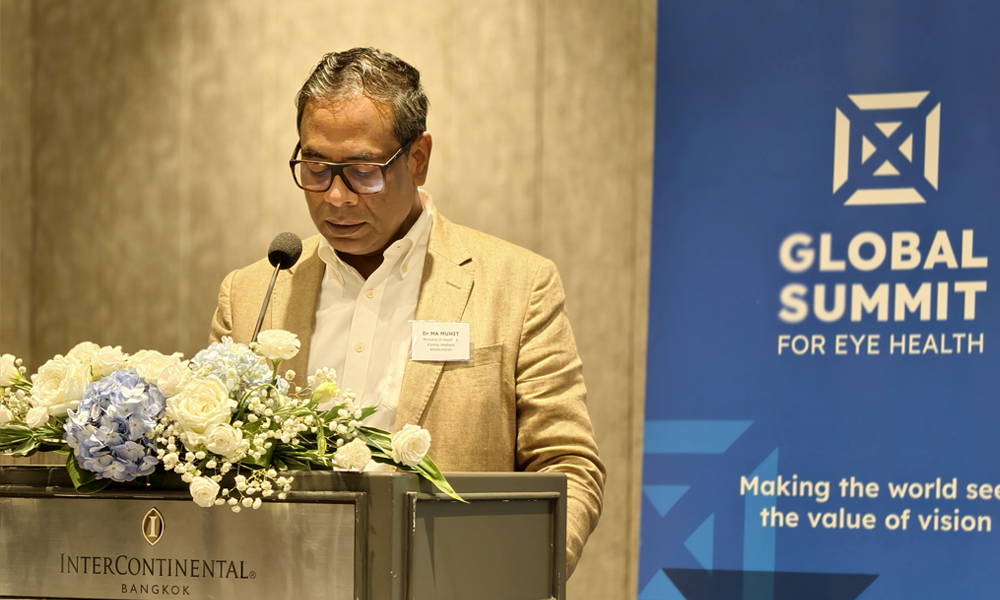
“This new financing mechanism is an important milestone on the road to the first-ever Global Summit for Eye Health, which will take place alongside the Commonwealth Heads of Government meeting in Antigua and Barbuda this November. The Summit will bring together Heads of State and Government representatives, development finance leaders and global partners to ensure eye care is integrated into national development strategies and financing frameworks.”
By combining philanthropic funding with World Bank financing, the initiative will use relatively small amounts of catalytic capital to unlock significantly larger government investment. Contributions to the fund are expected to be multiplied several times over through the World Bank’s International Development Association, with funding channelled directly through Ministries of Health into national budgets.
Adam Askew, CEO of the Vision Catalyst Fund, said: “Eye care is one of the most cost-effective investments in development, with every $1 invested generating up to $28 in economic returns in low- and middle-income countries. Yet despite this, it remains significantly underfunded.
What has been missing is not evidence, but a financing model capable of delivering at scale. This initiative, being developed with and administered by the World Bank, is designed to address that gap by linking catalytic philanthropic funding with government health budgets and World Bank financing.
By introducing this approach, we have an opportunity to move beyond short-term projects and support countries to integrate eye care into national systems in a way that is sustainable, scalable, and aligned with broader development priorities.”
The mechanism has completed a two-year development and approval process with the World Bank. Programmes are expected to begin in a small number of demonstration countries in 2026, where eye health will be integrated into existing primary healthcare, nutrition and ageing services.
Data Source: IAPB Vision Atlas