


Join the Leading Global Eye Health Alliance.
Membership-
Choose an alternate language here
- Membership
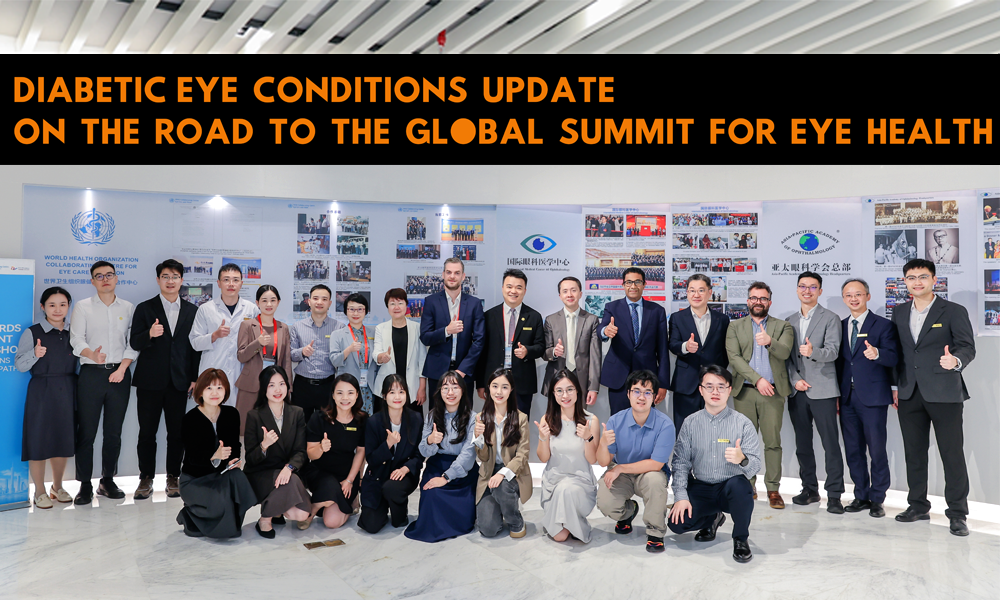
On 10 November 2025, just days before World Diabetes Day, I had the privilege of joining leaders from China, the World Health Organization (WHO), and international ophthalmic institutions for the Expert Workshop on the Development of WHO Standards for AI-based Solutions for Diabetic Retinopathy. This important event was co-organised and hosted at the Zhongshan Ophthalmic Center (ZOC), Sun Yat-sen University in Guangzhou, China. As a WHO Collaborating Centre for Eye Care and Vision, ZOC provided the ideal setting for this timely and forward-looking meeting.
The timing could not have been more fitting. With diabetes rates rising globally and diabetic retinopathy (DR) now one of the leading causes of vision impairment among working-age adults, the world urgently needs scalable, equitable, and safe solutions. As we approached World Diabetes Day – an annual reminder of the human and economic burden of this condition – the discussions in Guangzhou underscored how central eye health must be in the global response.
A Shared Commitment to Action
The workshop brought together a remarkable group of clinicians, researchers, policymakers, and technical experts from across China, the UK, the US, and beyond. WHO’s Dr Stuart Keel led the agenda, outlining both the promise and the complexity of developing global standards for AI tools designed to identify and triage DR.
Key Themes from the Discussions
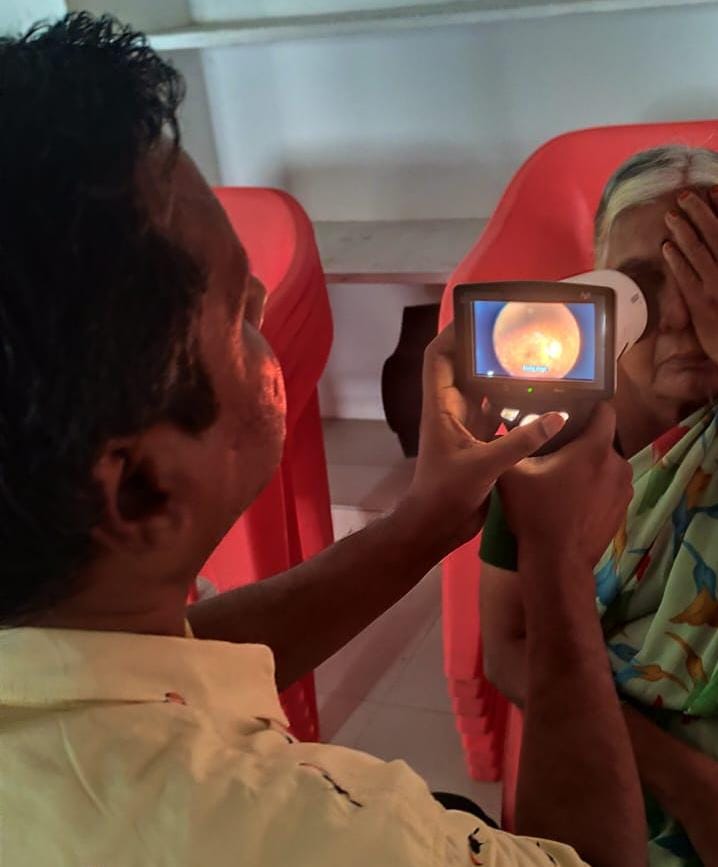
Experts emphasised that AI holds enormous potential to close detection gaps, particularly in low- and middle-income settings where trained graders are scarce. But AI alone is not a silver bullet. Robust health systems, clear quality standards, and supportive policies are essential to make any approach sustainable.
As AI models evolve rapidly, WHO’s work aims to provide countries with practical, adaptable guidance: what to consider when selecting products, how to ensure equitable deployment, and how to monitor performance over time. This will be vital to building trust among providers, regulators, and patients.
Across settings, whether China, Africa, or the Pacific, the challenges are similar: ensuring image quality, integrating AI tools into clinical workflows, managing data securely, training frontline staff, and ensuring cost-effectiveness. The workshop created a rare, open space for comparing experiences and strategies.
The presence of global leaders from the Zhongshan Ophthalmic Center to Moorfields Eye Hospital to the Doheny Eye Institute reinforced the shared commitment to shaping solutions that work for all countries, not just those with advanced digital infrastructure.
Why this Mattered for World Diabetes Day 2025
World Diabetes Day is always a reminder of the scale of the challenge: more than 540 million people globally are living with diabetes, and millions remain undiagnosed. Between 30–40% of them will develop diabetic retinopathy.
But this year’s theme – access to diabetes care – feels particularly urgent. Eye care is diabetes care.
What we discussed in Guangzhou directly advances that agenda:
WHO’s forthcoming global standards will help countries adopt AI tools safely and effectively, ensuring that innovation benefits those who need it most.
Looking Ahead
As the session concluded, Dr Keel set out clear next steps for finalising the Standards, incorporating expert input, and supporting countries through implementation.
For me – and for the IAPB – the workshop reinforced the critical role of partnerships in accelerating progress on diabetic eye health. China’s leadership, WHO’s convening power, and the collective expertise of global institutions offer a powerful foundation for the work ahead.