



Join the Leading Global Eye Health Alliance.
Membership-
Choose an alternate language here
- Membership
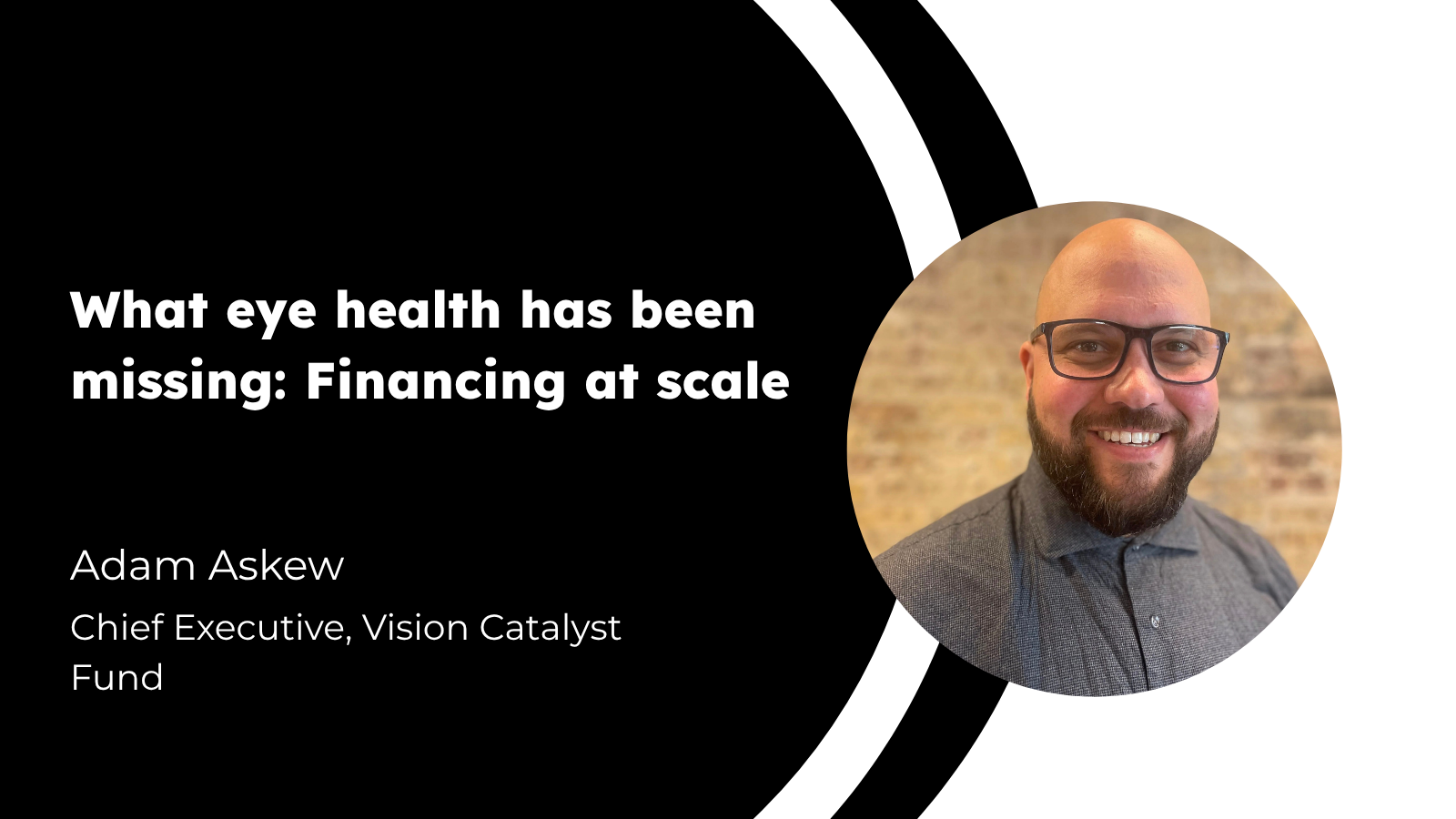
As the world gathers this week at the World Bank Spring Meetings in DC, there is a clear opportunity to align the value of vision with the financing needed to deliver it at scale.
At a time when eye health is finally being recognised for its impact on human capital, productivity and economic growth, it unfortunately remains significantly under-prioritised in the way the evidence demands. The contradiction is hard to ignore, especially when vision underpins education, productivity and economic participation but receives less than one per cent of national health budgets in many low- and middle-income countries, despite accounting for a significant share of patient need, in some cases up to 10% of patient consultations.
The challenge is no longer the lack of clear evidence; it is the financing.
With this in mind, the World Bank and the Vision Catalyst Fund, working closely with the IAPB, a founding partner of the VCF, alongside Vanguard investors CBM, Cure Blindness Project, and The Fred Hollows Foundation, are developing a new financing approach for eye health. This collaboration focuses on how catalytic funding can support governments in integrating and scaling eye care within national health systems.
Over the next 5 years, this new financing platform is designed to unlock funding at scale and embed eye care within national health systems.
By combining philanthropic capital with World Bank financing, particularly through the International Development Association (IDA), relatively modest catalytic contributions can mobilise significantly greater government investment. Crucially, this funding will be channelled through Ministries of Health and integrated into national health budgets, ensuring that eye care is not treated as a standalone issue, but as part of broader health and development strategies.
The World Bank’s Global Financing Facility for adolescent children acts as a shining example of how catalytic funding can unlock significantly larger domestic and IDA resources, mobilising billions of dollars to strengthen health systems across countries.
This approach reflects a shift from short-term, project-based funding towards long-term, systems-based investment. It recognises that lasting change depends on systems, and that eye health must be financed in the same way as other essential services.
The economic case is clear. In low-and middle-income countries, every dollar invested in eye health can generate an estimated $28 in returns. Few investments offer that level of impact, not only in health terms, but also in education, productivity and economic growth. And yet, more than a billion people live with avoidable vision loss, with consequences that extend far beyond the individual.
After two years of development with the World Bank, we are excited to enter the next phase of this collaboration. Initial programmes will begin in a small number of countries (to be announced later this year), where eye care will be integrated into existing services, including primary healthcare, nutrition and ageing. These early efforts will demonstrate how this model will work in practice and how it can be scaled over time.
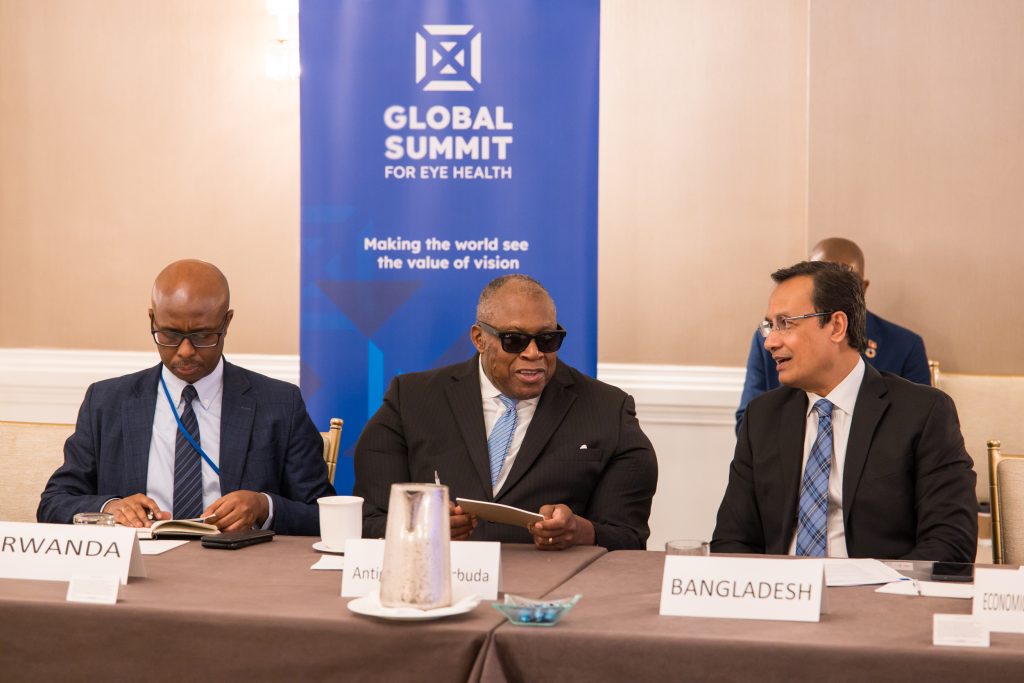
2026 marks a pivotal year for eye health globally. Momentum is building toward the Global Summit for Eye Health, where Heads of State, Ministers, and partners will come together to secure political and financial commitments for vision as a development priority. The work now underway with the World Bank is an important step in that journey, helping to demonstrate how catalytic financing can support countries to turn commitment into sustainable investment and delivery at scale.
There is growing recognition that eye health can no longer sit in the margins of global health and development discussions. The need is too great, and the opportunity too significant to ignore.
The solutions exist. The evidence is clear. What we are building is the mechanism to ensure that both are matched by financing at the required scale. The value of vision is undeniable. The task is to ensure it is fully recognised through sustained investment, stronger systems, and a shared commitment to making eye health a true priority.
____
To learn more about the value of vision, register to watch The Value of Vision: Eye Health as a Catalyst for Growth live from the Devex Impact House on 16 April 2026, at https://pages.devex.com/devex-impact-house-the-capital-summit.html#agenda
Data Source: IAPB Vision Atlas.