



Join the Leading Global Eye Health Alliance.
Membership-
Choose an alternate language here
- Membership
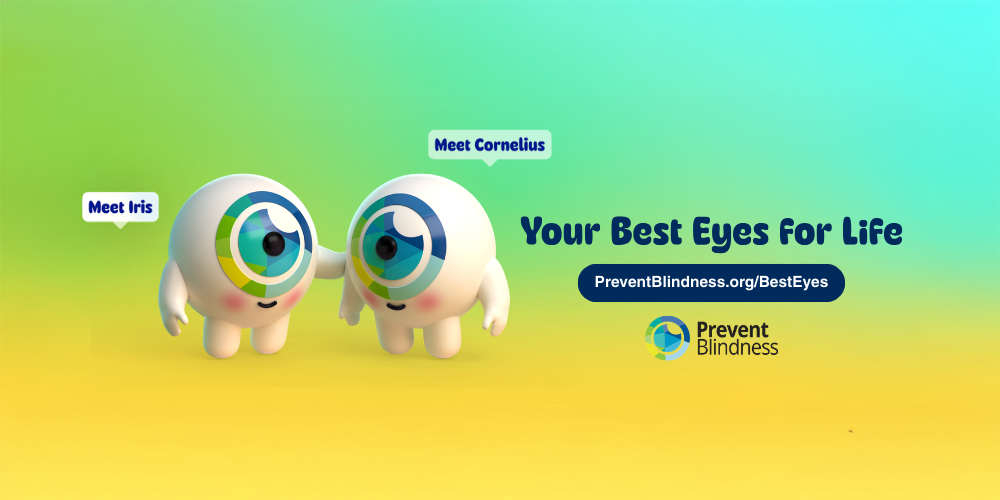
New Prevent Blindness campaign introduces “Iris and Cornelius” to demonstrate best practices, address perceptions related to maintaining healthy vision across all age groups.
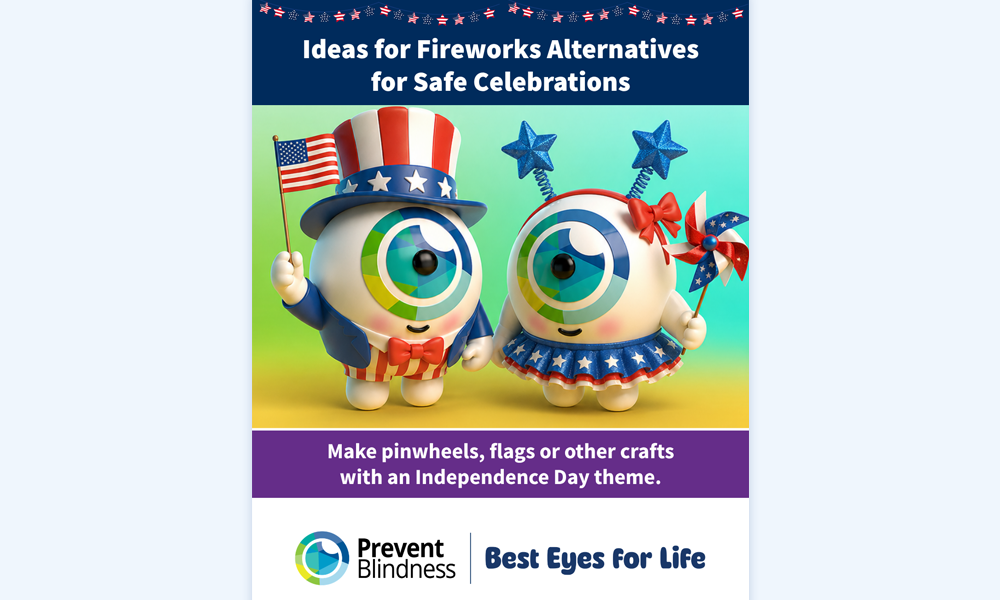
Prevent Blindness, the nation’s leading patient advocacy organization dedicated to protecting and preserving eye health, is rolling out the new “Best Eyes for Life” multi-media educational campaign featuring “Iris and Cornelius.” Together, these animated besties engage in everyday eye-related situations to raise awareness and prioritize eye health and safety.
The campaign is introduced as a recent Prevent Blindness consumer survey revealed that nearly 75 percent of respondents believe they would have symptoms if something was wrong with their vision or eye health. In fact, many serious eye diseases such as glaucoma and diabetic retinopathy often have no symptoms in their early stages.
The initial phase of the campaign focuses on three key areas critical to preventing blindness and preserving sight: the role of nutrition in eye health, the need for proper eye protection in sports, home and work, and the important role of healthy vision for a child’s success in the classroom. Campaign content will be distributed across multi-media platforms, including streaming services and digital channels.
“With this new initiative, we’re encouraging everyone to think of their eyes as their ‘besties’ and learn the simple steps we can take to care for them,” said Jeff Todd, president and CEO of Prevent Blindness. “Our ‘Best Eyes for Life’ campaign delivers positive, empowering messages about the importance of proactively caring for our eyes today so we can live our best lives tomorrow.”
The Vision and Eye Health Surveillance System from the Centers for Disease Control and Prevention estimates that more than 7 million Americans are living with vision loss or blindness. Many cases of significant vision impairment can be prevented or delayed with the appropriate vision screenings and timely interventions. In addition, 90 percent of eye injuries – including those occurring at work, at home, or during sports – are preventable.
The recent national survey of more than 1,000 individuals aged 18 and older conducted by Prevent Blindness also found:
Prevent Blindness Vice President, Marketing, Sarah R. Hecker explained, “A focal point of the ‘Best Eyes for Life’ campaign is to help people feel connected to their eye health and understand how it relates to overall health and mental well-being, while also inviting individuals and families to explore the trusted resources and support Prevent Blindness offers to help them along the way.”
For more information on the Prevent Blindness Best Eyes for Life program, please visit PreventBlindness.org/BestEyes. For more information on general eye health, or vision care financial assistance resources, please visit PreventBlindness.org.
About Prevent Blindness
Prevent Blindness is the nation’s leading eye health and safety patient advocacy organization dedicated to preventing blindness and preserving sight. The organization raises awareness about the importance of eye health and its connection to overall health, advocates for eye health policies and funding, supports professional education and training, and empowers those living with vision loss. With the generous support of its network of affiliates, volunteers, partners, and the public, Prevent Blindness provides free resources on the full spectrum of eye diseases and conditions that can significantly affect vision and quality of life, and advances initiatives that identify vision problems early and connect individuals to eye care. For more information, visit PreventBlindness.org, and follow Prevent Blindness on Facebook, X, Instagram, LinkedIn, TikTok, and YouTube.
About the Survey
Conducted by Researchscape International, the Prevent Blindness 2026 Consumer Survey is an online survey of 1,037 U.S. adults aged 18 and older designed to gauge awareness of common misconceptions about eye health that was fielded from February 6-9, 2026. The data was weighted to the U.S. population by nine demographic questions, and the credibility interval for questions answered by all respondents is ±4 percentage points.