







Join the Leading Global Eye Health Alliance.
Membership-
Choose an alternate language here
- Membership
Prevent Blindness, the nation’s leading volunteer eye health and safety organization, has announced the recipient of the 2022 Jenny Pomeroy Award for Excellence in Vision and Public Health as VOSH/International (V/I).
Additionally, Prevent Blindness is pleased to announce the co-recipients of the third annual “Rising Visionary Award” as Marissa K. Shoji, MD, Bascom Palmer Eye Institute, and Hursuong Vongsachang, MPH, Johns Hopkins University School of Medicine, Johns Hopkins Bloomberg School of Public Health. All award recipients will present at the 11th Annual Prevent Blindness Focus on Eye Health National Summit, to be held virtually on July 13-14, 2022.
The award recipients were chosen by an all-volunteer selection committee. The committee consists of leaders and professionals in the ophthalmology, optometry, advocacy, public health and scientific communities.
The Jenny Pomeroy Award for Excellence in Vision and Public Health is presented annually to an individual, team, or organization that has made significant contributions to the advancement of public health related to vision and eye health at the community, state, national and/or international level. The award is named after Jenny Pomeroy, who served as CEO of Prevent Blindness Georgia from 1996 until 2013, in recognition of her substantial work in advocating for funding and expanding public health programs and services for vision and eye care.
Founded in 1972, VOSH/International, a volunteer-based organization, was selected for the Jenny Pomeroy Award for Excellence in Vision and Public Health for its commitment to providing access to quality eyecare for underserved communities. The mission of V/I is to facilitate the provision and the sustainability of vision care by supporting eye clinics, optometry schools and optometric educators in geographical areas lacking sufficient eye care. The core programs include sharing U.S. optometric expertise with international schools of optometry through lecturing, mentorship, donating equipment and technology, and organizing educational and networking events to nurture collaboration to strengthen optometry globally. V/I also collects data from clinical work to generate the evidence and public health policy action to integrate eyecare within local health care systems worldwide. As of 2022, there are over 98 VOSH regional, state and school chapters globally.
The Prevent Blindness Rising Visionary Award recognizes an optometry student or resident, ophthalmology resident, primary health care, nursing, or other health professional student or resident in the United States who has the best essay based on a question related to the 2022 Focus on Eye Health National Summit theme, “Eye-conic Approaches to Eye Health.” This year, two Rising Visionary Awards will be presented.
Dr. Shoji’s essay, “A Guiding Light: A Vision for the Future,” addressed racial and gender disparities in eyecare. She outlined the need for a national program focusing on fostering diversity in ophthalmology, including recruitment of individuals at all stages of training, from interested high school students to fully-licensed practitioners with special emphasis on both underrepresented minorities and women.
Dr. Vongsachang’s award submission detailed the need and benefit for school-based vision care to be available widely and sustainably. She hopes that her current work in program implementation can one day translate into nationwide availability of school-based vision services through advocacy, stakeholder engagement and continued research. The goal is to bridge gaps in vision care access for children in need.
“We congratulate all of our Award recipients, including VOSH/International, Dr. Shoji and Ms. Vongsachang,” said Jeff Todd, president and CEO of Prevent Blindness. “We invite everyone to view their presentations at the upcoming Focus on Eye Health National Summit!”
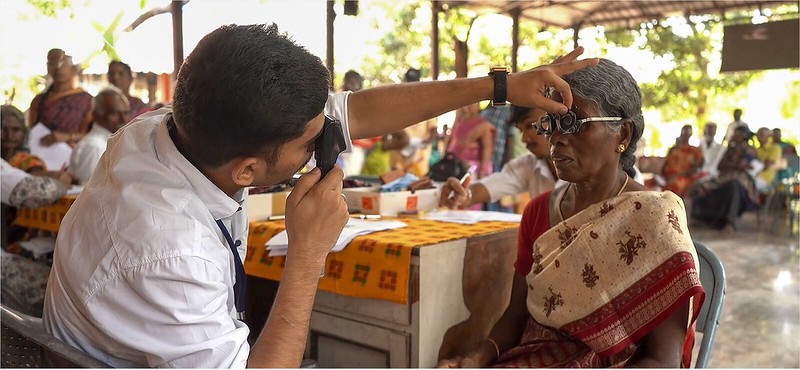
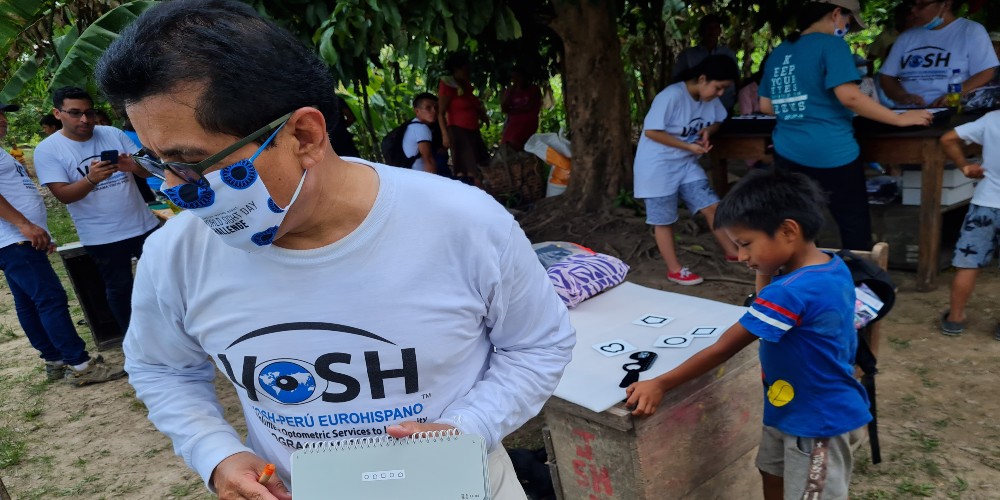
Image on top: CLÍNICA DE OJOS VISIÓN PERÚ, IQUITOS. AGOSTO, 2021/ Severo Sánchez
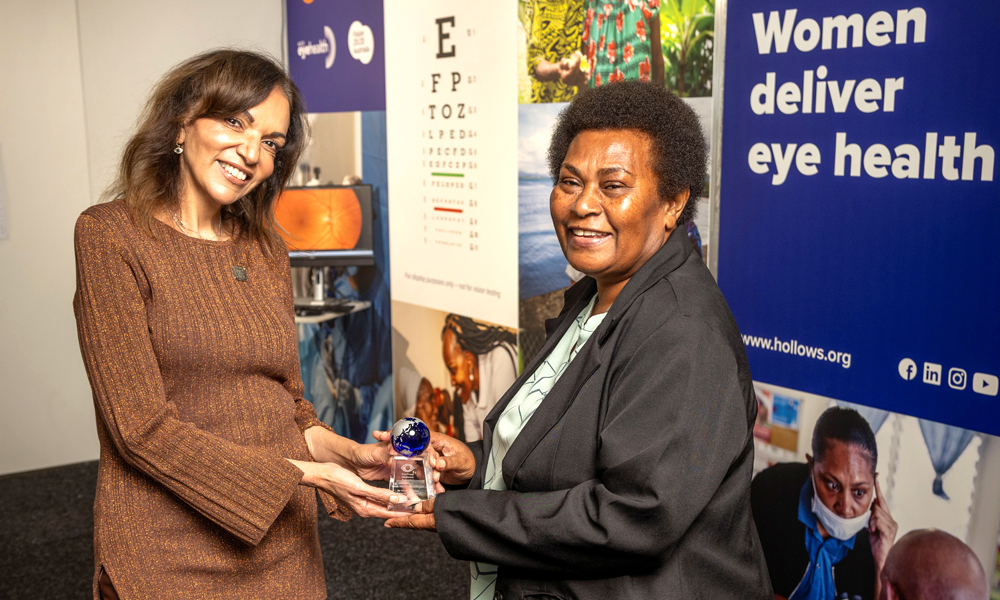
Award Photo by Michael Amendolia