



Join the Leading Global Eye Health Alliance.
Membership-
Choose an alternate language here
- Membership
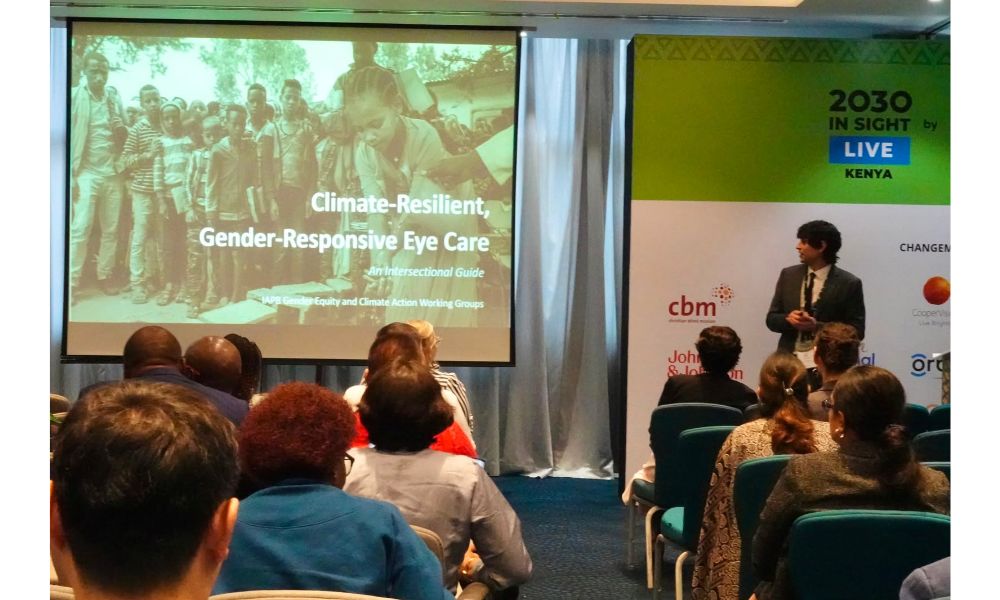
The World Health Organization recognises human-made climate change as the single greatest global health threat of the 21st century. Its impacts on eye health are already being felt.
Rising temperatures, changing rainfall patterns, worsening air pollution, increasing food insecurity, and more unpredictable and severe extreme weather events are driving heightened risks to vision and eye health.
But the impacts of the climate crisis on eye health are not felt equally. Harmful gender norms, poverty, disability, age, geography and displacement can intersect to shape both risk and access – meaning the same climate risks can have very different consequences for different people. Women and girls may face higher exposure to infectious eye conditions due to caregiving and water collection roles; people with disabilities can face barriers to information and evacuation during disasters; and older people may be more vulnerable to intensifying heat and smoke that worsen chronic eye conditions.
If climate action and eye care planning are not deliberately inclusive, they can reinforce inequities rather than reduce them.
Climate Resilient, Gender responsive Eye Care: An intersectional guide is a new practical guidance and advocacy tool for advancing integrated action on climate and eye health, grounded in an intersectional gender equity approach, published by IAPB. It is designed for decision-makers, planners and eye health actors who want to embed eye health and equity into climate and health planning and to strengthen services in ways that protect access, while building resilience.
Eight practical recommendations for inclusive, equitable, climate‑resilient eye care for all
If you work in government, for an NGO, an eye hospital, a professional association, or a climate and health team, you can use the guidance note in three simple ways:
Climate change is already reshaping the conditions in which eye health services have to operate. Rather than being reactive, scrambling after each shock, this guidance note offers a practical path forward: make eye health a climate and health priority; design services that can withstand disruption; reduce emissions where possible; and centre the people who face the greatest barriers to care.
If we take this integrated approach seriously, climate action can become a catalyst for better eye health systems – more accessible, more equitable and more sustainable. As the sector builds momentum on climate and health, we invite health planners, policy makers and service providers to use this guidance to turn commitments into action, so that climate-sensitive eye care protects sight, strengthens resilience and leaves no one behind.



HOW TO CONVINCE YOUR BOSS TO SEND YOU TO 2030 IN SIGHT LIVE KENYA