


Join the Leading Global Eye Health Alliance.
Membership-
Choose an alternate language here
- Membership
World Humanitarian Day, observed every year on 19 August, recognizes the efforts of humanitarian workers across the system, and brings together partners to advocate for the survival, well-being, and dignity of people affected by crises, and for the safety and security of aid workers.
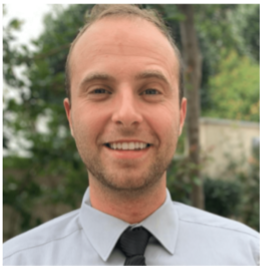
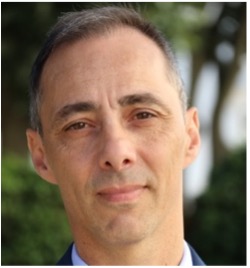
In recognition of World Humanitarian Day, this Fast Four with the IAPB Humanitarian Response Member Engagement Group‘s co-chairs, Raúl Alberto de Sousa and Mattan Arazi, explores the barriers eye care still faces in crisis settings, their reflections from their experience working in crisis settings, and what #ActForHumanity should mean for the future of eye health in emergencies.
Raúl: In my view, it is due to a combination of three things. One is the competing priorities and pressing issues associated with this kind of context. The second is the lack of perception of eye health as an enabler for survival, autonomy, and empowerment. The third is the lack of perception of eye health as an integral part of general health.
Mattan: I think part of the reason is that humanitarian response is understandably built around immediate threats to life. In the first days and weeks of a crisis, that is exactly where the focus should be. The problem is that eye health can remain in the “later” category even as the response becomes more established.
There are several reasons for this. One is visibility. If vision and eye health needs are not captured in needs assessments and planning, they are much harder to prioritise and fund.
There is also a perception that eye care is highly specialised and requires ophthalmologists, microscopes and operating theatres. Sometimes it does. But many eye health needs can be identified or managed at primary-care level, provided there is appropriate training and a clear pathway for referral.
The other challenge is continuity. Many eye conditions cannot be addressed through a single intervention. Cataract services require functioning referral and surgical systems. Glaucoma and diabetic retinopathy services require repeated treatment and follow-up. Even something as simple as providing spectacles depends on having a system that can continue to deliver them.
So, I think the challenge is not necessarily convincing people that sight matters. It is making eye health part of the humanitarian health system from the beginning rather than something added later.
Raúl: Eye care is essential as it supports survival, autonomy and individual empowerment. Consequently, these interventions have a significant impact in both acute crisis situations and prolonged emergency scenarios.
Furthermore, given that the goal in these settings is to build back better, with local and cultural awareness, this means human capital must be at the forefront of any humanitarian intervention, and we need to use all enablers that we can.
It is also important to note that eye conditions are among the most prevalent health issues, and interventions for refractive errors and assistive technology are among the most cost-effective. So, we always expect to have a lot of people experiencing eye conditions in these settings, and with simple and effective solutions available, it makes sense that eye health should be considered essential.
Mattan: Because vision is fundamental to how people function and maintain independence. In a displacement setting, being able to see may determine whether someone can collect water, navigate safely at night, recognise their child in a crowd, work or go to school. When vision is lost, someone who was previously independent may suddenly become dependent in an environment where families and communities are already under enormous strain.
That makes eye health a protection issue as well as a clinical one.
There is also an acute side. Conflict can result in severe ocular trauma, including injuries from blast fragments, shrapnel, and burns. An open-globe injury that is not treated promptly can mean permanent blindness in a young person who might otherwise have had decades of useful vision.
And many humanitarian crises are not short-lived. People may remain displaced for years, so postponing eye care until a later “recovery phase” can mean postponing it indefinitely.
There is also a strong, practical argument. Cataract surgery can restore independence, and something as simple as a pair of spectacles may allow someone to return to work or school. In settings where resources are limited, eye care can have a very meaningful impact on a person’s ability to function.
Raúl: The simple thought of someone blind trying to escape under bombardment or in an earthquake without their white cane, or a highly myopic mother or father having lost their eyeglasses and struggling to see where their children are after a catastrophic event, are anguishing and terrifying moments that no one should experience at all.
On the bright side, knowing that someone in a humanitarian situation is going to school or getting their work done because they are able to see is heartwarming. Knowing that these situations occur every single day should make us double our efforts to bring eye health into the options to consider in the humanitarian response.
Mattan: The experience that has stayed with me most is the Silk Road pathway between Afghanistan and Pakistan for children with retinoblastoma.
Access to comprehensive retinoblastoma treatment within Afghanistan is extremely limited, so we worked with local partners to create a referral pathway. Local teams at NOOR examined the child, we confirmed the diagnosis remotely, and the family then travelled across the border to a treatment centre in Pakistan.
On paper, the pathway works. In the first year, 23 children entered it. Only nine reached a treatment centre in Pakistan. Five had died by the end of follow-up, and twelve were lost to follow-up entirely, meaning that even today I do not know whether they are alive. In high-income countries, more than 95 percent of children with retinoblastoma survive.
What stayed with me was what actually prevented many of these children from reaching treatment. It was not the lack of chemotherapy, surgery, or clinical expertise. It was visas, border restrictions, transportation costs, and families becoming impossible to contact.
We had the medicine sorted, and the children still did not arrive. What that experience showed me is that the clinical solution alone is not enough. We can have the expertise and treatment available, but if a patient cannot reach that care, the system has still failed them.
We spend a lot of time thinking about what we will do once a patient reaches us. In humanitarian settings, we also need to spend much more time understanding why they may never reach us at all.
Raúl: I will be specific, as I believe this is a simple change that can be implemented now. I would like eyeglasses and assistive products to be included whenever education is considered in a humanitarian context. If any educational material is sent to a region, eyeglasses and assistive products should be included as well. They take up little space in supplies, cost almost nothing, and change lives.
Mattan: There are a few practical changes I would like to see.
First, eye health needs to be included more consistently in humanitarian needs assessment and planning. If we are not asking about vision, it is difficult to understand the need, and even harder to argue for resources.
Second, we need to translate existing eye care guidance into practical humanitarian delivery. We already have strong technical guidance on what eye care should look like. The challenge is making sure it is incorporated into the systems and standards used during humanitarian response.
Third, we should task-share wherever it is appropriate. Not every eye health need requires an ophthalmologist. Health workers can be trained to screen, manage basic conditions, provide simple interventions, and recognise when someone needs referral. The specialist should be part of the pathway, not necessarily the first point of contact.
Fourth, we need to think much more seriously about continuity. Eye care does not always fit neatly into short project cycles. A child with retinoblastoma needs ongoing treatment. A patient undergoing cataract surgery needs follow-up. A referral pathway is only useful if it continues to function.
And perhaps most importantly, we should build around the eye care workforce that is already there. In many crisis settings, local doctors, nurses, optometrists and other health workers continue working despite extraordinary constraints.
The goal should not be to create a parallel eye care system that disappears when the emergency funding ends. It should be to support and strengthen the people and services that will still be there afterwards. To me, that is what #ActForHumanity should mean.
If you are interested in contributing to the important work of the IAPB Humanitarian Response Work Group, learn more and get involved.
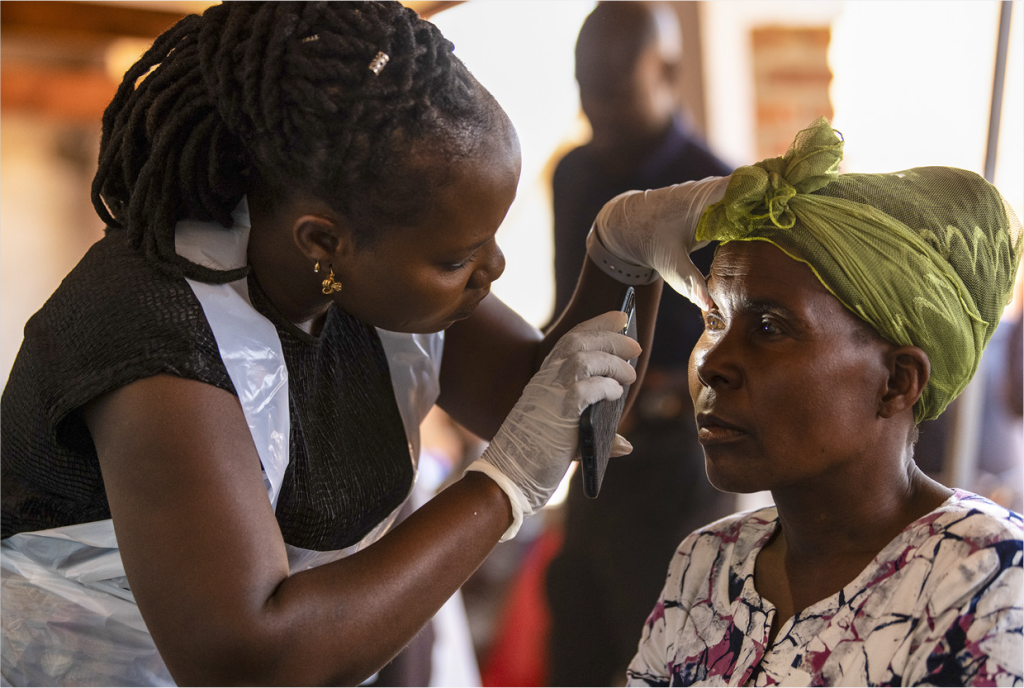
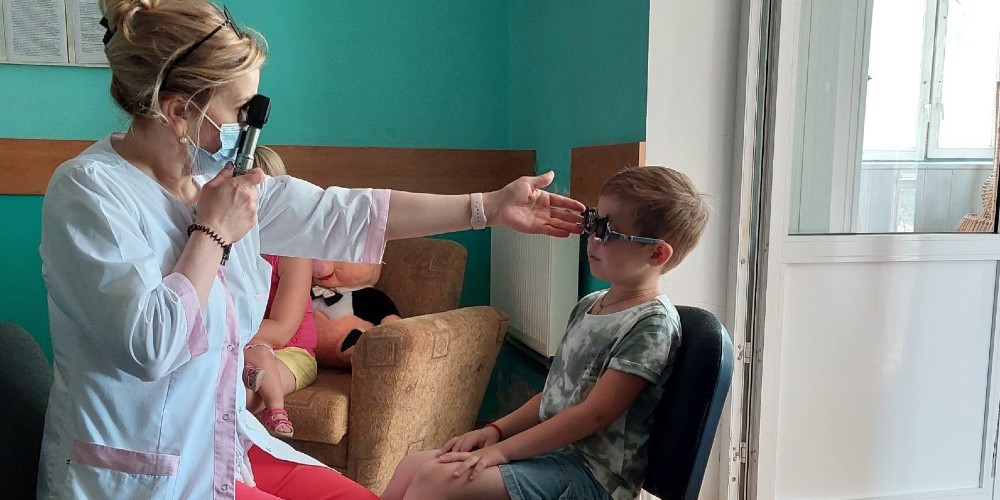
The LOW VISION Center reflects on its emergency plan to address the continuity and expansion of eye care in a context unprecedented in Europe since World War II.