


Join the Leading Global Eye Health Alliance.
Membership-
Choose an alternate language here
- Membership
I have been asked to share a few reflections after our workshop on gender and eye health in Port Moresby in April, and the Women Deliver conference in Melbourne that followed. I do this with some hesitation, because most of what I might say has been said by the colleagues, partners and patients I work alongside. But I am grateful for the chance.
I came to ophthalmology because my older brother told me to. He is a GP and in my high school years he took me to meet Dr Korimbo, our first ophthalmologist in PNG, and said, “Jambi, this is your job, it is a good job for a woman.” He was thinking about the on-call hours, and what they would mean for raising a family. I followed his advice, and I am glad I did.
Most of what has happened since has come from someone else opening a door. The late Dr Bage Yominao, our second ophthalmologist (and first female ophthalmologist in both PNG and the Pacific), gave me her ticket to a Friends of Fred meeting in Thailand in 1999 because she was too busy to go herself. That is where I met Gabi Hollows. I would not be where I am without that chance meeting, and without the many people who have backed me ever since.
The progress that often gets attributed to me really belongs to a much wider group: the National Prevention of Blindness Committee, the doctors and nurses at Port Moresby General Hospital, and our partners at PNG Eye Care, CBM, The Fred Hollows Foundation and the Brien Holden Vision Institute, alongside provincial colleagues who hold services together in places that are hard to reach.
Together, that team completed the Global Trachoma Mapping Project in 2015 and the Rapid Assessment of Avoidable Blindness in 2017. Together, we held the line until, in May 2025, the World Health Organization validated PNG as having eliminated trachoma as a public health problem. I keep using the word we because it is the only honest one for it.
Our RAAB confirmed what many of us already suspected: women in PNG are more likely than men to be living with avoidable blindness. The reasons are practical. A woman may not have someone to escort her safely to the clinic. The household money tends to go to her husband’s care first. She is needed at home to look after children or the elderly. In parts of the Highlands, safety on the road is itself a reason to stay back.
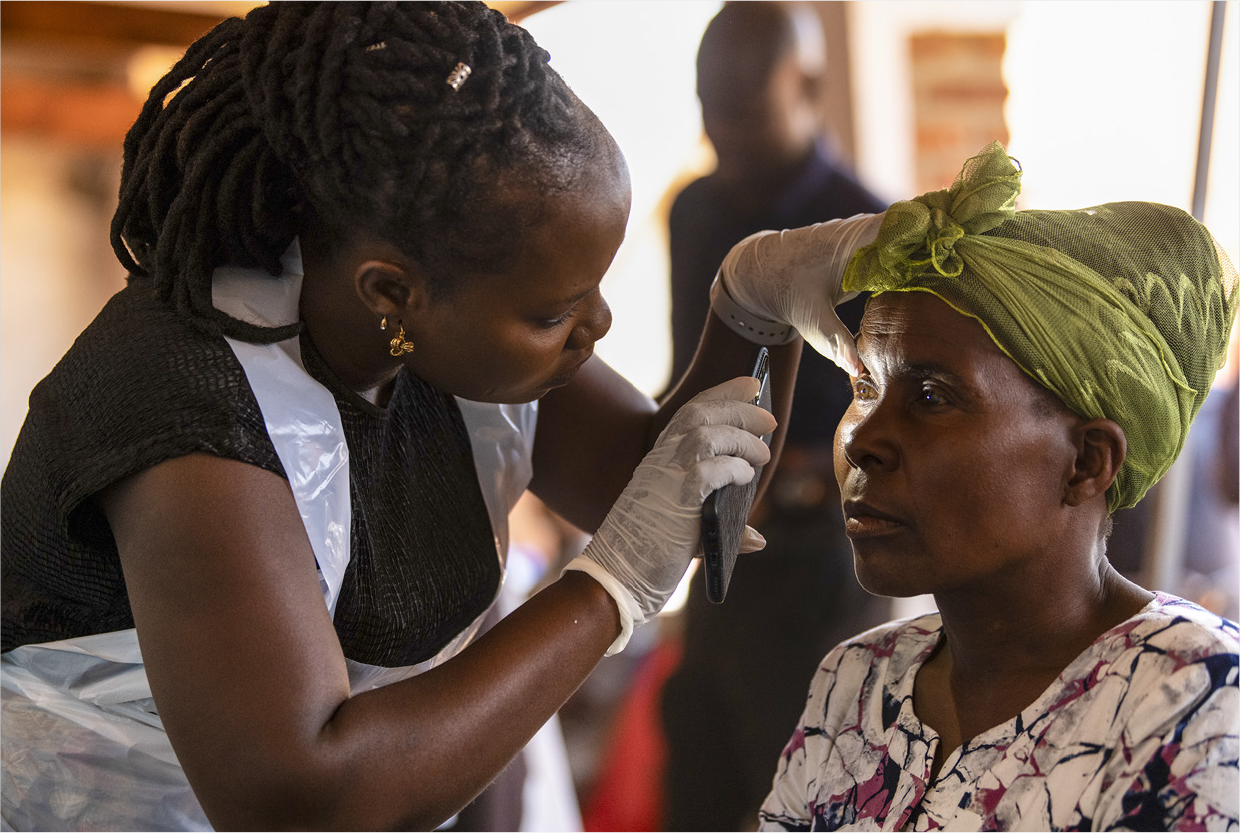
Our partners are working on these things in small, careful ways. We now arrange babysitters for our female doctors going on outreach, so they can do our work without worry. We organise transport so a woman can be brought in for surgery and dropped home the same day. They have asked hospitals to set up wards with cooking facilities, so a mother can bring her guardian, and her small child, without losing the household for a week.
None of these are grand ideas. They are the right ones.
At our workshop in April, the suggestions that stayed with me did not come from the doctors in the room. They came from observations our colleagues and patients shared. In our crowded eye clinics, women do not push. The men get seen first. A woman without a guardian to advocate for her waits longer, or does not come back.
Out of those conversations came practical ideas for the new National Eye Health Centre, which opens this November: a women-only clinic day; a small nursery space, something we honestly had not thought of in our original design; service-delivery priorities for pregnant women, young mothers and the elderly; and working through the women’s church fellowships, the National Women’s Council, the Women Doctors Association and the WhatsApp groups that already connect women across PNG. I owe those ideas to the people in that room, and especially to Caroline Casey and Louisa Syrett for pushing us to be more intentional.
Eye health has survived in PNG because it has been written into the National Health Plan 2021–2030, into our Cataract Surgical Rate indicator, and into the National Eye Health Strategic Plan. Integrated services tend to last; vertical ones tend not to.
Training our own people at home matters. The national teaching centre at the University of Papua New Guinea is the result of many years of work by many hands, and we now have a place to bring our trainees up properly.
Gender equity is not a side conversation. Pacific Pathways earlier this year, and Women Deliver in Melbourne, reminded me how often eye health is missing from the rooms where these decisions are being made. We have to keep showing up.
And the last one is the one I come back to most. I am blessed to be where I am. I work with a small team that supports each other. The CEO of Port Moresby General Hospital releases us when outreach calls. My colleagues run the clinic so I can do PBL work. I am only here because of them, and because of the partners who have walked alongside us for many years.
Thank you, all of you.