






Join the Leading Global Eye Health Alliance.
Membership-
Choose an alternate language here
- Membership
Prevent Blindness, the nation’s leading eye health and safety organization in the United States, has announced the recipient of the 2024 Jenny Pomeroy Award for Excellence in Vision and Public Health as Mission for Vision (MFV). Erica Shelton, OD, MS, FAAO, Clinical Instructor and PhD Candidate, The Ohio State University College of Optometry, has been named as the recipient of the fifth annual “Rising Visionary Award.” Both award recipients will present at the 13th Annual Prevent Blindness Focus on Eye Health Summit, to be held as a virtual interactive event, on July 10-11, 2024.
These award recipients were chosen by a volunteer selection committee, consisting of leading professionals in ophthalmology, optometry, advocacy, public health, and scientific communities.
The Jenny Pomeroy Award for Excellence in Vision and Public Health is presented annually to an individual, group, or organization that has made significant lifetime contributions to the advancement of public health related to vision and eye health at the community, state, national and/or international level. The award serves as a living memorial to Jenny Pomeroy, who served as the CEO of Prevent Blindness Georgia from 1996 until 2013 and was a tireless champion of public health and vision advocacy.
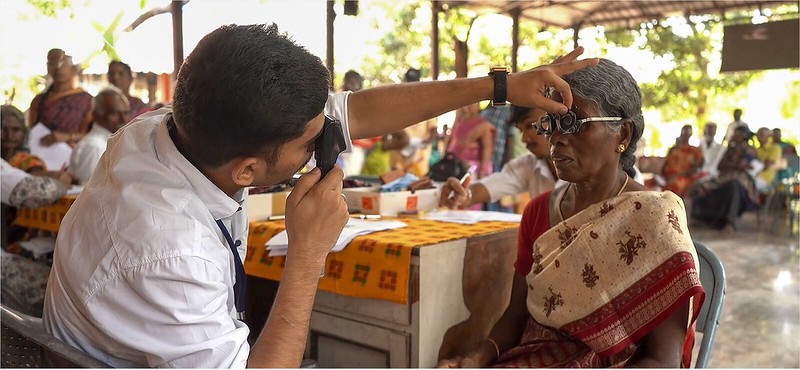
Founded in the year 2000, Mission for Vision seeks to restore the gift of vision to every visually impaired human being, irrespective of nationality, religion or socio-economic status. To date, MFV has positively impacted the lives of more than 19.7 million people in India, including the enablement of more than 3 million eye surgeries. MFV works in 24 Indian states and union territories with leading eye health partners.
Additionally, MFV has helped:
• Establish and strengthen 24 Secondary/Tertiary Eye Hospitals, ranking among the top in India, providing a model of sustainable social enterprises.
• Train more than 700 Allied Ophthalmic Personnel (AOP) particularly socio-economically challenged young rural women, each capable of serving at least 1,500 patients annually, enabling empowerment, augmenting service delivery and livelihoods.
• Establish 153 Vision Centers, including 5 mobile units, to enable primary eye care in remote geographies serving more than 7.3 million people and working towards achieving self-sustenance in around 3 years.
• Provide eye health services to over 830,000 children, including for complex conditions such as Retinopathy of Prematurity and Retinoblastoma.
• Generate valuable evidence on public eye health.
“Sight is the most central of our senses. We are delighted and humbled that Mission for Vision’s endeavors towards a better life for communities through good eye health has been appreciated and acknowledged through an award established to commemorate the exceptional vision of the distinguished Jenny Pomeroy,” said Jagdish Chanrai, Founder of MFV. “It is an immense honor for us, and it underscores our vision and steadfast commitment towards the eradication of needless blindness and visual impairment.”
Elizabeth Kurian, MFV’s Chief Executive Officer added, “We reiterate our deep appreciation to our partners and team for their unwavering commitment and exceptional contribution to our common mission, and express our gratitude to our communities for the opportunity to serve them. We gratefully accept this award on our collective behalf and commit to further advancing public eye health.”
The Prevent Blindness Rising Visionary Award recognizes current student, intern, or resident located in the United States in optometry, ophthalmology, primary health care, nursing, psychology, or another health-related field, who submits the best essay based on the 2024 Focus on Eye Health Summit theme, “Being Seen and Heard.”
Dr. Shelton’s essay emphasized the significant successes in supporting strong school-based vision programs (SBVP). According to Considerations in Building a School-Based Vision Program, Ambrosino et al, “School-based vision programs (SBVPs) serve as one approach to advancing health equity. Operating at the intersection of schools and healthcare, SBVPs can increase access to pediatric vision services, improve academic performance, and facilitate referrals to community vision care providers.”
Dr. Shelton’s essay expands this definition, noting that providing accessible vision care to the pediatric population provides opportunities to improve vision health literacy in families and help build a culture that appreciates the importance of vision care across all ages. This can be achieved by replicating proven SBVP programs and expanding them across all communities.
“I would like to thank Prevent Blindness for this recognition. I would like to thank my mentors and colleagues at The Ohio State University College of Optometry for their continued support in my work over the years, including providing externship opportunities at school-based vision programs, said Dr. Shelton. “My externship experience at the Oyler School Vision Clinic in Cincinnati, Ohio introduced me to the importance and value of school-based vision programs. A special thanks to my PhD advisor Dean VanNasdale, OD, PhD and my mentor John Crews, DPA. I look forward to discussing more about my essay at the summit this July.”
“Prevent Blindness congratulates Mission for Vision, and Dr. Erica Shelton as recipients of two of our most prestigious awards,” said Jeff Todd, president and CEO of Prevent Blindness. “We share their passion for helping adults and children live to their fullest potential in life through vision and eye health awareness, education, and assisting in access to eyecare for all.”
For more information on the Prevent Blindness Jenny Pomeroy Award for Excellence in Vision and Public Health and the Rising Visionary Award, please visit PreventBlindness.org. For information on the 2024 Prevent Blindness Focus on Eye Health Summit, please visit PreventBlindness.org/eyesummit, or contact eyesummit@preventblindness.org.
About Prevent Blindness
Founded in 1908, Prevent Blindness is the nation’s leading volunteer eye health and safety organization dedicated to fighting blindness and saving sight. Focused on promoting a continuum of vision care, Prevent Blindness touches the lives of millions of people each year through public and professional education, advocacy, certified vision screening and training, community and patient service programs and research. These services are made possible through the generous support of the American public. Together with a network of affiliates, Prevent Blindness is committed to eliminating preventable blindness in America. For more information, visit us at PreventBlindness.org, and follow us on Facebook, X, Instagram, Threads, LinkedIn and YouTube.
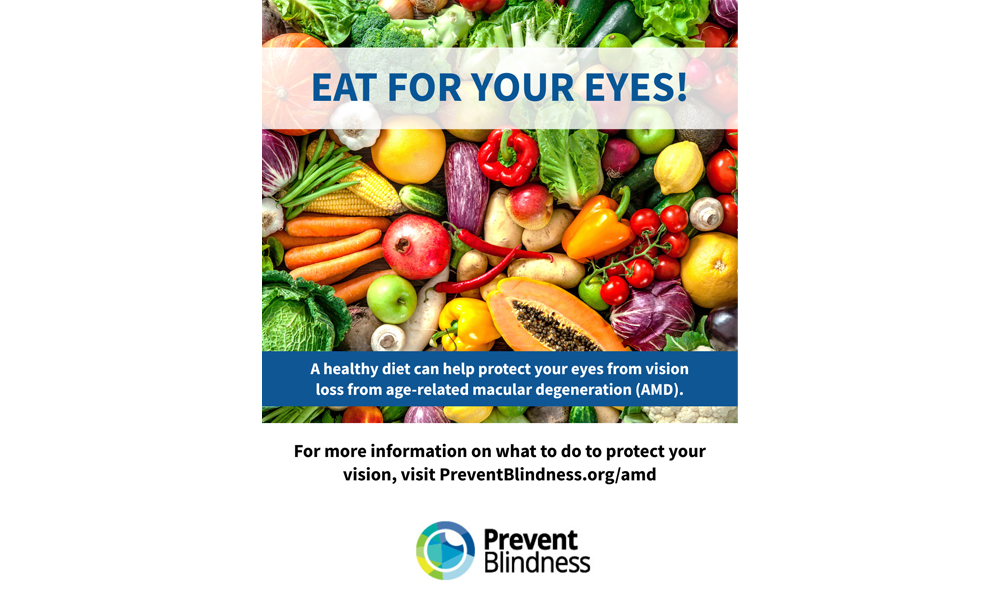
Prevent Blindness is declaring February as Age-related Macular Degeneration (AMD) and Low Vision Month in an effort to provide education and various expert-approved resources to the public and professionals. This year’s AMD and Low Vision Month is generously supported by Gold Sponsor EyePoint, Inc.
According to Johns Hopkins Medicine, AMD is the most common cause of severe loss of eyesight among people 50 and older. And, about 4 million Americans live with low vision, which is defined as chronic visual impairment that cannot be corrected with glasses, contact lenses or medical treatments.
AMD affects the central part of the retina called the “macula.” When AMD damages the macula, the center part of a person’s vision may become blurred or wavy, and a blind spot may develop. Early detection and treatment of AMD is key to helping to prevent significant vision loss.
Two types of AMD include:
“As our population ages, the number of individuals impacted by AMD continues to grow. Many will face difficulties doing the things we sometimes take for granted, such as reading, seeing faces, and driving,” said Jeff Todd, president and CEO of Prevent Blindness. “Our robust collection of resources on AMD and low vision are intentionally created to help minimize vision loss and maintain independence for those impacted by AMD while providing effective tools to the public and providers on ways to save sight.”
As part of AMD and Low Vision Month, Prevent Blindness offers the free AMD GuideMe app. This resource provides a customized overview of AMD along with a tailored resource list and suggested steps to help save sight from the eye disease specific to the individual using the GuideMe app. Prevent Blindness offers additional educational resources including fact sheets and shareable social media graphics in English and Spanish, and dedicated webpages.
New this year, as part of the Prevent Blindness ASPECT Patient Engagement Program Member Spotlight Series, graduate Laurie S., shares her experience with AMD, including her family history with the eye disease, how it impacts her daily activities including the ability to read music, and the importance of support groups “Age-related Macular Degeneration: Laurie’s Story.”
Videos in the Prevent Blindness Focus on Eye Health Series include:
The Prevent Blindness “Living Well With Low Vision” program provides useful information to those with low vision, their care partners and healthcare professionals. Content includes self-help guides, resources for vision loss and mental wellness, information on clinical trials, and much more. Living Well With Low Vision is supported by grants from Amgen and Genentech.
For more information on AMD, please visit PreventBlindness.org/amd. For information on geographic atrophy, please visit PreventBlindness.org/geographic-atrophy.
And, for more information on Living Well With Low Vision, or other general eye health information, please visit lowvision.PreventBlindness.org.
For a listing of organizations and services that provide financial assistance for vision care in English or Spanish, please visit https://preventblindness.org/vision-care-financial-assistance-information.