



Join the Leading Global Eye Health Alliance.
Membership-
Choose an alternate language here
- Membership
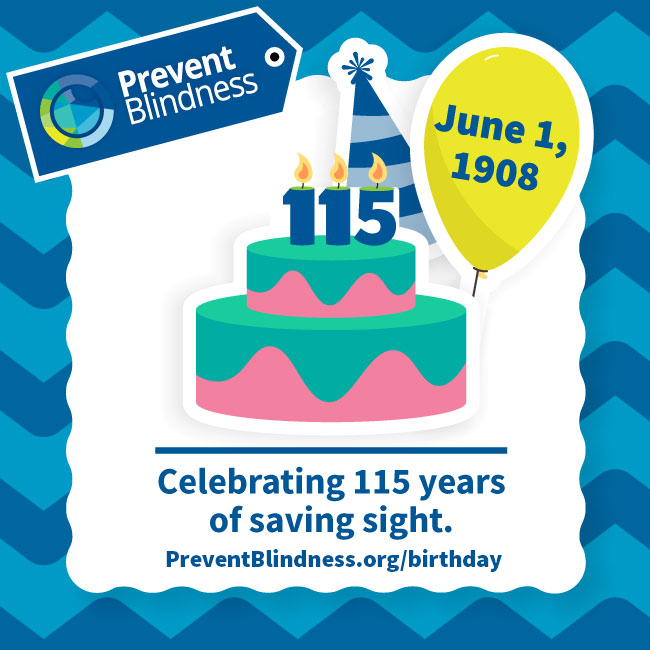
Prevent Blindness, the United Nation’s oldest eye health and safety nonprofit organization, will be celebrating its 115th birthday on June 1, 2023. The group is marking the occasion by declaring it as “Prevent Blindness Day.”
Prevent Blindness was founded in 1908, as the “Committee on Prevention of Blindness” under the previously-established New York Association for the Blind. In 1928, it was renamed the “National Society for the Prevention of Blindness,” and shortened to the “National Society to Prevent Blindness” in 1928. Then in 1978, the organization began doing business as “Prevent Blindness America,” which was later shortened to “Prevent Blindness.”
Established as a public health advocacy organization, the earliest Prevent Blindness volunteers were dedicated to eradicating a preventable form of blindness in newborns called ophthalmia neonatorum, also known as “babies’ sore eyes.” Through successfully leading legislation that mandated the application of sight-saving eyedrops (a solution of silver nitrate) at birth, the incidence of blindness due to babies’ sore eyes was reduced by 75 percent.
Over the next century, Prevent Blindness expanded by addressing eye safety in the work place in the mid-1950s during the industrial revolution, opening affiliate offices across the country, implementing the nation’s earliest screening programs for children and for glaucoma detection, focusing attention on vision population health research initiatives, advocating for increased government funding for vision and eye health programs at the state and national levels, and developing programs to support and create community among patients. Highlights from the history of Prevent Blindness may be found at PreventBlindness.org/our-history/.
Additionally, the public is encouraged to send a birthday message to Prevent Blindness across various social media channels, with the hashtags #HBDPreventBlindness and #PreventBlindnessDay. Their channels include: Facebook, Twitter, Instagram, and LinkedIn.
“Our 115th birthday is a great opportunity for us to reflect on the impressive history of our organization and to recognize the amazing people who helped get us to where we are today,” said Jeff Todd, president and CEO of Prevent Blindness. “We are thrilled to continue the legacy of our founders and work towards saving sight among generations to come.”
For information about Prevent Blindness and its programs, please visit PreventBlindness.org.
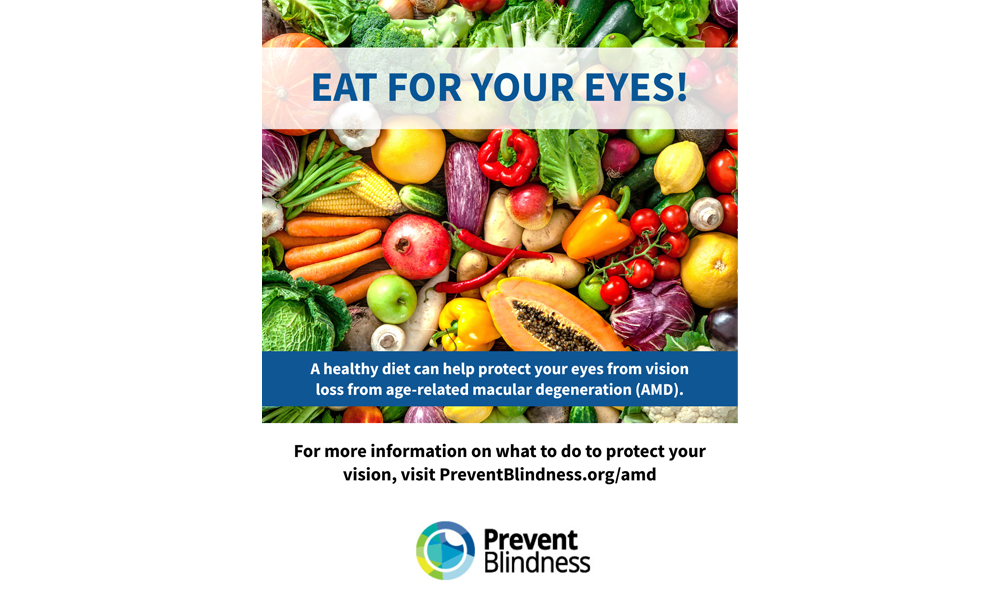
Prevent Blindness is declaring February as Age-related Macular Degeneration (AMD) and Low Vision Month in an effort to provide education and various expert-approved resources to the public and professionals. This year’s AMD and Low Vision Month is generously supported by Gold Sponsor EyePoint, Inc.
According to Johns Hopkins Medicine, AMD is the most common cause of severe loss of eyesight among people 50 and older. And, about 4 million Americans live with low vision, which is defined as chronic visual impairment that cannot be corrected with glasses, contact lenses or medical treatments.
AMD affects the central part of the retina called the “macula.” When AMD damages the macula, the center part of a person’s vision may become blurred or wavy, and a blind spot may develop. Early detection and treatment of AMD is key to helping to prevent significant vision loss.
Two types of AMD include:
“As our population ages, the number of individuals impacted by AMD continues to grow. Many will face difficulties doing the things we sometimes take for granted, such as reading, seeing faces, and driving,” said Jeff Todd, president and CEO of Prevent Blindness. “Our robust collection of resources on AMD and low vision are intentionally created to help minimize vision loss and maintain independence for those impacted by AMD while providing effective tools to the public and providers on ways to save sight.”
As part of AMD and Low Vision Month, Prevent Blindness offers the free AMD GuideMe app. This resource provides a customized overview of AMD along with a tailored resource list and suggested steps to help save sight from the eye disease specific to the individual using the GuideMe app. Prevent Blindness offers additional educational resources including fact sheets and shareable social media graphics in English and Spanish, and dedicated webpages.
New this year, as part of the Prevent Blindness ASPECT Patient Engagement Program Member Spotlight Series, graduate Laurie S., shares her experience with AMD, including her family history with the eye disease, how it impacts her daily activities including the ability to read music, and the importance of support groups “Age-related Macular Degeneration: Laurie’s Story.”
Videos in the Prevent Blindness Focus on Eye Health Series include:
The Prevent Blindness “Living Well With Low Vision” program provides useful information to those with low vision, their care partners and healthcare professionals. Content includes self-help guides, resources for vision loss and mental wellness, information on clinical trials, and much more. Living Well With Low Vision is supported by grants from Amgen and Genentech.
For more information on AMD, please visit PreventBlindness.org/amd. For information on geographic atrophy, please visit PreventBlindness.org/geographic-atrophy.
And, for more information on Living Well With Low Vision, or other general eye health information, please visit lowvision.PreventBlindness.org.
For a listing of organizations and services that provide financial assistance for vision care in English or Spanish, please visit https://preventblindness.org/vision-care-financial-assistance-information.