


Join the Leading Global Eye Health Alliance.
Membership-
Choose an alternate language here
- Membership
Voluntary National Reviews (VNRs), presented annually at the United Nations High-Level Political Forum, are an important platform for governments to report progress on the Sustainable Development Goals. Increasingly, they are also being used to highlight national action on eye health.
In 2025, 14 of the 36 countries submitting VNRs referenced eye health, vision impairment, or access to visual assistive technology, representing 40% of reporting countries. This marks a significant increase from previous years and reflects growing recognition that eye health contributes to the advancement of multiple SDGs, including health, education, decent work, and inclusive development.
Recognising this growing momentum, United Nations Department of Economic and Social Affairs invited the UN Friends of Vision, with support from the International Agency for the Prevention of Blindness and the Fred Hollows Foundation, to present at a recent Virtual Knowledge Exchange on integrating eye health into VNRs. The session highlighted the normative and technical frameworks supporting eye health reporting, practical examples from recent VNRs, and the role of reporting in strengthening accountability for UN General Assembly resolution 75/310, Vision for Everyone.
Participants were also introduced to key resources available to support Member States, including the UN Friends of Vision Guidance for Voluntary National Reviews, the WHO Suite of Tools for Country Planning, the IAPB Vision Atlas, and The Value of Vision: The Case for Investment, which provides country-level data on the economic costs of vision loss and the benefits of investing in eye health.
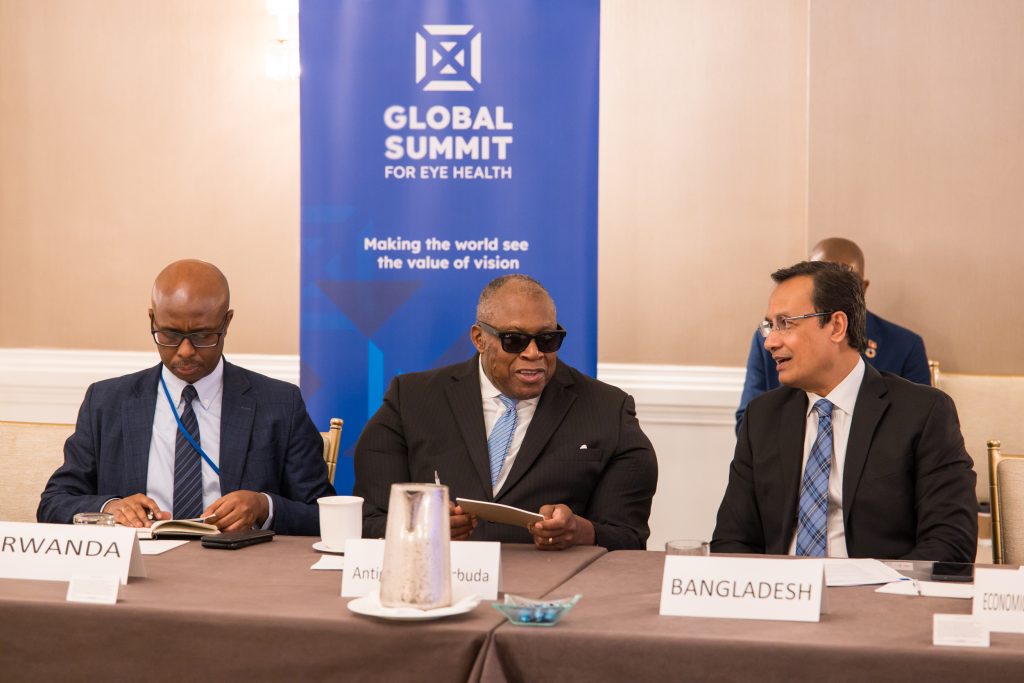
VNR engagement will also be important in the lead-up to the Global Summit For Eye Health, to be hosted by Antigua and Barbuda in 2026. The Summit aims to strengthen accountability for eye health commitments, with progress tracked through established reporting mechanisms such as VNRs.
How members can support:
IAPB members working at country level are encouraged to engage with UN Resident Coordinators and national VNR focal points in countries preparing reports in 2026. Sharing information on national eye health programmes, policies, and data can help ensure that progress on vision care is reflected in national SDG reporting and contribute to the growing global momentum toward eye health for all.
Ensuring that eye health is reflected in national VNRs is also critical for shaping the post-2030 development agenda. As the international community begins to consider the future of global development frameworks, consistent reporting on eye health will help demonstrate its impact across multiple sectors and reinforce its place as a core development priority.