


Join the Leading Global Eye Health Alliance.
Membership-
Choose an alternate language here
- Membership
Prevent Blindness has declared June as Cataract Awareness Month to provide patients and professionals with free educational resources on cataract, a clouding of the eye’s lens. According to the Centers for Disease Control and Prevention (CDC), cataract is the leading cause of blindness worldwide and the leading cause of vision loss in the United States. Additionally, an estimated 20.5 million Americans aged 40 years and older have cataract in one or both eyes.
Prevent Blindness offers a variety of free informational resources in English and Spanish including fact sheets, social media graphics, and a listing of vision care financial assistance programs. The group also offers a dedicated web resource at PreventBlindness.org/cataract, and the “Understanding Cataract” episode in the “Focus on Eye Health Expert Series,” featuring Albert Cheung, MD, Cataract, Cornea, Anterior Segment Specialist with Virginia Eye Consultants and Assistant Professor at Eastern Virginia Medical School, Department of Ophthalmology.
More than half of all Americans have cataracts by the time they are 80 years old. However, cataract can also sometimes be found in young people or even newborn babies (congenital). Risk factors for developing cataract include:
• Intense heat or long-term exposure to UV rays from the sun
• Certain diseases, such as diabetes
• Inflammation in the eye
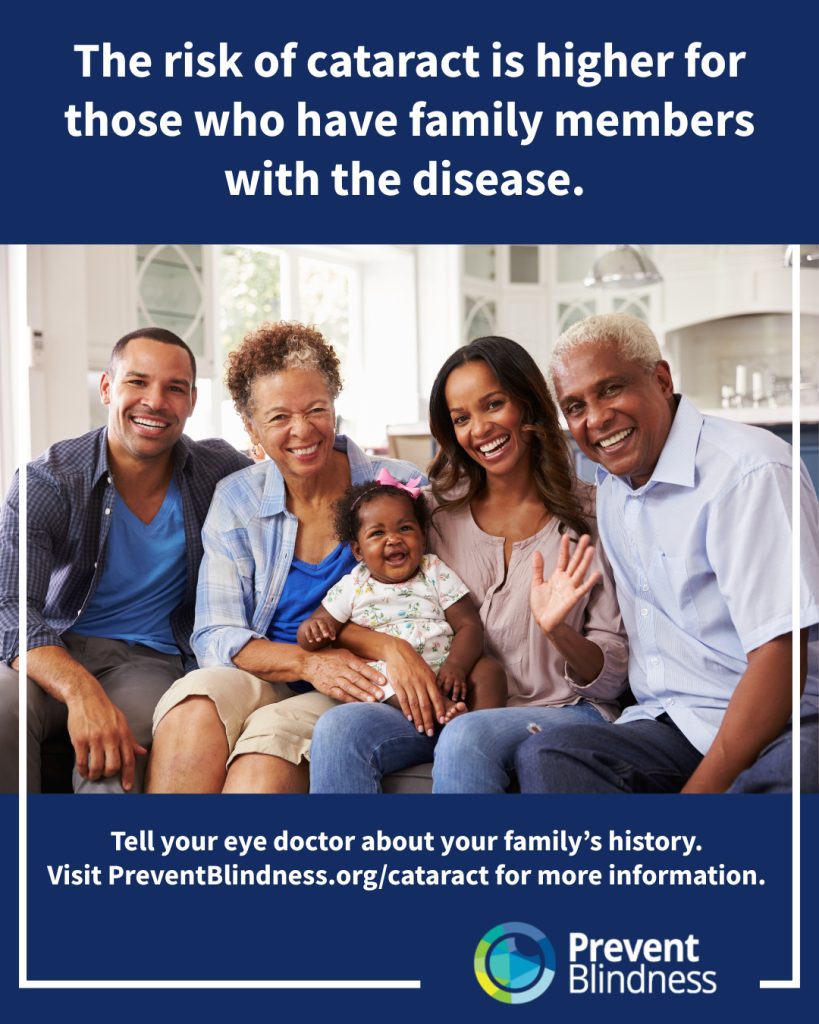
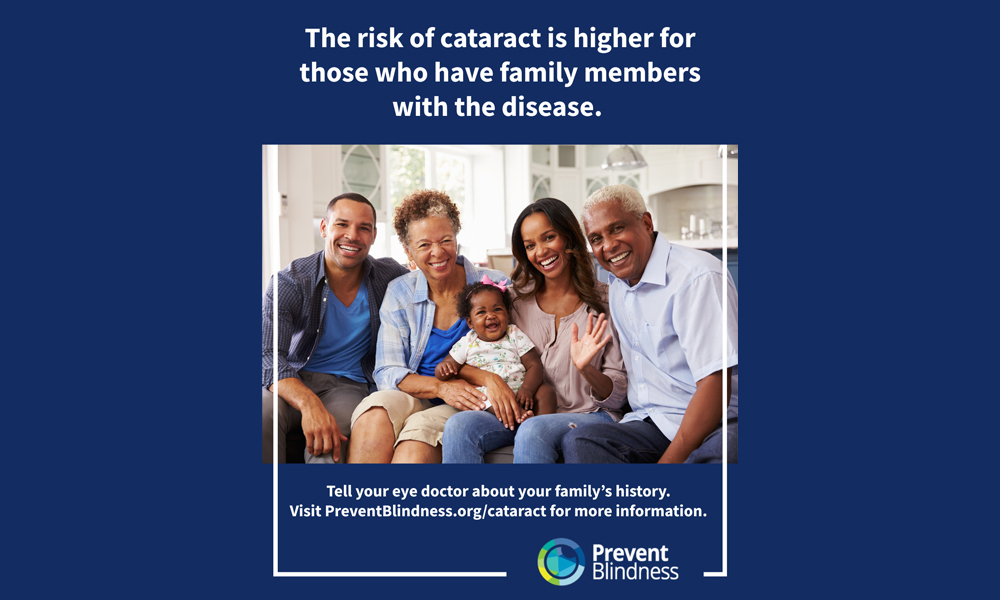
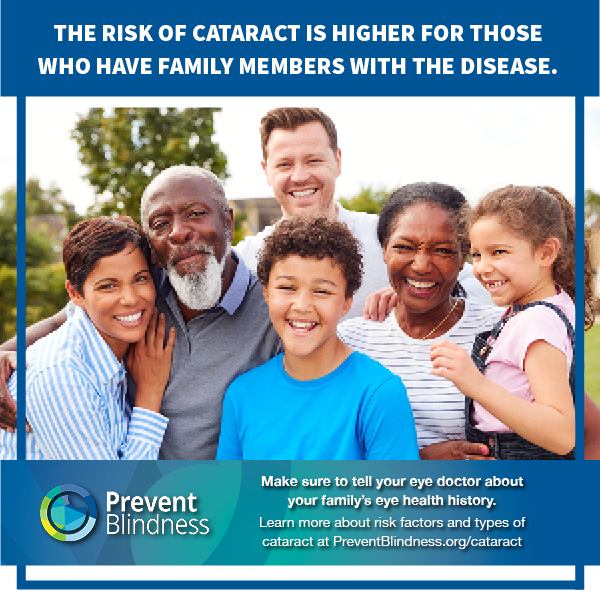
• Hereditary influences
• Events before birth, such as German measles in the mother
• Long-term steroid use (medicines used to treat some health problems, like arthritis or allergies)
• Eye injuries
• Eye diseases, such as glaucoma
• Smoking
The Cleveland Clinic states that cataract surgery is one of the most common procedures, with surgeons performing more than 3 million cataract surgeries in the United States, and 20 million globally, improving vision for 97 percent of patients. For those who have had cataract surgery recommended by their eye doctors, Prevent Blindness offers the dedicated webpage, PreventBlindness.org/cataract-surgery, and the printable “Guide to Cataract Surgery.”
“As we age, we are more likely to develop cataract. The good news is that surgery is highly effective,” said Jeff Todd, president and CEO of Prevent Blindness. “Make sure to talk to your eye doctor about your risk for cataract and steps you can take to keep your eyes healthy and your vision clear.”
For free information on cataract or cataract surgery, please visit PreventBlindness.org/cataract. For a listing of vision care financial assistance programs in English and Spanish, visit PreventBlindness.org/vision-care-financial-assistance-information/.
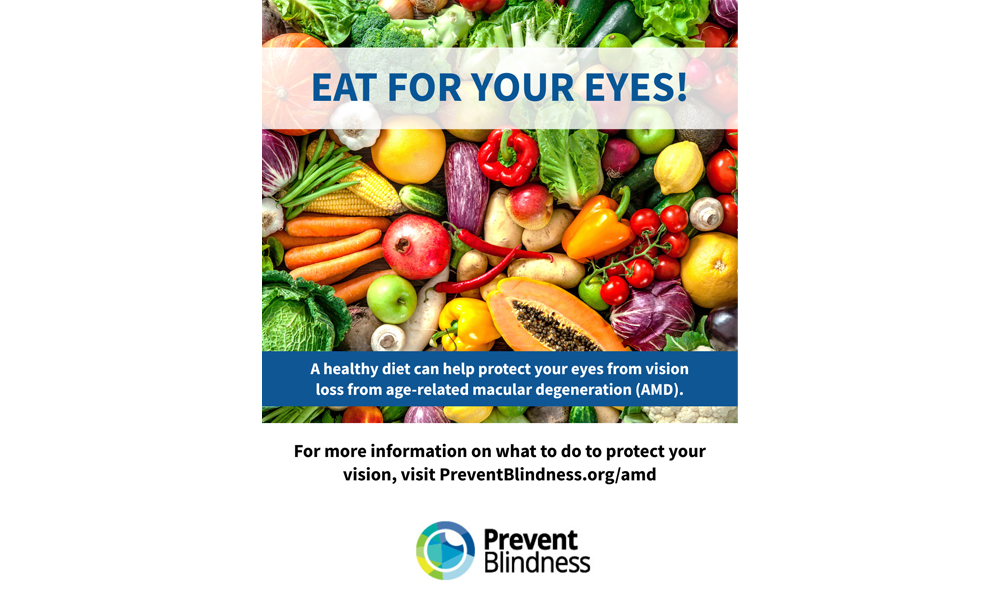
Prevent Blindness is declaring February as Age-related Macular Degeneration (AMD) and Low Vision Month in an effort to provide education and various expert-approved resources to the public and professionals. This year’s AMD and Low Vision Month is generously supported by Gold Sponsor EyePoint, Inc.
According to Johns Hopkins Medicine, AMD is the most common cause of severe loss of eyesight among people 50 and older. And, about 4 million Americans live with low vision, which is defined as chronic visual impairment that cannot be corrected with glasses, contact lenses or medical treatments.
AMD affects the central part of the retina called the “macula.” When AMD damages the macula, the center part of a person’s vision may become blurred or wavy, and a blind spot may develop. Early detection and treatment of AMD is key to helping to prevent significant vision loss.
Two types of AMD include:
“As our population ages, the number of individuals impacted by AMD continues to grow. Many will face difficulties doing the things we sometimes take for granted, such as reading, seeing faces, and driving,” said Jeff Todd, president and CEO of Prevent Blindness. “Our robust collection of resources on AMD and low vision are intentionally created to help minimize vision loss and maintain independence for those impacted by AMD while providing effective tools to the public and providers on ways to save sight.”
As part of AMD and Low Vision Month, Prevent Blindness offers the free AMD GuideMe app. This resource provides a customized overview of AMD along with a tailored resource list and suggested steps to help save sight from the eye disease specific to the individual using the GuideMe app. Prevent Blindness offers additional educational resources including fact sheets and shareable social media graphics in English and Spanish, and dedicated webpages.
New this year, as part of the Prevent Blindness ASPECT Patient Engagement Program Member Spotlight Series, graduate Laurie S., shares her experience with AMD, including her family history with the eye disease, how it impacts her daily activities including the ability to read music, and the importance of support groups “Age-related Macular Degeneration: Laurie’s Story.”
Videos in the Prevent Blindness Focus on Eye Health Series include:
The Prevent Blindness “Living Well With Low Vision” program provides useful information to those with low vision, their care partners and healthcare professionals. Content includes self-help guides, resources for vision loss and mental wellness, information on clinical trials, and much more. Living Well With Low Vision is supported by grants from Amgen and Genentech.
For more information on AMD, please visit PreventBlindness.org/amd. For information on geographic atrophy, please visit PreventBlindness.org/geographic-atrophy.
And, for more information on Living Well With Low Vision, or other general eye health information, please visit lowvision.PreventBlindness.org.
For a listing of organizations and services that provide financial assistance for vision care in English or Spanish, please visit https://preventblindness.org/vision-care-financial-assistance-information.