




Join the Leading Global Eye Health Alliance.
Membership-
Choose an alternate language here
- Membership
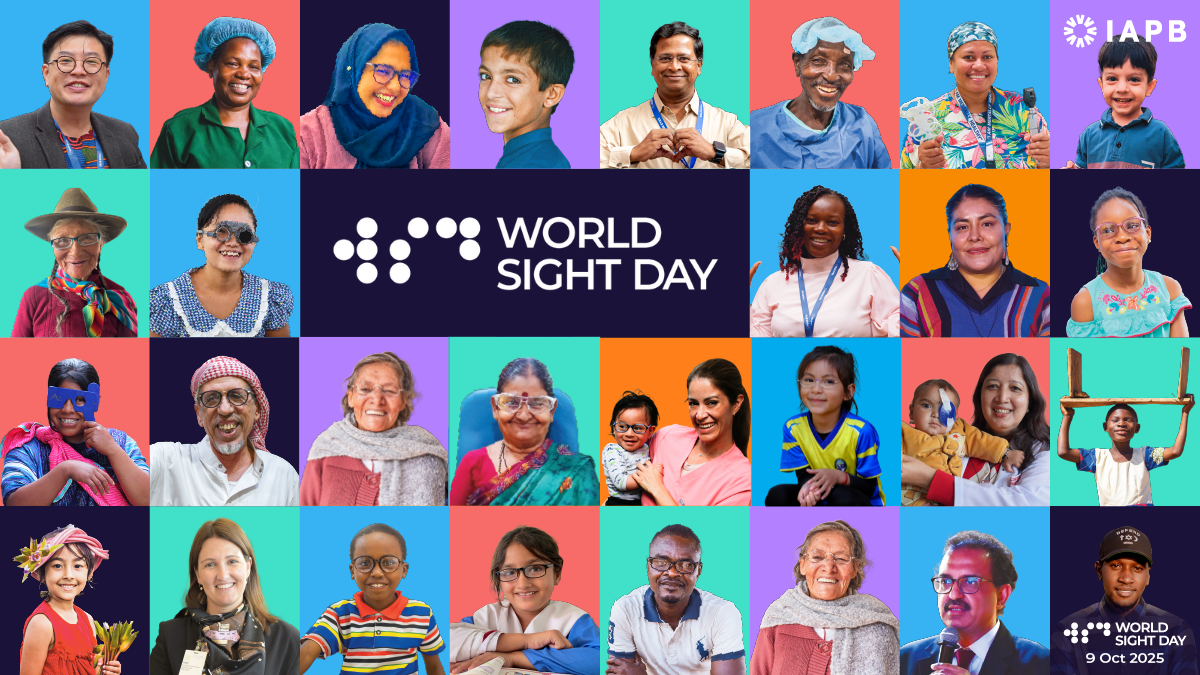
We reflect on how the world marks World Sight Day and collectively celebrate the value of vision by calling on millions to love their eyes.
Investing in the Value of Vision at a country level
The Value of Vision report by IAPB, Seva Foundation and Fred Hollows Foundation, launched at the United Nations General Assembly two weeks ago, highlights the global impact of investing in eye health initiatives. To mark World Sight Day, national data relating to the report has been released showing how countries can benefit from prioritizing eye health, urging everyone to love their eyes by getting an eye test.
Behind these figures are real people whose lives are changed when they gain access to care. We meet Denis, who a content creator from Mshomoroni who nearly lost his sight last year while at university before receiving urgent surgery. He said, “I went from struggling to read and facing blindness to seeing clearly again. The surgery changed my life. Now I can study, create content, and plan for my future. No one should lose their vision when the solutions are this simple.” And Tula, from Phangulgavhan, Maharashtra, shares his story of how she had to drop out of college due to his poor vision before regaining his sight with a pair of glasses. “When I could not see the blackboard, I thought my dream of studying was over. The day I received my glasses, I felt like I had been given my life back,” says Tula.
Peter Holland, IAPB Chief Executive, said, “Sight loss is a truly universal problem that impacts every part of our lives. But we have clear solutions. Most sight loss can be prevented with simple and affordable interventions like expanding sight tests, providing glasses, and improving cataract surgery. For World Sight Day, we urge everyone, from governments and businesses to schools and families, to make eye health a priority. The evidence is clear: by investing in vision, we invest in our future.”
Lioness Hannah Hampton Recognised
Also to coincide with World Sight Day, IAPB Global Ambassador, Her Royal Highness The Duchess of Edinburgh has presented England Lioness and Chelsea Football Club Goalkeeper, Hannah Hampton with a Love Your Eyes Special Recognition Award. The award acknowledges Hannah’s efforts to raise awareness of eye health, challenge stigma, and inspire others, even when faced with challenges.
Born with strabismus, a serious vision condition that left her with almost no depth perception, Hannah underwent multiple surgeries before the age of three to improve her sight. Although some eye health specialists advised her to avoid sport, her determination and the support of her parents ensured she could pursue her passion for football.
Sitting down to tell her story for Every Story Counts, Hannah recalled how the career she enjoys today wouldn’t be possible without the eye care she received at a young age.
Every Story Counts
To continue drawing attention to the importance of eye health, dozens of individuals have submitted stories to Every Story Counts. An opportunity to gather stories from all regions, demographics, and backgrounds to demonstrate that eye care is a universal issue that will impact everyone at some point. By sharing stories, people are adding their invaluable perspective and inspiring global leaders to act on eye health commitments and invest in eye health interventions.
Eyes Focused on Action
Launching today is a global call for everyone to #LoveYourEyes. People are invited to commit to an eye test, as well as include their name amongst other voices from around the world calling for action on eye health from the world’s leaders. These names will be presented to leaders attending the Global Summit for Eye Health, being held in Antigua and Barbuda late 2026.
A Global Challenge
From New Zealand to Nepal, IAPB members, partners and supporters are commemorating World Sight Day in a big way. They are screening the vision of hundreds of politicians, working with Ministries of Health across Asia and Africa to ensure eye health takes centre stage, and even lighting up famous landmarks in the name of eye health for all.
Thank you
World Sight Days is made possible by the support of the Love Your Eyes Global Partners; Abbvie, AMGEN, Bayer, CBM, CooperVision, Cure Blindness Project, The Fred Hollows Foundation, Hoya, Johnson & Johnson Vision, National Vision, Roche, Safilo and Sightsavers.
Please visit IAPB social media channels as we continue to celebrate the incredible campaign efforts of our network of members, supporters and campaigners.