




Join the Leading Global Eye Health Alliance.
Membership-
Choose an alternate language here
- Membership
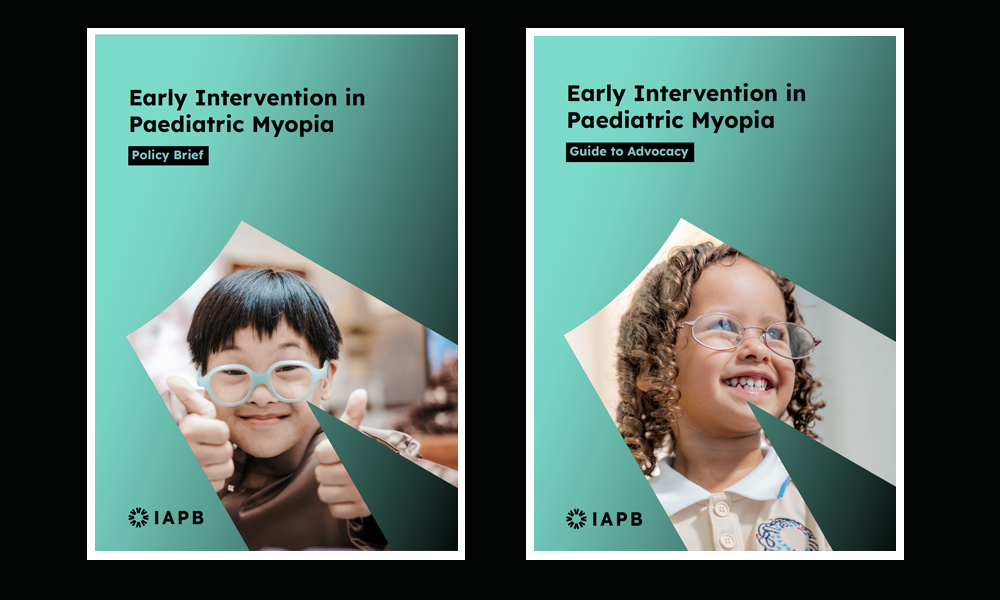
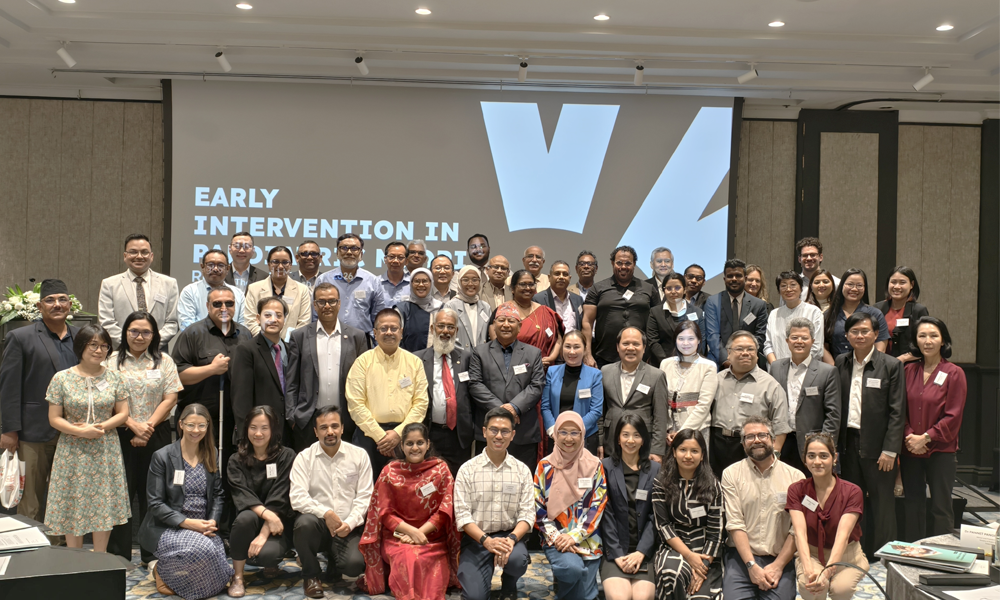
IAPB has published two new resources aimed at supporting stronger policy action and advocacy for early intervention in childhood myopia: the Myopia Policy Brief and the Early Intervention in Paediatric Myopia: Guide to Advocacy.
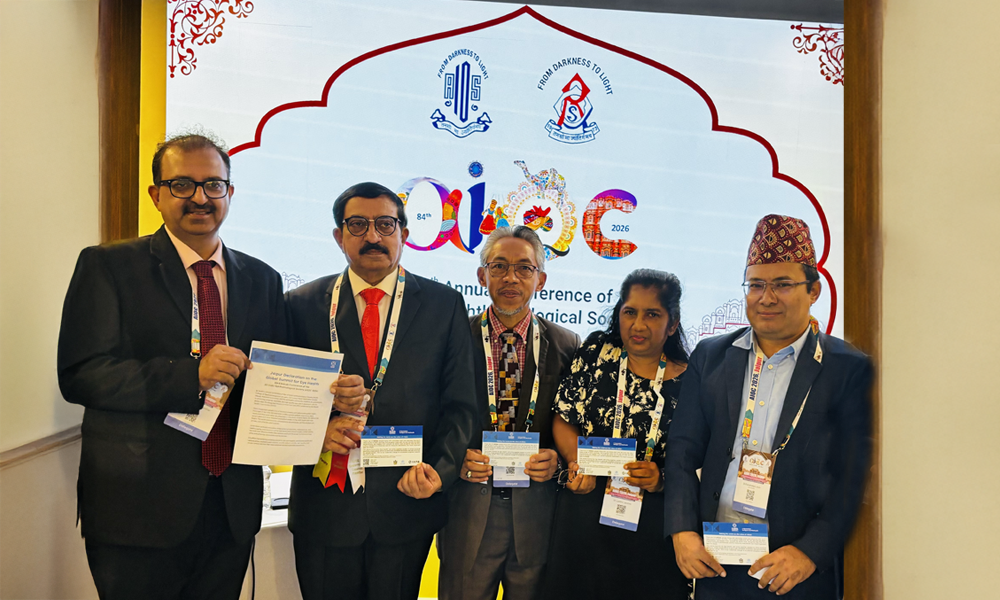
The publications were officially launched during the 41st Asia-Pacific Academy of Ophthalmology Congress (APAO 2026) in Hong Kong, bringing global attention to the growing need for coordinated action to address the rapid rise of Myopia among children and adolescents.
Myopia is one of the fastest-growing eye health challenges worldwide. When myopia begins in childhood and progresses unchecked, high myopia can result without timely intervention. This significantly increases the lifetime risk of serious eye conditions later in life, including retinal detachment, glaucoma and myopic macular degeneration. With cases projected to rise sharply in the coming decades, early detection and intervention in childhood are critical to protecting lifelong vision.
The Myopia Policy Brief outlines the scale and urgency of the global myopia challenge and provides policymakers with clear recommendations to strengthen national responses. It highlights the importance of integrating myopia prevention and management into broader eye health strategies, child health programmes and education systems, reflecting the need for systemic and sustained approaches, rather than isolated clinical interventions.
Complementing this, the Early Intervention in Paediatric Myopia: Guide to Advocacy is designed as a practical resource that equips advocates, clinicians, civil society organisations and policymakers to advance policy change. The guide provides practical strategies for engaging decision-makers, building cross-sector partnerships and promoting evidence-based approaches to early detection and management.
Together, the two resources aim to support governments and stakeholders to prioritise early action and implement concrete national and regional policies that protect children’s vision and long-term health outcomes.
The launch at APAO 2026 underscored the growing momentum within the global eye health community to address paediatric myopia through coordinated policy, advocacy and clinical action.
As a leading global alliance dedicated to ending avoidable blindness and sight loss, IAPB with its accelerated efforts towards the first ever Global Summit for Eye Health, continues to strengthen work with partners across sectors to ensure that children everywhere have access to timely eye care and the opportunity for healthy vision throughout their lives.
This initiative was sponsored by Santen, whose support has helped catalyse a global conversation on paediatric myopia across diverse regions and practice settings.
About Global Summit for Eye Health: The Government of Antigua and Barbuda, in technical collaboration with the World Health Organization (WHO) will host the first ever Global Summit for Eye Health to focus on the value of vision to countries, communities and individuals. The Summit will convene senior leaders from government, private and public sectors, NGO’s and funding institutions to help reach the 1 billion people living with avoidable sight-loss. Five years on from the UN Resolution on Vision, the event will be an opportunity to secure a new wave of ambitious commitments and transform a shared vision into action. For more information, visit https://globalsummitforeyehealth.org/
About IAPB: The International Agency for the Prevention of Blindness (IAPB) is the overarching alliance for the global eye health sector. For 50 years, IAPB has united governments, professional bodies, patient groups, NGOs, and academic institutions to form a powerful global movement for eye health. With nearly 300 member organisations across over 100 countries, IAPB drives universal access to eye health through advocacy, knowledge-sharing, and campaigns. Guided by its 2030 In Sight strategy, IAPB continues to build on this legacy to achieve a world where no one experiences avoidable sight loss. For more information, visit www.iapb.org.