

Skip to content

Health promotion in schools improves eye health literacy in children – research study

Published: 08.08.2018
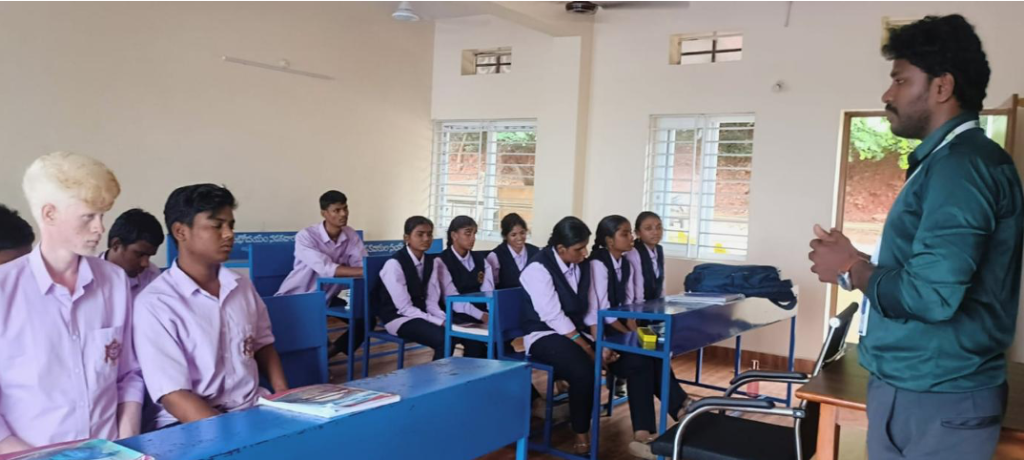
Smiling students at a high school in Vietnam
1/1

 School children in Vietnam/Story: Health promotion in schools improves eye health literacy in children - research study

  • 300 children, aged 12-15 at five schools in Vietnam involved
  • Knowledge and attitudes to eye health improved by 10-20%
  • Uptake of eye examinations increased by more than 20%
  • Some knowledge, attitudes and practices were unchanged

Health promotion in schools is an effective way to transfer knowledge to children and could potentially improve eye care outcomes, according to a recent study in Vietnam.1 Researchers from Brien Holden Vision Institute and Ba Ria -Vung Tau Provincial Eye Centre in Vietnam, found that knowledge of childhood eye diseases and activities that could cause eye problems improved significantly, and an increased number of children having an eye examination and receiving spectacles, following health promotion activities at schools in the Bà Rịa-Vũng Tàu (BRVT) province.

Around two-thirds of children in BRVT with vision impairment have never received spectacles or do not wear them. Generally, school eye care programmes have largely focused on vision screening, refractive error correction, spectacle wearing compliance and prevention of trachoma and Vitamin A deficiency. Yet it has been suggested that eye health “literacy” is critical to ensuring ongoing utilisation of eye care services and spectacle wear compliance.

The researchers considered that health promotion may be an avenue to improving eye health knowledge, attitudes and practices among children, parents and teachers, but few studies have actually evaluated the effectiveness of this type of intervention. The study was conducted at five schools in BRVT, involving 300 children aged 12-15 years. It included activities such as oral presentations, posters, leaflets and stickers, training of teachers and school screenings.

The study’s findings

It was found that the percentage of children with “correct” knowledge and showing “positive” attitudes to eye health increased by between 10-20% after the health promotion. This included more than 90% of children correctly reporting the common symptoms of eye problems. Awareness of red eye infections (including preventative strategies), refractive error and cataract increased by 12–24% and knowledge of eye trauma (foreign object injury) increased three-fold. Uptake of eye examinations increased from 63.3% prior to health promotion to 84.7% afterwards.

The intervention did not make positive changes across all areas, such as:

  • regularity of spectacle wear
  • knowledge of squint or night blindness
  • knowledge informed by traditional beliefs and myths
  • attitudes to eating Vitamin A rich food and personal hygiene such as hand and face washing.

Notwithstanding the above limitations, this is the first questionnaire to assess children’s knowledge, attitude and practices in the area of eye health in Vietnam, and does provide strong evidence that health promotion initiatives are effective in improving eye health literacy in children. This resource will be a valuable reference for agencies planning eye health initiatives for children and an advocacy tool for those working in the sector.

The study was conducted as a part of the Vietnam Australia Vision Support Programme, financially supported by an Avoidable Blindness Initiative grant through the Department of Foreign Affairs and Trade, Australian Government.

Reference

  1. Paudel P, Yen PT, Kovai V, Naduvilath T, Ho SM, Giap NV and Holden BA. Effect of school eye health promotion on children’s eye health literacy in Vietnam, Health Promotion International, 2017, 1–10, doi: 10.1093/heapro/dax065

Photo Credits

Prevent Blindness is declaring February as Age-related Macular Degeneration (AMD) and Low Vision Month in an effort to provide education and various expert-approved resources to the public and professionals. This year’s AMD and Low Vision Month is generously supported by Gold Sponsor EyePoint, Inc.

According to Johns Hopkins Medicine, AMD is the most common cause of severe loss of eyesight among people 50 and older. And, about 4 million Americans live with low vision, which is defined as chronic visual impairment that cannot be corrected with glasses, contact lenses or medical treatments.

AMD affects the central part of the retina called the “macula.” When AMD damages the macula, the center part of a person’s vision may become blurred or wavy, and a blind spot may develop. Early detection and treatment of AMD is key to helping to prevent significant vision loss.

Two types of AMD include:

  • Dry- The most common form of AMD, dry AMD, is caused by the appearance of small yellow deposits called drusen, which form under the retina. These are accumulated waste products of the retina, which can grow and stop the flow of nutrients to the retina. This may cause the retinal cells in the macula that process light to die, causing vision to become blurred. This form of the disease usually worsens slowly. An advanced form of dry AMD is called geographic atrophy.
  • Wet- Wet AMD generally causes more rapid and more serious vision loss. In this form of the disease, tiny new blood vessels grow under and into the retina. These blood vessels are fragile and often break and leak, causing a loss of vision.

“As our population ages, the number of individuals impacted by AMD continues to grow. Many will face difficulties doing the things we sometimes take for granted, such as reading, seeing faces, and driving,” said Jeff Todd, president and CEO of Prevent Blindness. “Our robust collection of resources on AMD and low vision are intentionally created to help minimize vision loss and maintain independence for those impacted by AMD while providing effective tools to the public and providers on ways to save sight.”

As part of AMD and Low Vision Month, Prevent Blindness offers the free AMD GuideMe app. This resource provides a customized overview of AMD along with a tailored resource list and suggested steps to help save sight from the eye disease specific to the individual using the GuideMe app. Prevent Blindness offers additional educational resources including fact sheets and shareable social media graphics in English and Spanish, and dedicated webpages.

New this year, as part of the Prevent Blindness ASPECT Patient Engagement Program Member Spotlight Series, graduate Laurie S., shares her experience with AMD, including her family history with the eye disease, how it impacts her daily activities including the ability to read music, and the importance of support groups “Age-related Macular Degeneration: Laurie’s Story.”

Videos in the Prevent Blindness Focus on Eye Health Series include:

  • “Age-related Macular Degeneration (AMD) and Low Vision,” featuring W. Lloyd Clark, MD, Palmetto Retinal Center, and Assistant Clinical Professor of Ophthalmology at the University of South Carolina School of Medicine.
  • “Low Vision,” featuring R. Tracy Williams, OD, FAAO, Executive Director at Spectrios Institute for Low Vision, Clinical Professor of Ophthalmology, Loyola University and Adjunct Professor, Illinois College of Optometry. Dr. Williams is also a former Prevent Blindness Board of Directors member.
  • “Vision Impairment and Mental Wellness,” with AMD patient Dr. Connie Hills, psychologist, consultant and speaker.

The Prevent Blindness “Living Well With Low Vision” program provides useful information to those with low vision, their care partners and healthcare professionals. Content includes self-help guides, resources for vision loss and mental wellness, information on clinical trials, and much more. Living Well With Low Vision is supported by grants from Amgen and Genentech.

For more information on AMD, please visit PreventBlindness.org/amd. For information on geographic atrophy, please visit PreventBlindness.org/geographic-atrophy.
And, for more information on Living Well With Low Vision, or other general eye health information, please visit lowvision.PreventBlindness.org.

For a listing of organizations and services that provide financial assistance for vision care in English or Spanish, please visit https://preventblindness.org/vision-care-financial-assistance-information.